
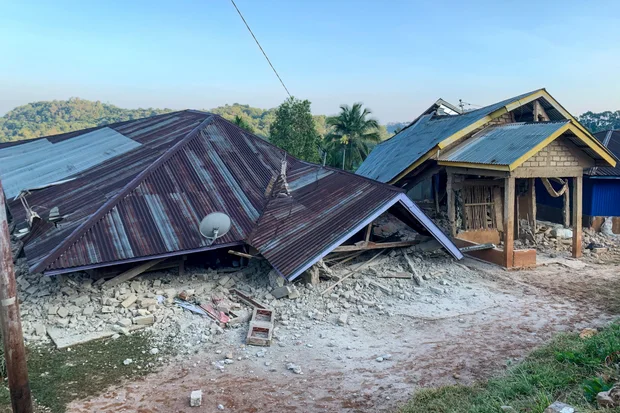








A 7.7-magnitude earthquake that struck eastern Indonesia on Saturday killed at least 47 people, a disaster management official said, revising an earlier toll. A second, 6.4-magnitude quake struck the country’s western Sumatra island later, according to the U.S. Geological Survey.
Authorities said dozens more residents were injured and warned that the death toll would almost certainly rise. Officials initially issued a tsunami warning and urged coastal residents to move to higher ground, but later lifted the alert when Indonesia’s Meteorology, Climatology and Geophysics Agency confirmed that monitoring showed no significant sea-level changes that would pose a threat to coastal communities.
The U.S. Geological Survey reported the primary quake hit Indonesia’s Flores region at 5:58 a.m. local time, with an epicenter 42 miles north-northwest of the city of Ende in East Nusa Tenggara province. The meteorological agency noted the initial tremor was followed by at least 235 aftershocks, with the largest recorded at magnitude 6.2.
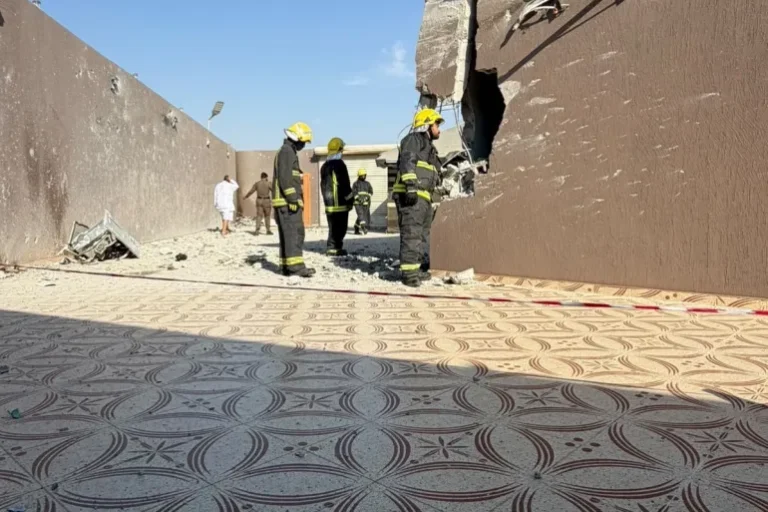
The head of the National Disaster Management Agency, Suharyanto, said rescuers have recovered at least 47 bodies, mostly in Sikka, Manggarai and East Manggarai, and at least 50 people were taken to hospitals. Suharyanto, who uses a single name, said the quake flattened at least 157 houses and damaged nearly 200 more, forcing about 2,000 villagers to abandon their homes and move to temporary shelters.
East Nusa Tenggara Police Chief Rudi Darmoko stated that the earthquake caused severe damage and collapsed buildings. He noted that power outages in cities and villages have hampered the flow of information and complicated search and rescue efforts. “We are continuing to collect reports of damage and casualties, but there are communication disruptions,” Darmoko said, adding that landslides in Ende regency triggered by the earthquake also cut off the Trans-Flores highway, a 435-mile mountain road spanning the island.
The powerful tremor also destroyed more than 100 public facilities, including schools, medical centers and churches. “I have never felt an earthquake this big,” Yulian Juita Ekalia, who lives in Ruteng city more than 60 miles west of the epicentre, told AFP. She described the experience as terrifying, noting that the shaking caused household items to collapse as she and her neighbors fled their homes in fear.
The death toll could rise because landslides triggered by the earthquake buried or cut off many remote villages across six regencies on Flores Island, said Fathur Rahman, who heads the Search and Rescue Office in Maumere. Footage on local television showed patients at several hospitals being evacuated as a precaution, with staff moving equipment like beds, IV stands and oxygen cylinders outdoors to establish temporary treatment areas.
The National Disaster Management Agency has deployed a helicopter to assist with logistics and support emergency response operations, including potential evacuations. This air support is considered crucial given East Nusa Tenggara’s geography, which consists of numerous islands and presents significant transportation and access challenges for ground crews.
Indonesia, a vast archipelago of more than 17,000 islands, remains highly prone to earthquakes and volcanic activity due to its location on the “Ring of Fire,” an arc of volcanoes and fault lines in the Pacific Basin. The region has a history of devastating seismic events, including a 1992 earthquake that killed about 2,500 people on Flores, a 2018 magnitude 7.5 quake that spawned a localized tsunami, and the massive 2004 magnitude 9.1 earthquake off Sumatra that triggered a tsunami killing 230,000 people across a dozen countries.
“It felt like we were on a trampoline; it was really scary,” said the 37-year-old university lecturer.
“As I rushed to get outside, everything in the house fell down: the television, my son’s trophies, the dish racks, suitcases on top of the wardrobes.
When I got outside, my son and neighbours were already there, screaming in fear.”
Most notably, a powerful earthquake caused a tsunami in 1992 that killed about 2,500 people on Flores, part of a group of islands in the eastern half of Indonesia, while in 2018, a magnitude 7.5 quake spawned a large localized tsunami that wiped out coastal areas, killing more than 4,400 people.