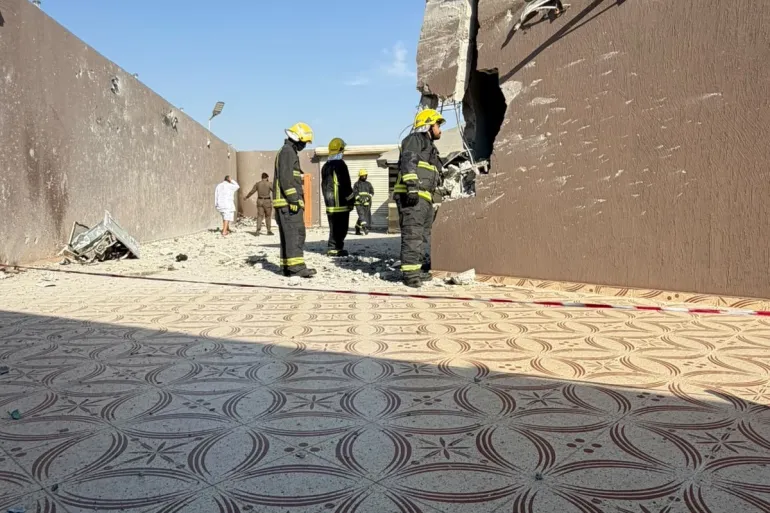







A surge in hostilities between Saudi Arabia and Yemen’s Houthi movement has resulted in at least five deaths, including three children, amid escalating regional tensions. The violence involves a series of aerial strikes and cross-border drone activity that has drawn scrutiny from international powers.
On Thursday, Saudi Arabia’s civil defence agency reported the death of a Yemeni resident within the kingdom after a Houthi drone was intercepted over the southwestern governorate of Taif. This incident marks the first death within Saudi territory this month as Houthi offensive operations continue to intensify.
Simultaneously, local media aligned with the Houthi movement reported that Saudi-led coalition aircraft targeted three telecommunications towers in Yemen’s Taiz province. These strikes reportedly resulted in the death of one civilian, with another individual wounded in the town of Abs. Further reports from Houthi-backed channels indicated that three children were killed during separate operations attributed to government forces supported by the Saudi-led coalition.
The current escalation is further complicated by diplomatic friction over allegations regarding the safety of religious sites. Saudi authorities stated that a drone launched by the Houthis had been intercepted while allegedly en route to Mecca. Houthi leader Abdel-Malik al-Houthi dismissed the claim as a “heinous lie” and “great propaganda” during a televised address, asserting that his forces would never target the city, which holds immense significance for the Yemeni people. He accused the Saudi leadership of fabricating the threat to further its war objectives.
International reaction has been swift, with Kuwait and Bahrain expressing solidarity with Saudi Arabia and condemning the Houthi strikes. Meanwhile, the European Union’s foreign affairs spokesperson has urged the group to cease military actions immediately.
The situation has drawn broader regional attention, with Iran’s Foreign Ministry spokesperson, Esmaeil Baghaei, stating that any aggression against Islamic holy sites is condemnable. However, Baghaei cautioned against accepting the claim of a Mecca-bound drone without verification, suggesting the region should remain wary of potential “false flag” operations.
Behind the scenes, diplomatic pressure is mounting. Sources indicate that China has privately urged Iranian officials to help restrain the Houthis following an appeal from Riyadh. Publicly, Beijing has called for dialogue and the preservation of navigation safety in the area.
The conflict also risks drawing in other regional partners. Pakistan’s Defence Minister, Khawaja Asif, suggested that recent Houthi activity warrants the implementation of a defense agreement involving Saudi Arabia and Turkiye. These remarks coincided with discussions between Iranian Foreign Minister Abbas Araghchi and Pakistani military leadership regarding ongoing regional security developments. The report also notes that reporting from the Yemeni capital Sanaa, Yousef Mawry said: “Al-Houthi’s speech is not just directed towards the Yemeni people; it is directed to the world to set the record straight that the Houthis did not target the holy city of Mecca, as the Saudis claim.”. The report also notes that meanwhile, Rashad al-Alimi, the head of Yemen’s Saudi-backed Presidential Leadership Council, said that Houthi forces are suffering heavy blows on the fronts in Taiz, Marib, Lahj, al-Jawf, Hajjah, al-Bayda al-Dhale. The report also notes that al-Alimi said that gains made by the Houthis along the Red Sea coast are temporary, the state-run Saba news agency reported, in a meeting with the French ambassador to Yemen. The report also notes that but he added that “a mere claim” of intercepting a drone “en route to Mecca” is not enough to accuse the Houthis of the act. The report also notes that “Nor should we forget that our region has witnessed numerous instances of ‘false flag’ operations, particularly in recent months,” Baghaei said while pointing at Israel.