








Imagine booking a ticket on one of Europe’s premier airlines, stepping onto a brand-new, ultra-modern Airbus A350, and walking past 34 of the grandest business-class suites in the sky — only to be told no one is allowed to sit in them. That ironic reality may await passengers on KLM’s new Amsterdam-Toronto route this fall, among other major carriers. The luxury pods — complete with lie-flat beds and sliding privacy doors — could be entirely off-limits when departure day rolls around, sitting completely empty at 35,000 feet.
The culprit isn’t a lack of demand, but a paradox of modern aviation. As premium seats have become increasingly complex, getting regulatory clearance to fly them is harder than ever, creating a production bottleneck. Airlines around the world are currently plagued by delays in their efforts to deliver new premium offerings — including increasing passenger demand for privacy, high-tech connectivity and inflight entertainment — to meet the surge in air travel. Flagship carriers including American, Lufthansa, Riyadh Air and Singapore Airlines are all struggling to navigate the lengthy, multi-year approval process for bespoke cabins.
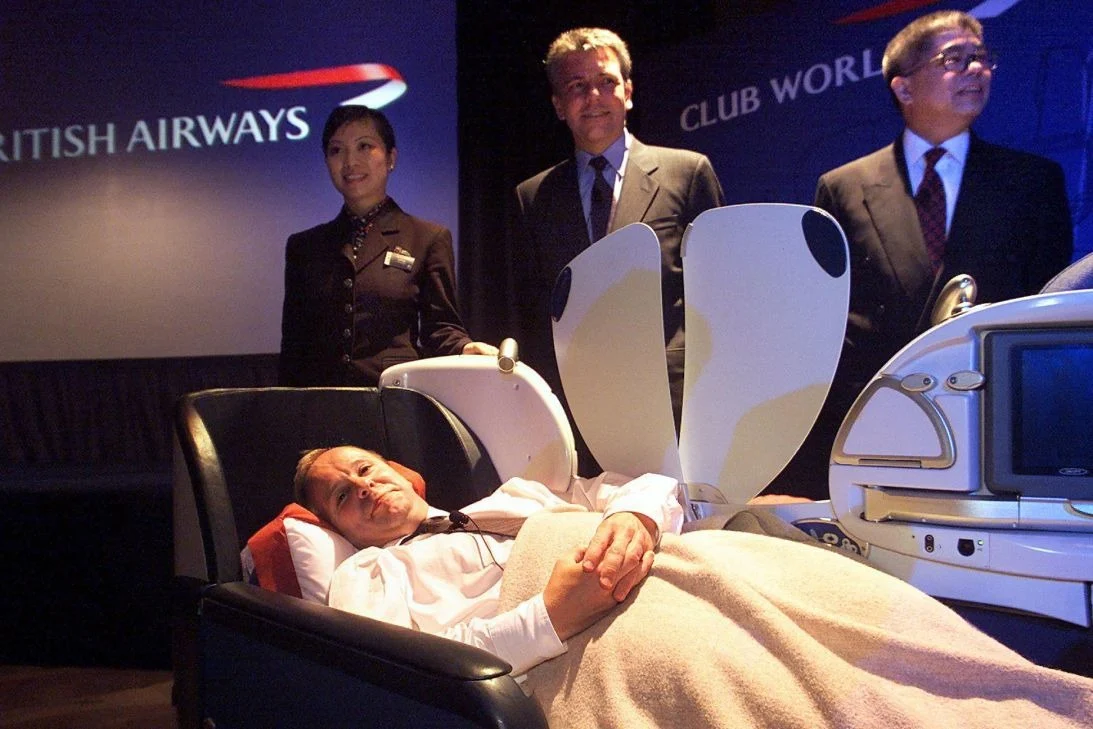
When the McCallister family dashes onto their flight to Paris in the 1990 film “Home Alone,” barely making it after an alarm clock failure, the parents — having waved their kids into coach — turn left into first class and settle into what were essentially comfortable, oversized recliners. That was the standard for decades until British Airways introduced the world’s first lie-flat seat in 2000. In the decades since, front-row real estate has transformed into high-tech mini-apartments. Take Lufthansa’s new premium Allegris suites and Senses, its sister carrier Swiss’ version. Both are a complete overhaul of their long-haul cabins, featuring seat heating, seat cooling and personal climate controls.
Experts estimate that certifying a new premium seat today takes at least six months longer than it did prior to the Covid pandemic, when lead times averaged one to two years. “By the time you imagine it, design it, test it, get it certified, get it built — it is a lengthy three-year process,” Ben Minicucci, the CEO of Alaska Airlines, said in May on bringing the airline’s first-ever business-class suites to market. “We approved this design on a new product last year and now it’s getting the seat manufacturers aligned.”
Compounding the crisis is the fact that airlines are actively resisting standardization in a bid to outdo each other. “Another industry that is in a booming ramp-up phase, you want to scale it — you would go for standardization,” said Mark Hiller, the CEO of seat manufacturer Recaro. Instead, airlines are insisting on custom designs to stand out. “The interest and need for differentiation … are driving the demand and really lead to bottlenecks in the industry.” Federal regulators are also taking a much harder line on crash safety tests for custom setups. FAA Administrator Bryan Bedford told The Wall Street Journal in May that the agency sees premium seats “that just don’t pass our human factors tests for impact.”
The obsession with privacy is a massive part of the problem. “If you went back 10 years ago, there were very few walls in the business-class cabin and today there are a lot,” Andrew Nocella, chief commercial officer of United Airlines, commented earlier this year. “I do think that the evolution of the cabins has made [certification] very complicated.” Stephanie Pope, the CEO of Boeing Commercial Airplanes, recently commented about seat certification delays: “How do you identify risk with the customers early on and push that risk upstream?”
“In the certification, authorities [and] the seat suppliers are ramping up,” said Recaro CEO Mark Hiller. “On the other hand, all these improvements are somehow eaten up by the more demand we’re having.” In fact, Hiller warns, the bottleneck could get worse before it gets better. Yet despite taking the safer route, KLM’s new A350 business suites remain blocked off, awaiting the green light from European regulators EASA, which KLM says is now using a “revised interpretation of regulatory requirements.” As Boeing’s Pope noted, “The complex interiors I don’t see going away. I think that is the wave of the future.” She joked: “Someday we’ll all have a shower next to our seat.” The report also notes that it starts by rewinding the tape a few decades. The report also notes that yet, as nice as those amenities are, every added feature introduces a fresh regulatory hurdle, in this case contributing to a multi-year delay before both airlines were able to deploy. The report also notes that launching its Nocella says the company worked closely with safety inspectors and manufacturers, united seems to have found a way through the regulatory maze. The report also notes that every added wall, higher door and high-tech widget is another tangle of testing and paperwork, but for most carriers. The report also notes that modern suites aren’t just big chairs anymore. The report also notes that every custom material and hard barrier has implications for dynamic impact testing, flammability and crucial Head Injury Criteria safety ratings, as ZIM Aircraft Seating Group CEO Raffael Rogg points out. The report also notes that planemakers, seat suppliers and regulators — is eager to clear the logjam, every link in the aviation chain — airlines. The report also notes that no manufacturer wants a multimillion-dollar jet sitting on the tarmac awaiting chairs or flying across the Atlantic carrying ghost suites.