






A sudden and intense resurgence of warfare in Yemen has triggered a massive displacement crisis, forcing thousands of families to flee their homes. A rapid advance along the Red Sea coastal plains and up the rugged hills toward the mountaintop city of Taiz has sent waves of people fleeing in cars to seek shelter. Since the beginning of September 2026, the UN Office for the Coordination of Humanitarian Affairs (OCHA) estimates that at least 125,000 people, representing roughly 18,000 households, have been displaced by the renewed hostilities.
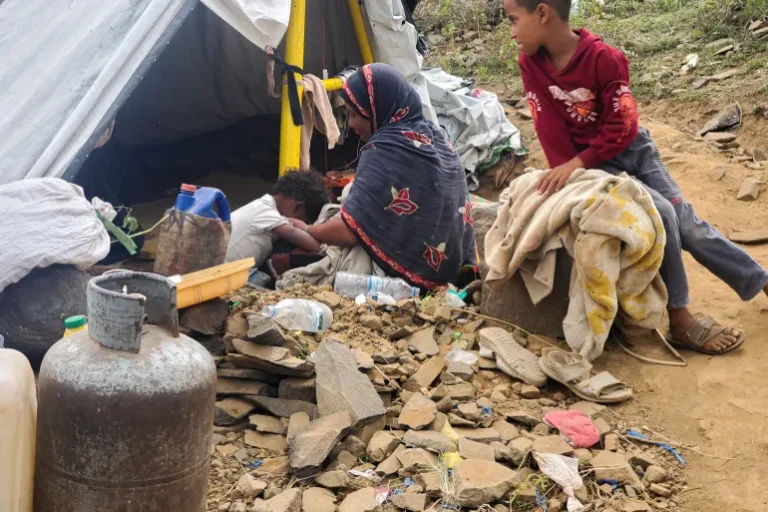
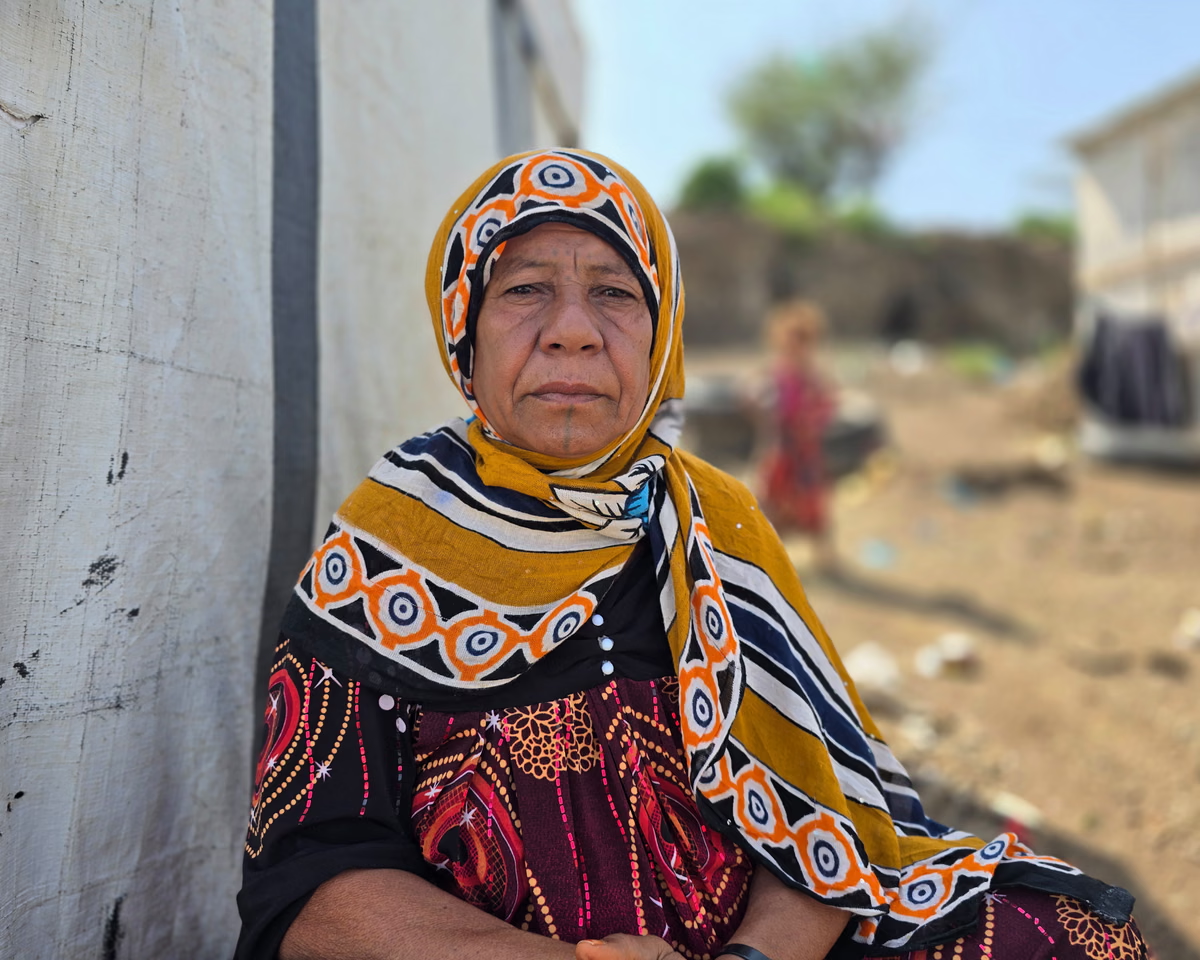
The scale of the crisis is visible in Al-Shimayateen district, where newly displaced families are overwhelming local camps. Among them is Asma Taleb, a woman in her 50s who fled her home last week along with her two sons and five grandchildren. She explained that they had to leave their large, comfortable home in the Maqbanah district of the Taiz region. Now, they are struggling to find simple building materials, such as plastic sheets and wooden poles, to build a basic shelter.
Taleb, who had never left her village before except for brief emergencies lasting a day or two, expressed how devastating the sudden flight was. “The fighting was fierce in our village, and some of our civilian neighbours were killed or injured, so we fled home and left everything behind,” she said. “Amid the fierce battles you forget everything. We left our home belongings, and one neighbour even left his livestock behind.”
Upon reaching the camp, Taleb found three or four families already crowded into each tent due to the constant arrival of new displaced people. With no other options, her family moved in with a relative who was already sharing a tent with three other families. While she felt relief on the first day to have reached safety, the harsh reality of the overcrowded camp and lack of tents quickly set in. Some humanitarian organizations have stepped in to distribute canned food and hygiene kits, but Taleb worries she will not be able to return home soon as fighting continues and more families arrive daily.
The impact of the fighting has reached beyond Yemen’s borders. The International Organization for Migration reported that more than 2,000 people fleeing the renewed conflict have crossed the sea to reach Djibouti’s northern shores, landing at various points along the coastline near Obock.
Local livelihoods have been completely shattered by the conflict. Hatem Qasem, a farmer in his 40s from the Al-Wazeyah district west of Taiz city, explained how the approaching battles forced his community to flee. Relying on farming and livestock, Qasem and his neighbors had rarely left their village. However, intense shelling and clashes surrounding their village three days prior left them with no choice but to escape. To cover the cost of their escape, they had to quickly sell off their livestock at very low prices because they could not bring the animals with them.
“We took the children and left – around five families in one car. We couldn’t believe we managed to escape the fighting, but praise be to God, we made it,” Qasem said. After arriving in Al-Shimayateen, Qasem and his family of eight had to rent a single room in a house shared with three other displaced families to divide the rental costs. Though safe, Qasem noted that they have no work and no support network, making long-term survival in the area difficult. He plans to wait out the month to see if the fighting subsides so they can return home; otherwise, they will have to search for other options.
The humanitarian situation across the country remains critical. In 2026, OCHA estimates that approximately 22.3 million people in Yemen—representing more than half of the total population—require humanitarian aid and protection, including 5.2 million displaced individuals. In temporary settlements like the Al-Safia makeshift camp, those displaced have no access to employment and are entirely dependent on aid agencies for survival.
The human toll of the recent escalation has been devastating, particularly for children. According to Save the Children, at least 19 children were killed and 49 injured between August 1 and September 9. This contributed to a broader toll of 117 civilians killed and 206 injured during this period of escalating violence. In just one week, from September 3 to September 9, at least 175 people were killed or injured, including 43 children—marking the highest weekly casualty toll for children in the past year.
Aid delivery remains severely hampered by active combat. Ali Qaid, the manager of the executive unit for Internationally Displaced People Camps Management in Taiz governorate, confirmed that while some humanitarian groups have managed to deliver aid to newly arrived families in Al-Shimayateen, many civilians remain trapped. He noted that ongoing displacement from the western districts of Taiz governorate is making it incredibly difficult for humanitarian organizations to reach those caught in the middle of active fighting. The report also notes that more than 100,000 people have fled their homes in the last month. The report also notes that including 43 children, the highest weekly child casualty toll in the past 12 months, at least 175 were killed or injured in a single week (3-9 September). The report also notes that “This war doesn’t differentiate between people. The report also notes that “I dream of returning to my village today, before tomorrow, but it isn’t in my hands. The report also notes that the rapid Houthi advance in Yemen: why it matters and what’s at stake.