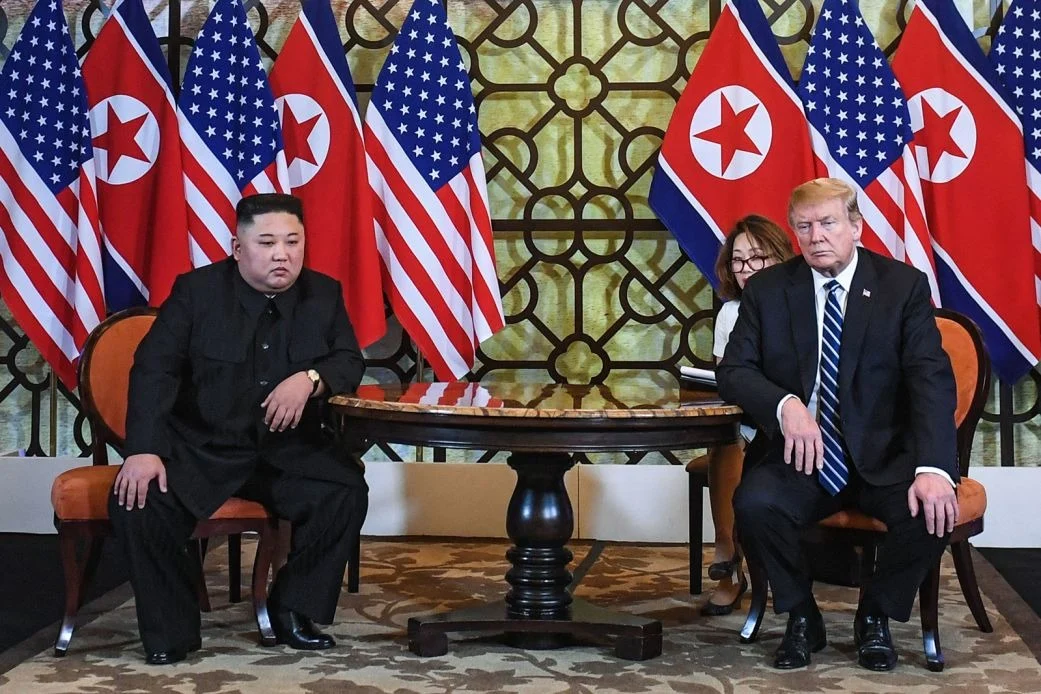







President Donald Trump has announced a sudden reduction in major military drills with South Korea, a move that has intensified concerns regarding the ability of US forces to maintain deterrence against hostile regimes while simultaneously supporting key international allies. The decision to scale back the 10-day Ulchi Freedom Shield exercises, which involve tens of thousands of troops, comes as the administration claims North Korea has been “unthreatening and respectful.” Trump characterized the war games as costly and inappropriate, stating on Truth Social that such bilateral exercises unnecessarily burn through US resources and readiness at a time when the nation is running low on both.
This policy shift arrives as North Korean leader Kim Jong Un continues to aggressively expand his nation’s armed forces and nuclear weapons program. Kim has deepened his military cooperation with Moscow, providing missiles for use in the war in Ukraine and sending soldiers to gain combat experience on the front lines. This alignment is reinforced by a mutual defense treaty with Vladimir Putin and a three-way partnership with Russia and China, which was highlighted during a public display of military hardware in Beijing last year. Despite these developments, the US president has refrained from criticizing Kim, even as North Korea continues to upgrade its arsenal and showcase new military assets, such as a guided-missile destroyer.
The decision to curtail the drills stands in contrast to the administration’s recent praise for South Korea as a model ally. Defense Secretary Pete Hegseth, speaking at the Shangri La Dialogue in Singapore, recently lauded Seoul for its consistent investment in defense, noting that the nation lives on the front lines and builds genuine combat power. However, the Pentagon has increasingly shifted military assets away from the Pacific to address conflicts elsewhere, including the ongoing crisis in the Persian Gulf. Washington has previously relocated missile interceptors from the Korean Peninsula and recently ordered the USS George Washington, its only Western Pacific-based aircraft carrier, to the Middle East to relieve the USS Abraham Lincoln.
Military analysts and security experts are divided on the implications of the reduced exercises. Jennifer Kavanagh of the think tank Defense Priorities argued that the drills are a drain on resources, but others warn that the move undermines coalition readiness. Retired US Navy Adm. Mark Montgomery, a senior fellow at the Foundation for Defense of Democracies, stated that the decision lowers readiness and places US forces—including nearly 30,000 troops in South Korea and over 50,000 in Japan—at unnecessary risk. Carl Schuster, a former director of the US Pacific Command’s Joint Intelligence Center, added that because most costs for the exercises were already incurred, the reduction will likely force the military to find alternative, potentially less effective, ways to maintain training standards.
Critics view the move as an “unforced error” that grants a strategic advantage to North Korea. Cedric Leighton, a retired US Air Force colonel and military analyst, emphasized that the exercises are critical for the joint defense of South Korea, Japan, and the United States. The decision also echoes Trump’s previous rhetoric regarding burden-sharing, which has caused friction with long-standing allies in Europe and Asia. As the administration continues to prioritize an “America First” approach, questions are mounting among NATO members and other partners about the long-term reliability of the United States as a global security guarantor.
The current situation marks a significant departure from 2017, when Trump responded to North Korean ballistic missile testing by deploying three aircraft carriers to the region and issuing stern warnings to Pyongyang. By contrast, the current administration’s refusal to challenge Kim’s recent military advancements, coupled with the scaling back of defensive drills, has left many observers concerned about the potential for future instability. With North Korea using the conflict in Ukraine to refine its own military capabilities, the reduction in US-led exercises is seen by many as a missed opportunity to maintain a credible deterrent in an increasingly volatile region. The report also notes that trump’s statement is hard to reconcile with Kim’s actions. The report also notes that “If you want to see what burden sharing looks like, consider the Republic of Korea. The report also notes that south Korea has invested consistently in its own defense, … because it does not have the luxury of treating war like an academic exercise. The report also notes that and the Iran war has served as a reminder that the US will always move its assets to where it needs them most, south Korea is acting out of necessity. The report also notes that it announced its only Western Pacific-based aircraft carrier, the USS George Washington, was headed to waters near Iran to relieve the beleaguered USS Abraham Lincoln, its sister ship that has been plagued by reports of low morale after more than 200 days without a port call, and just last week. The report also notes that arguing that scaling them back puts US forces –– almost 30,000 of them stationed in South Korea and over 50,000 more in nearby Japan –– in a more dangerous situation, but others take issue with her premise the exercises are unnecessary. The report also notes that how far Kim can now press that advantage remains to be seen. The report also notes that scaling them back may not amount to much on the ground, trump frequently changes course on a dime and as all the elements for the Ulchi Freedom drills are in place.