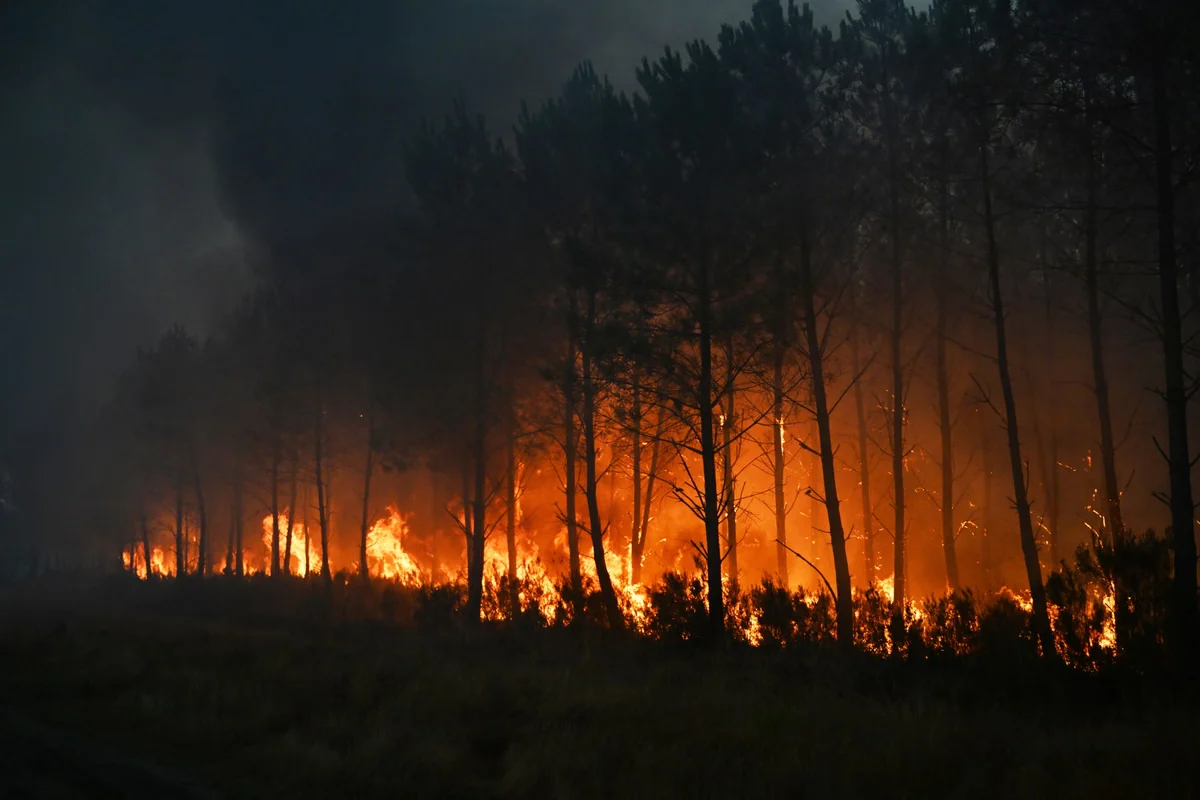








The devastating wildfires that swept through France this summer have scorched more land than ever previously recorded, displaced more residents than at any time since the second world war, and triggered what scientists believe is the nation’s most significant air quality crisis in nearly eight decades. Smoke from the massive inferno reached Limoges, a city 125 miles from the flames, carrying toxic particulate levels that exceeded the worst smog days recorded in Delhi last year.
A Landscape Engineered for Disaster
The origins of this catastrophe trace back to the 18th century, when the coastal wetlands of south-western France were so saturated that shepherds relied on stilts to traverse the landscape during winter. The transformation began in earnest with an 1857 decree from Napoleon III, which compelled landowners to drain the marshes and plant maritime pines. This project converted the region into Europe’s largest human-made forest, serving as a vital economic engine for the timber industry, which currently employs 30,000 people.
However, this monoculture has become a firefighter’s nightmare. The maritime pines, which constitute 90% of the Landes forest, are highly combustible. They contain resin that burns with the intensity of petrol, needles that create a thick layer of flammable ground cover, and pine cones that act like grenades when heated, exploding and scattering flames across firebreaks that would otherwise contain a blaze.
Historical Precedents and Modern Risks
- The 1949 blaze, ignited at a sawmill, consumed 50,000 hectares and killed 82 people, mostly volunteers, due to the lack of natural firebreaks.
- Humanity has released 1.85 trillion tonnes of planet-baking carbon since the 1857 decree, warming Europe by 2.4C and increasing the frequency of extreme heat and drought.
- A strikingly wet winter in 2026 encouraged rapid vegetation growth, which was then desiccated by relentless heatwaves, creating a massive surplus of dry fuel.
- By mid-July, after three weeks of temperatures exceeding 30C, the landscape was primed for ignition.
On 22 July, smoke emerged from the dense pine stands near Saumos, a village 20 miles west of Bordeaux. While the exact ignition source remains under investigation, the fire quickly overwhelmed local resources. The blaze engulfed hundreds of hectares within hours, eventually reaching the outskirts of La Porge, where one in ten homes was destroyed in the subsequent days. Bruno Lafon, head of the regional forest fire prevention service, noted that from an ecological and management perspective, the forest was perfectly primed for a large-scale fire, not only due to climate factors but because of the sheer volume and homogeneity of the fuel.
The Human Element and Future Outlook
French authorities have arrested nearly 500 individuals on suspicion of starting fires this summer, with approximately 70% of incidents suspected to be deliberate. While public awareness campaigns have historically reduced fire frequency since the 1980s, preventing arson remains a persistent challenge. Despite improved firefighting techniques, the scale of the threat continues to grow. At the end of July, a shift in weather conditions allowed firefighters to halt the blaze at 42,000 hectares, though crews continue to battle small flare-ups and underground “zombie fires” that may persist for months.
The human cost of such fires is profound; studies indicate that wildfire smoke contributes to 1.5 million deaths annually worldwide, ranking it among the most lethal environmental threats. Experts warn that without significant improvements in forest management and fire prevention, the total area burned in Europe is projected to increase by 39% even under optimistic pollution-reduction scenarios. As one official remarked, the men on the ground performed admirably, but the scale of the disaster likely required a greater number of aerial assets from the very beginning to contain the rapid spread across the uniform, storm-damaged tree stands. The report also notes that a city 125 miles (200km) from the flames, with more toxic dust than Delhi residents inhaled on the city’s worst day of smog last year, the smoke from France’s biggest inferno in nearly 80 years choked Limoges. The report also notes that but the conditions behind it were centuries in the making, the blaze that tore through forests outside Bordeaux in late July took just a few weeks to reforge France’s relationship with fire. The report also notes that which retain more moisture and have shady canopies that stop vegetation from drying, the dense monoculture can burn with fury when sparks catch, without the diversity offered by broad-leafed species. The report also notes that the flames killed 82 people, most of them volunteers racing to put out the fire, gorging on plentiful fuel and with few breaks to impede their spread. The report also notes that but workers contracted by Enedis, a utility company that manages France’s electricity distribution, were active in the area and reported having sparked a fire with a faulty machine, the source of ignition is under investigation. The report also notes that which has identified the machine as its leading line of inquiry, did not respond to requests for comment, the Bordeaux public prosecutor. The report also notes that enedis declined to answer specific questions because of the continuing investigation.