
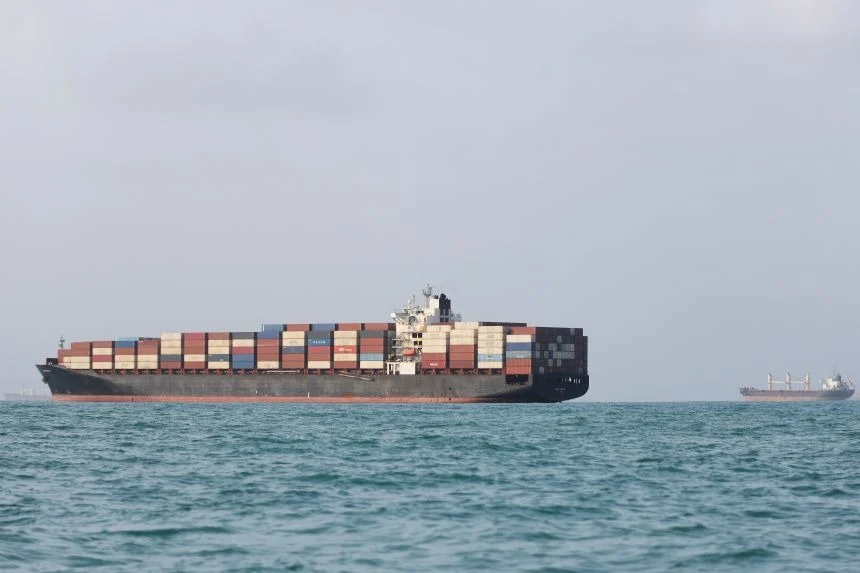








Nearly six months into the ongoing conflict between the United States and Iran, global oil reserves are rapidly depleting as maritime traffic through the Strait of Hormuz remains effectively paralyzed. While President Donald Trump has repeatedly asserted that the U.S. maintains total authority over the vital waterway, the reality on the ground appears far more contested.
“They don’t have control. We have total control. We own it, and at some point, maybe they’ll do something, and then they get blown away,” Trump told reporters on Wednesday, adding that the U.S. Navy had recently swept the strait for mines. He insisted that the current U.S. position is strong, though Iran maintains that full transit will not resume until its specific conditions are met.
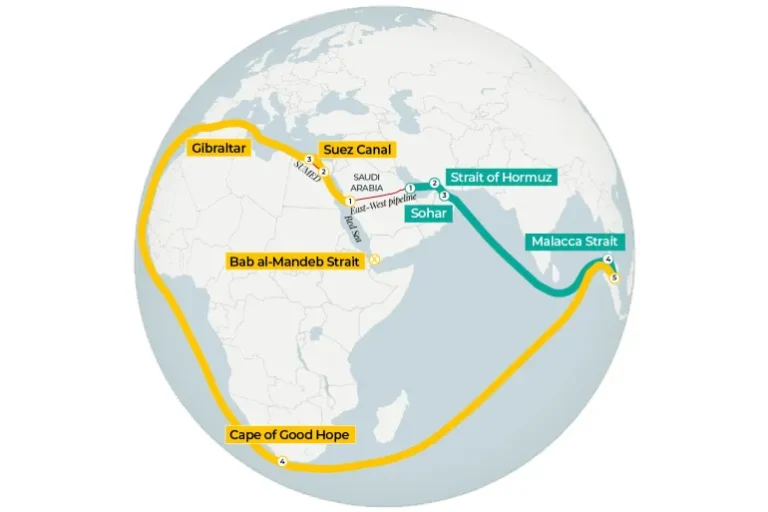
The strategic importance of the strait—which typically facilitates the movement of 20% of the world’s oil and significant natural gas supplies—cannot be overstated. While a U.S. naval blockade remains in effect to restrict Iranian maritime trade, overall traffic has plummeted. On Tuesday, only 14 vessels navigated the strait, a sharp decline from the roughly 120 ships that crossed daily prior to the hostilities.
Carl Schuster, former director of the U.S. Pacific Command’s Joint Intelligence Center, noted that shipping companies lack confidence in the U.S. military’s ability to guarantee safe passage. This skepticism is bolstered by recent violence; the Abu Dhabi National Oil Company reported that at least four of its vessels were targeted by drones and missiles in the strait last week alone. Furthermore, the United Kingdom Maritime Trade Operations (UKMTO) has warned of Iranian surveillance drones and harassment tactics. Since the conflict began, the UKMTO has recorded 54 reports of vessel damage, 13 near-misses, and three confirmed total losses.
Military analysts suggest that neither nation currently exercises absolute control. Retired Air Force Col. Cedric Leighton described the situation as a tense standoff. “Because of the proximity of US forces, because of the blockade, and because of Iran’s ability and willingness to at least threaten the use of mines and the use of small boats to harass vessels … neither side is really able to exercise full control over the strait,” Leighton explained.
Iran appears to be leveraging its geographic proximity and the resulting psychological advantage to sustain its position. Mohammad Reza Naqdi, a top adviser to the Revolutionary Guards, told PBS that Iran aims to maintain deterrence to ensure its security, with some officials suggesting the country is prepared to prolong the war until after the U.S. presidential term ends. This strategy places significant pressure on the U.S. economy, potentially influencing the upcoming November midterm elections if Congress demands a resolution that favors Tehran.
While the U.S. retains a clear military and economic edge through sanctions and frozen assets, its regional forces are described as being stretched thin. Leighton warned that U.S. leverage is ultimately tied to its staying power; any retreat or relaxation of the blockade could diminish Washington’s negotiating authority regarding the future governance of the strait. Consequently, President Trump faces a difficult dilemma: maintaining the blockade risks further economic strain and domestic pressure, while withdrawing could lead to unfavorable concessions. The report also notes that for instance, only 14 vessels crossed the strait on Tuesday – compared with the roughly 120 ships that used to cross daily before the war. The report also notes that there have been 54 reports of damage to vessels in the strait, or the Persian Gulf and the Gulf of Oman which sit either side of it, according to UKMTO, a Royal Navy-affiliated body that monitors mar, since the war began. The report also notes that “What you’re really dealing with is a standoff here,” he said. The report also notes that experts say – with ships fearing for their safety amid attacks on vessels in the strait, and the ever-looming threat of US-Iran strikes resuming, the reality is far more complicated than Trump’s proclamation of control. The report also notes that headed to non-Iranian destinations, there is still some traffic going through the Persian Gulf. The report also notes that but that traffic is still just a fraction of pre-war levels. The report also notes that and these attacks drive up insurance costs – further deterring shipping companies while the war rages on. The report also notes that there have been 54 reports of damage to vessels in the strait, or the Persian Gulf and the Gulf of Oman which sit either side of it, according to UKMTO, a Royal Navy-affiliated body that monitors maritime security and shipping in the region, since the war began.