
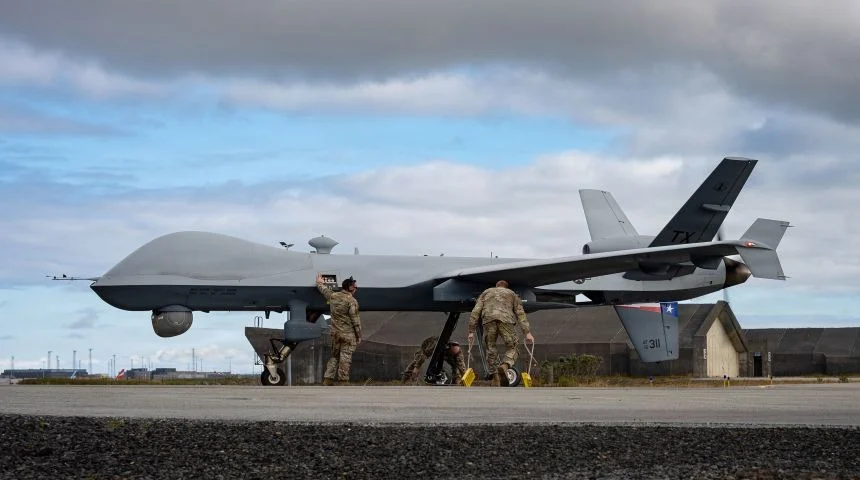







The U.S. military is preparing to reassign a significant portion of its MQ-9 Reaper drone fleet from Africa to U.S. Southern Command. Six individuals familiar with the strategic planning indicated that this movement of intelligence and strike assets is intended to support expanded counternarcotics and counterterrorism operations in South America, particularly within Ecuador. This nation recently initiated joint military actions with the United States targeting groups defined as designated terrorist organizations.
While the exact number of relocated drones remains unconfirmed, one source suggested the move involves the majority of the current U.S. Africa Command fleet. This transfer occurs as the Trump administration shifts its focus toward land-based operations alongside regional partners. Internal Pentagon discussions are simultaneously weighing whether to divert some of these assets to the Middle East, where the military has faced losses, including MQ-9s, during ongoing conflict with Iran.
This reallocation underscores the diminishing priority of the African theater in the latest National Defense Strategy, released in January by Defense Secretary Pete Hegseth, which prioritizes the defense of the U.S. homeland and the western hemisphere. Despite warnings from military leaders that groups like ISIS and al-Shabaab remain active in Africa, the shift suggests a strategic pivot. Some officials have expressed concern that withdrawing these assets could complicate continued operations against militant groups on the continent.
The Pentagon declined to comment on the deployment. This move follows reports that the Justice Department’s Office of Legal Counsel drafted a classified opinion last year justifying lethal force against a wide array of drug cartels, framing them as an imminent threat to Americans. The legal framework reportedly allows for the designation of traffickers as enemy combatants, potentially enabling lethal strikes without traditional legal oversight.
Recent months have seen increased U.S. military engagement across the Americas. During an August conference in Panama, Secretary Hegseth lauded partnerships with nations including Colombia, Honduras, Guatemala, and Jamaica, specifically citing requests for joint operations against narco-terrorists. Secretary of State Marco Rubio noted during a recent regional visit that the U.S. is fostering a new era of cooperation, following an agreement with Colombian President Abelardo de la Espriella to loan three MQ-9A Reaper drones for border monitoring and potential precision strikes.
Furthermore, the U.S. Embassy in Panama confirmed on Thursday the delivery of over $6 million in long-range drone systems designed to assist the National Aeronaval Service in border security and maritime enforcement. These efforts build upon a broader campaign that has resulted in over 230 deaths attributed to U.S. military strikes against suspected trafficking vessels in the Caribbean and eastern Pacific since the defense department began these operations several months ago.
The effectiveness of this strike campaign remains a subject of debate. Experts and law enforcement personnel have questioned whether the operations have significantly disrupted the drug trade, with some suggesting that cartels have simply adapted by establishing alternative trafficking routes. Critics have described the strike strategy as largely performative, arguing that the vessels targeted do not represent the primary conduits for major narcotics smuggling. In recent weeks, the U.S. has transitioned to interdicting vessels, removing crews, and turning them over to partner nations before scuttling the boats. Secretary Rubio explained that this shift is a necessity of conducting joint operations in sovereign territorial waters, as the U.S. must navigate the distinct legal frameworks and compliance requirements of each participating nation. The report also notes that six sources familiar with the planning told, part of a wave of military equipment that has, the US military is expected to send MQ-9 Reaper drones operating over Africa to the US command responsible for South America. The report also notes that last year, the US military moved a combination of MQ-9 drones, F-35 fighter jets, and at least one AC-130 gunship to the Caribbean as part of its campaign targeting alleged drug boats. The report also notes that some also voiced concern that transferring assets like MQ-9 drones out of the command’s hands could make those operations more challenging, while sources said that the targeting of terror groups would continue. The report also notes that the Middle East and Europe — the US military’s activity in Africa has long fallen near last in the list of military priorities, and with competing interests abroad — between the Pacific. The report also notes that last week, Secretary of State Marco Rubio said during a visit to region that the US was looking to usher in a “golden age” of the relationship with Colombia, saying the “natural state of things” is for the two to be “strong allies and partners. The report also notes that the US Embassy in Panama announced more than $6 million worth of long-range drone systems — not MQ-9s — were delivered to Panama to give that country’s National Aeronaval Service “the capability to monitor remote borders, safeguard strategic maritime corridors, and dismantle illicit drug trafficking and human smuggling networks.”, and on Thursday.