







Voting for the US midterm elections is now underway, with the first ballots cast 46 days before Election Day. As the campaign enters its final stretch, a distinct divide has emerged: Democrats currently hold a lead in national polling, while Republicans have significantly outpaced their rivals in campaign advertising expenditures.
Early voting opened in Virginia this past Friday, and residents in Idaho, Minnesota, and South Dakota have also begun casting absentee ballots in person. According to an NPR analysis of data from the tracking firm AdImpact, Republican-aligned groups and candidates have reserved more than $557 million in ad space for the nine most competitive Senate races, compared to $343 million for Democrats. Much of this funding comes from super PACs, which can raise unlimited sums provided they operate independently of official campaigns. In the last two weeks alone, Trump-aligned groups like MAGA Inc. added over $150 million to their advertising reservations.
Despite this massive cash influx, some analysts question its ultimate impact. David Levine, a law professor at the University of California, told reporters that he believes large-scale PAC spending may prove ineffective this cycle. “A late surge in advertising may not move the needle,” Levine noted, especially when messaging clashes with the daily experiences of voters. He expects a surge in early and mail-in ballots from citizens eager to express opposition to current administration policies, noting that for those voters, “those votes will already have been cast” before late-cycle ad blitzes can reach them.
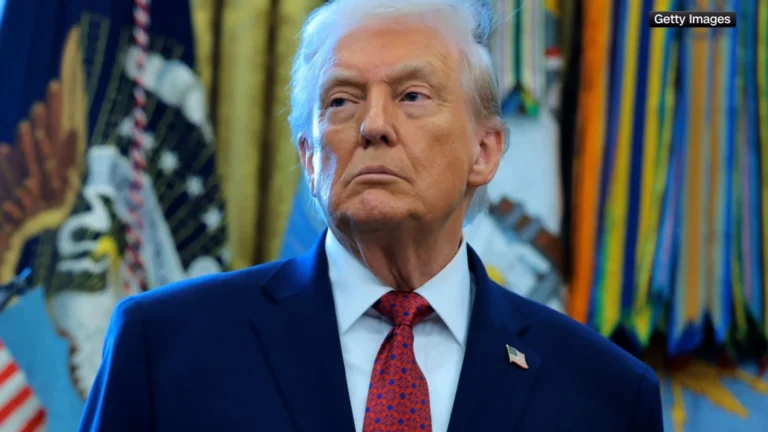
Economic concerns remain the dominant force driving voter sentiment. A recent Marquette Law School survey indicates that 54 percent of likely voters support a Democrat for Congress, while 41 percent favor a Republican. The same survey highlights that 37 percent of Americans view inflation and the cost of living as their top concerns. President Donald Trump’s approval rating sits at approximately 37 percent, with only 19 percent of respondents approving of his management of the economy. Many voters report feeling the pinch in their daily lives, with 81 percent noting higher grocery bills and 80 percent reporting increased fuel costs since the war with Iran began on February 28.
The battle for the 100-seat Senate is particularly tight. Republicans currently hold 53 seats, while Democrats—including two independents who caucus with them—hold 47. Democrats need a net gain of four seats to secure a majority, though a 50-50 tie would be broken in favor of Republicans by Vice President JD Vance. The Cook Political Report has identified seven toss-up races: Alaska, Iowa, Maine, Michigan, New Hampshire, Ohio, and Texas, five of which are currently held by Republicans. In New Hampshire, the contest between Democratic Representative Chris Pappas and former senator John Sununu was recently upgraded to a toss-up.
Control of the House of Representatives is a shorter path for Democrats, who face a current gap of 218 Republicans to 214 Democrats, with one independent and two vacancies. However, analysts point out that mid-decade redistricting has altered the landscape. New maps in states like Texas, California, Ohio, and Florida have relocated roughly 35 million people, providing Republicans with a structural edge estimated at two to six seats compared to the 2024 map. Consequently, Democrats require a larger margin in the popular vote to secure a majority.
The electoral outlook could still shift based on inflation data, developments in the Iran war, and turnout patterns among independents, Hispanics, and younger voters. Furthermore, a Supreme Court ruling from June, which permitted parties to spend more freely in coordination with their candidates, could influence the final weeks. David N. Gibbs, a history professor at the University of Arizona, anticipates the traditional midterm penalty for the party in the White House, suggesting that Republicans “will almost certainly continue this trend and will lose Congressional seats.” He added that if the economy remains in a poor state, the losses for the party in power could exceed what current polls suggest. The report also notes that ruling 6-3 that limits on how much a party can spend in coordination with its candidates violate the First Amendment, the US Supreme Court also opened more room for party spending in June. The report also notes that the reason sits in the checkout line. The report also notes that a Republican, against Democratic state Representative James Talarico, texas pits Attorney General Ken Paxton. The report also notes that experts say redistricting does not change national generic-ballot polls.