

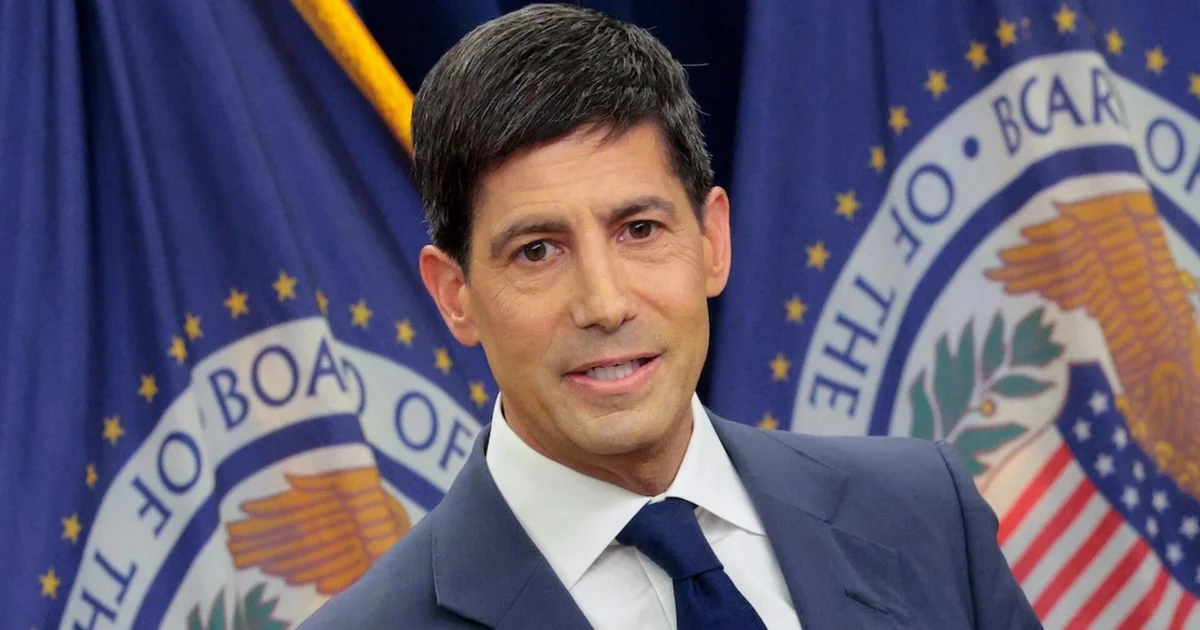







In a unanimous decision on Wednesday, the Federal Reserve implemented its first interest rate hike since 2023. Officials increased the federal funds rate by 0.25 percentage points, lifting the target range to between 3.75% and 4%, the highest level observed since December 2025. This policy shift represents a direct response to resurgent inflation, which officials aim to steer back toward their 2% annual objective.
The move marks a significant departure from earlier expectations. At the start of 2026, many economists anticipated that the central bank would lower rates throughout the year as price pressures cooled. However, the ongoing conflict involving Iran has severely disrupted global energy supplies, driving up fuel costs—such as diesel, which hit a record $6.31 per gallon on Wednesday—and creating broad economic instability.
“Inflation remains elevated. Today’s policy action will support a timelier return to the Committee’s 2 percent goal,” the Federal Reserve stated. While the hike was expected by market analysts, the central bank’s latest projections suggest that members are prepared to authorize additional increases before the end of the year if current trends persist.
The impact of this decision extends to the average American consumer. Higher benchmark rates typically filter through the financial system, leading to increased borrowing costs for personal loans, credit cards, and auto financing. Heather Boushey, a professor at the University of Pennsylvania’s Kleinman Center for Energy Policy, noted that consumer sentiment has fallen 13% compared to last year. She cautioned that the current policy shift will make borrowing significantly more difficult for families already strained by rising costs for essentials like gas and food.
Despite the tightening, economists do not anticipate a return to the aggressive stance seen in 2022. During that period, the Fed raised rates 11 times as inflation surged to a 40-year peak of 9.1%, pushing the benchmark from near-zero to a range of 5.25% to 5.5% by July 2023. Current projections suggest a more measured approach, though the path forward remains highly dependent on incoming data regarding energy prices and the Consumer Price Index, which currently sits at 3.4%.
Financial experts emphasize that households should brace for a prolonged period of elevated interest rates. Nigel Green, CEO of the deVere Group, advised that individuals should treat this single meeting as a milestone in a longer process rather than an isolated event. As markets adjust, attention is now shifting toward the upcoming December outlook and whether inflation can be effectively contained without triggering a deeper economic downturn. The report also notes that the Fed also signaled that its rate-setting committee expects to again raise rates later this year, in a set of quarterly projections. The report also notes that instead, monetary policymakers are brandishing their most potent weapon to curb prices. The report also notes that fed Chairman Kevin Warsh will answer questions about the central bank’s latest policy statement in a news conference at 2:30 p.m. The report also notes that pushing up fuel prices in the U.S. and driving up costs across the broader economy, but escalating conflict in the Middle East has disrupted crude oil production and supplies. The report also notes that a 71% jump from a year ago, according to AAA, the average price of diesel reached a record $6.31 per gallon on Wednesday. The report also notes that up from $4.06 a month ago and $2.98 just before the Iran war started in February, gasoline now averages $4.37 a gallon. The report also notes that higher interest rates can tamp down inflation because consumers pare spending and businesses reduce investment. The report also notes that that cools economic growth and tempers price increases as demand slows.