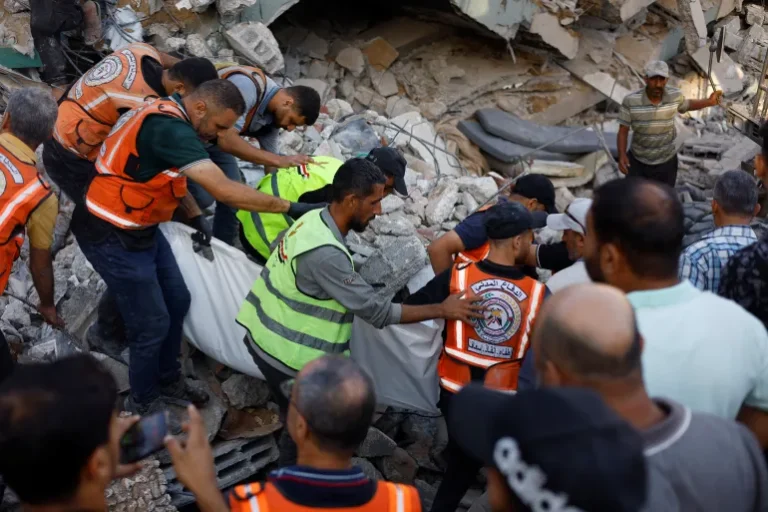






A catastrophic building collapse in western Gaza City has claimed at least 21 lives, highlighting the mounting risks for displaced civilians forced to reside in severely damaged structures. The incident at the al-Saada building occurred during the early hours of Wednesday, trapping dozens of residents beneath layers of concrete and debris.
Hayat al-Ajlah, a 37-year-old resident who survived the collapse, recounted being jolted awake by a cracking sound. She described a sensation of the ground shifting before the structure gave way. Trapped in the dark, she heard the fading voices of her 74-year-old father and 12-year-old son, Yasser, amid the chaos. Hayat eventually escaped, though she reported the loss of nine extended family members, including her parents, four siblings, and three nieces and nephews.
Her four children survived the incident, although her eight-year-old daughter, Dalia, was hospitalized with a severe head injury. The family had previously been displaced from Shujayea to Deir el-Balah before returning to Gaza City two months ago. Finding no other housing options, they had occupied an empty third-floor apartment in the damaged building, believing it to be a necessary escape from the harsh conditions of tent living.
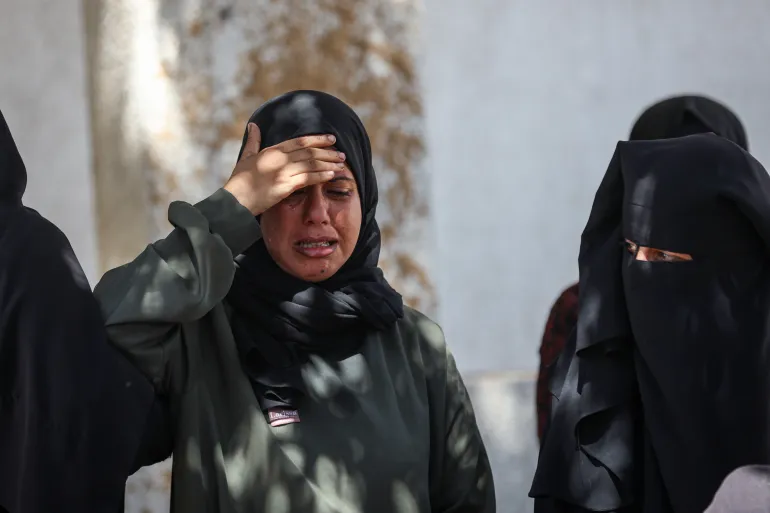
The tragedy hit the family particularly hard as they had gathered to prepare for an upcoming wedding. At al-Shifa Hospital, survivors and relatives gathered in grief, including Umm Mahmoud Saada, who lost her 38-year-old son, Mahmoud, along with his wife and six children. Like others, Mahmoud had moved into the structure as a temporary measure after struggling to survive in a street-side tent.
Rescue operations were significantly hampered by a severe lack of heavy machinery and essential tools, a consequence of ongoing restrictions on imports into the region. Palestinian Civil Defence teams worked for hours with basic equipment, struggling to navigate the heavy rubble that pinned victims underneath the pancaked floors.
The collapse has intensified local anxieties regarding structural integrity across the territory. Mansour Bakroun, a 56-year-old nearby resident, noted that the building had shown clear signs of instability since the war began, with masonry and stones frequently falling from its exterior. He recalled rushing to assist neighbors as the dust settled, only to confront the reality of living in a zone where safe housing has become virtually non-existent.
Local observers like Huzaifa Mohammed expressed profound frustration with the cycle of danger. He described the daily terror of witnessing crumbling walls and the recurring question of where residents are expected to go. His account emphasized that many families have spent years navigating these dangers, often left with no recourse other than to endure conditions that many fear will lead to further fatalities.
The disaster serves as a grim reminder of the infrastructure crisis in Gaza, where many buildings remain structurally compromised after months of bombardment. As residents continue to seek shelter, questions remain regarding how many more vulnerable, damaged buildings are being inhabited out of sheer necessity, with few alternatives available to the displaced population. The report also notes that gaza City, Gaza Strip – Leaning heavily on the arm of a relative, Hayat al-Ajlah moves slowly between the hospital beds, scanning the faces of the injured. The report also notes that “I woke up to check my phone,” the 37-year-old Hayat said. “Suddenly, I heard a sound like something cracking. The report also notes that the building came down, killing at least 21 Palestinians, moments later. The report also notes that “My father and mother’s voices disappeared because they were in the part where the floors collapsed on top of each other,” she said through tears. “We were closer to the side of the building that tilted, so we survived by a miracle.”. The report also notes that “My mother was afraid of the building, and my father was planning to find another place,” she said. The report also notes that “He had a tent in the middle of the street and was exhausted [living in it], and his financial situation was very difficult,” his mother said. “A relative showed him this place, so he settled there temporarily.