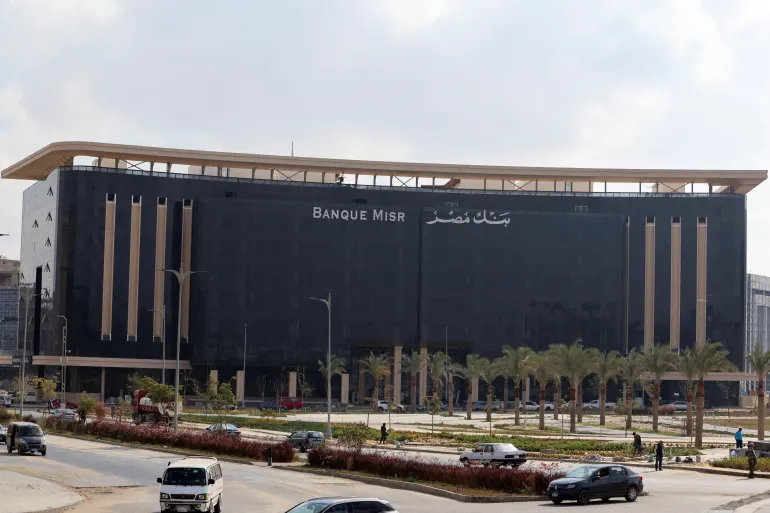








The United States government has announced plans to cut off the United Arab Emirates (UAE) operations of Banque Misr from the American financial system. This regulatory action follows accusations that the Egyptian bank’s UAE branches have been conducting business with the Iranian government, effectively acting as a conduit for prohibited financial activity.
US Secretary of the Treasury Scott Bessent stated on Friday that the move is part of a broader effort to dismantle Tehran’s economic lifelines. “We also warned that Iran’s enablers cannot continue to enjoy access to the US dollar and the global financial system. Banque Misr UAE decided to find out the hard way, and today, we are taking the first step in holding it accountable for its continued, egregious support of the Iranian regime,” Bessent said.
The Treasury’s Financial Crimes Enforcement Network (FinCEN) proposed a rule that would revoke the UAE branch’s correspondent banking access to US financial institutions. According to the Treasury, Banque Misr UAE serves as a critical node for Iran to access US dollars. Estimates suggest that between January 2024 and June 2026, the bank processed approximately $1.8 billion for 103 companies believed to be linked to Iranian shadow banking networks.
These networks allegedly provide Iran with essential access to US dollar correspondent banking relationships, allowing the country to generate revenue abroad. The Treasury further alleged that the bank’s client list includes front companies utilized by the Iranian Ministry of Defence and the Islamic Revolutionary Guard Corps (IRGC) to evade sanctions and launder money on behalf of Supreme Leader Mojtaba Khamenei.
The proposed sanctions are expected to take effect 30 days following a public comment period. Officials emphasized that the measure is strictly limited to the UAE branches of Banque Misr and will not impact the bank’s other international operations or the broader Egyptian banking sector.
In response, Banque Misr issued a statement on Saturday confirming it is reviewing the Treasury’s notice. The bank noted that the regulatory measures are subject to an official period for receiving and studying comments before a final decision is reached. The institution stated it is handling the data and estimates provided by the US with the utmost seriousness and intends to contact the Treasury for further clarification. Until then, the UAE branch continues to operate normally.
The Central Bank of Egypt confirmed it is coordinating with the Egyptian Ministry of Foreign Affairs and US authorities regarding the matter. The Central Bank clarified that the restriction applies only to USD transactions with correspondent banks and does not affect the wider banking system in Egypt.
Meanwhile, UAE banking authorities have initiated their own response. The UAE central bank announced on Sunday that it is launching a special, urgent examination of Banque Misr’s local branches, which will include an in-depth forensic lookback. The regulator emphasized its expectation that licensed banks must protect the UAE’s financial system from reputational risks and adhere to international regulations.
This action is part of a wider US initiative, dubbed Operation Economic Outcast, which has intensified during the current deadlock in truce negotiations. Last week, the US Treasury also sanctioned nearly 60 individuals and entities accused of helping Iran procure weapons, conduct cyber operations, and generate oil revenue.
Additional measures were announced alongside the Banque Misr case, including sanctions against Reza Mohammad Taeedi, the general manager of the Dubai branch of Iran’s Bank Melli. The Treasury accused Bank Melli of facilitating billions of dollars in transactions for the IRGC Qods Force. Furthermore, the US sanctioned the Hong Kong-based Kameng Trading Limited for allegedly assisting Iranian entities in accessing the US financial system.
Iranian officials have dismissed the latest sanctions. Economy Minister Ali Madanizadeh stated that the measures would fail, while Iranian government spokeswoman Fatemeh Mohajerani noted that President Masoud Pezeshkian’s administration is prepared to navigate these developments. An IRGC spokesperson, Sardar Mohebi, characterized the US economic pressure as evidence of a defeat on the battlefield.
Ali Akbar Dareini, a researcher at the Centre for Strategic Studies in Tehran, suggested that Iran has become highly adept at circumventing such restrictions. He argued that the US strategy is based on a miscalculation and that the sanctions are unlikely to achieve their goal of causing internal economic collapse or civil unrest. The report also notes that on Monday August 24, the United States announced sanctions on Iran and various global entities doing business with the country, in what officials called an “economic D-Day” and officially du, ahead of Friday’s sanctions. The report also notes that at least 60 entities across the Middle East, Asia and Europe have been targeted in the latest sanctions as part of the economic pressure campaign that could further disrupt energy markets and rattle the global economy. The report also notes that “The United States is returning to economic pressure because military force has failed to deliver the quick victory it expected,” Negar Mortazavi, senior fellow at the US-based Center for International Policy, told Al Ja. The report also notes that who else has the US taken action against. The report also notes that the IRGC, to move funds inside and outside of Iran, it has allowed the IRGC-QF and its parent organisation. The report also notes that analysts say, have pushed the Trump administration to try economic sanctions, but these are unlikely to compel Iran into meeting the demands, the long-term implications of the war.