








On the afternoon of 15 August 2021, the Taliban returned to power in Kabul, fundamentally altering the lives of millions. For Shallah, then 16, the news arrived while watching Tolo news at home, prompting her to run into the garden in tears. Her younger sister, Fatimah, then 11, learned of the takeover from her aunt, while their eldest sister, Maahi, then 22, felt the immediate gravity of the situation while at work, her hands trembling as she read reports on social media.
At the time, the three sisters were living in Qom, Iran, having moved there six years earlier to escape violence in Afghanistan. Despite their precarious status as undocumented residents, the family had hoped for a stable life. The sisters initially clung to the possibility that the Taliban might have evolved since the 1990s, when the group enforced a regime of gender apartheid. However, these hopes quickly dissipated as the Taliban began systematically stripping women of their rights, barring them from public life, education, and most employment.
The family’s return to Afghanistan was involuntary. Following a surge in anti-Afghan sentiment in Iran, where authorities accused Afghans of complicity in attacks against the country, the government intensified deportations. In May 2026, the sisters’ father was detained while working; when the mother and Maahi went to the police station to locate him, they were also arrested, leading to the entire family’s deportation.
This mass movement of people has been significant, with over 1 million individuals forced back into Taliban-controlled territory over the past year, including approximately 400,000 from Iran alone. By the end of last year, an estimated 1.4 million undocumented Afghans were living in Iran, alongside 3 million others with legal status or visas.
The sisters’ history with education has been fraught with challenges. Born in Iran, they were taken to Afghanistan in 2010 because Iran restricted undocumented children from schooling beyond primary levels. By 2017, the family returned to Iran to escape the worsening war. While Iranian authorities had briefly relaxed rules to allow undocumented children to attend school, Maahi was excluded due to an age limit, forcing her into the workforce to support her family.
Fatimah and Shallah experienced significant discrimination while attending Iranian schools. Fatimah reported that Afghan students were consistently graded lower than their Iranian peers and faced constant threats of expulsion. Shallah, despite being a top student, faced harassment and was once denied a school prize solely because of her Afghan nationality.
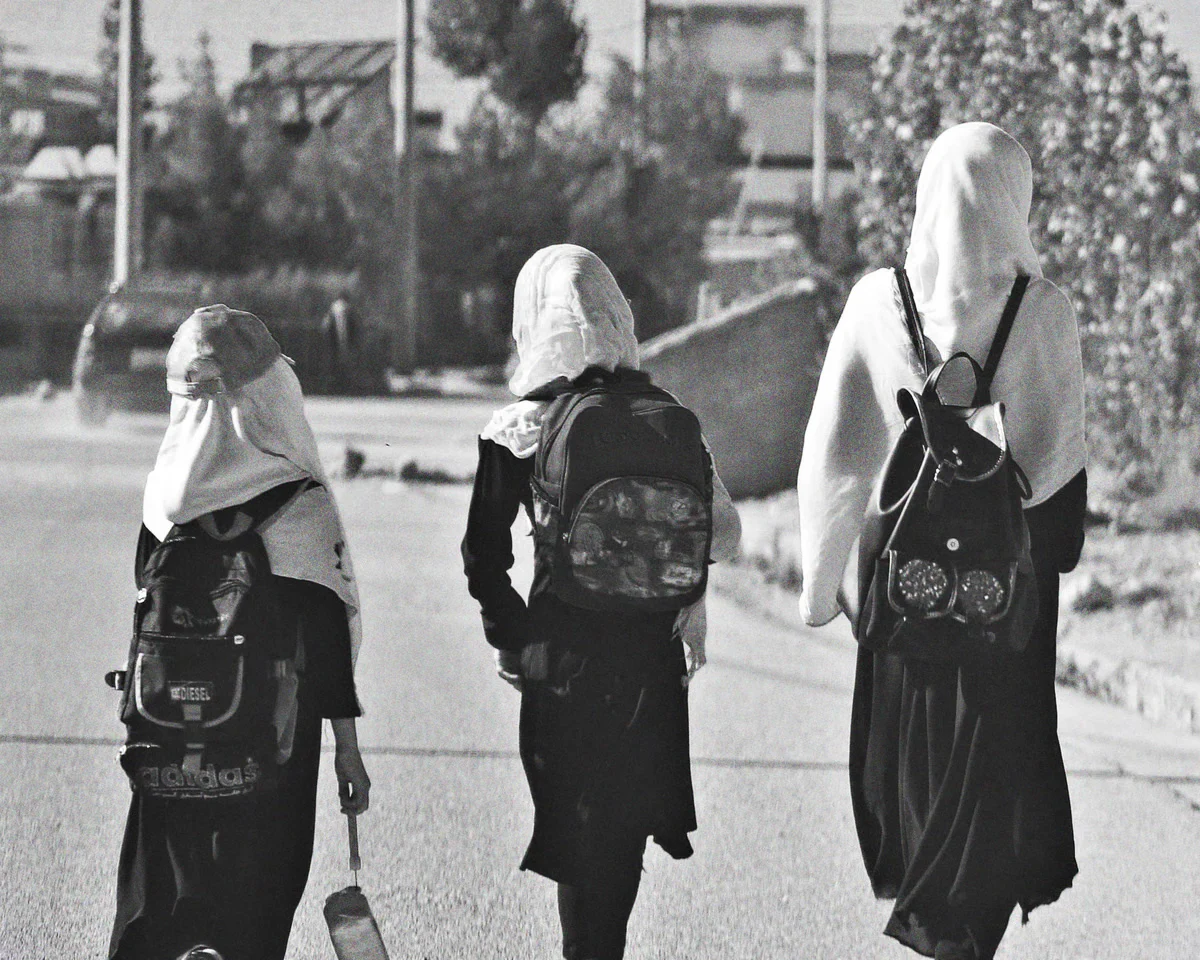
In 2025, the educational edict expired, and Fatimah was barred from continuing her studies. Now living in Herat, the sisters rarely leave their home due to the presence of the Taliban’s morality police, who strictly enforce dress codes. Tensions in the region remain high; in June, security forces killed at least two people, including a young boy, during protests sparked by the arrest of women for alleged dress code violations.
Despite the official ban on female education, the sisters are using their limited savings to pay 2,500 afghani (£28) per month for private, unofficial classes. While these sessions do not offer formal diplomas, they provide the sisters with a sense of purpose.
Maahi is currently studying German, holding onto the hope that she might one day finish her education and emigrate. Reflecting on her determination, she stated, “I am not one to wait for what the future will bring me. I am one to make my future by chasing opportunities.” Meanwhile, Fatimah has attempted to seek assistance from Iranian authorities to return to school by submitting her certificates, but she has received no response. The report also notes that her elder sister, Maahi*, then 22, was well aware of the consequences and remembers her hands shaking at work as she read the news on her phone, on Facebook pages of Afghan news. The report also notes that maybe things would not be so bad for women and girls under the Taliban, at first the older sisters tried to convince themselves that if the worst happened. The report also notes that perhaps, they thought, these Taliban were different from the ones of the late 1990s, who had implemented a systematic denial of women’s rights that gave rise to the concept of gender apartheid. The report also notes that maahi remembers the strange feelings she had – a mix of happiness to come back home but fearful of leaving the only life she had known until then. The report also notes that she did not yet understand the war between the US-led coalition and the Taliban, at 11 years old. The report also notes that by 2017, the ongoing war and attacks on civilians convinced her parents to leave again for Iran, to keep their children safe. The report also notes that who has since been assassinated, and Farahnaz Forotan, who now lives in exile, she admired two Afghan journalists: Yama Siawash. The report also notes that until she realised that the authorities had put an age limit on this: she was 21 by then, as it had taken her two years to get the educational papers allowing her to study, but only Afghans below the age of 20 could study in Iranian schools, maahi was overjoyed.