






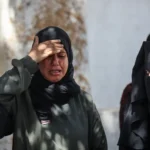
A group of migrants, many hailing from Latin American nations like Brazil, Colombia, Guatemala, Honduras, and Venezuela, are currently residing in a hotel in a remote area of Liberia. None of these individuals are Liberian citizens, and many have no connection to the African continent at all. These individuals were transported to the West African nation last month by U.S. immigration officials as part of an escalating strategy in the Trump administration’s immigration enforcement efforts, which involves sending deportees to countries where they lack any existing ties.
For those caught in this process, the situation is one of profound isolation. They find themselves unable to return to the United States—where many have families—while fearing persecution if they were to return to their home countries. Elvis Rodriguez Venturas, a Honduran native, expressed his distress to interviewers, noting that he feels as though he is on the other side of the world. Rodriguez Venturas, who worked in construction in Texas, has four children, two of whom are U.S. citizens. His wife remains in the U.S., and he is frequently asked by his children when he will return.
The situation is complicated by the fact that many of these deportees had previously secured legal protections in U.S. immigration courts. These protections were intended to block their removal to their home countries due to valid concerns regarding potential torture or persecution. However, because they lack permanent legal status, they have been targeted for removal to third countries under the current administration’s zero-tolerance approach.
Deportees reported that they received no warning from U.S. Immigration and Customs Enforcement regarding their destination, nor were they offered an opportunity to contest being sent to West Africa. Colombian immigrant Arin Garcia Yepes noted that he had never even heard of the country before his arrival, while Brazilian national Paola Ferreira Dos Santos, aged 21, only realized where she had been taken when her flight touched down in Monrovia on August 20.
While administration officials often characterize their deportation operations as targeting individuals with significant criminal records, most of the people interviewed for this report lacked criminal convictions beyond immigration violations, such as unauthorized entry. In response to inquiries, the Department of Homeland Security stated it is utilizing all lawful options to conduct large-scale deportations, adding that those in the U.S. illegally have the option to self-deport in exchange for a $3,000 stipend.
The State Department has declined to provide specific details regarding these third-country deportation agreements, citing a policy of not commenting on diplomatic communications. Liberia, a nation founded in the 19th century by freed American slaves, borders the North Atlantic and has a population exceeding 5 million. The Liberian government confirmed in August that it had reached an agreement to accept as many as 1,200 deportees from the U.S., framing the arrangement as a humanitarian effort.
This deal makes Liberia one of more than 30 nations globally that have agreed to accept third-country deportations under pressure from Washington. Other agreements have reportedly been brokered with nations facing severe political or economic instability, including South Sudan and the Central African Republic. Although the Liberian government has stated that these individuals may pursue asylum, the deportees expressed little interest in permanent resettlement, citing cultural barriers, economic hardship, and the difficulty of obtaining work visas.
Unlike some other nations involved in these deals, Liberia has not placed these individuals in detention. While they are advised to remain near their hotel for safety reasons, they are technically free to move around. The International Organization for Migration has provided basic support to the group. Nevertheless, many feel trapped and are weighing the dangerous prospect of returning to their home nations or hoping another country might offer them entry.
Venezuelan deportee Carlos Tellez Sanchez, who previously worked in food delivery and car sales in the Dallas area, remains in limbo while his wife and American-born child stay in Texas. For him, returning to Venezuela is not a viable option, as he fears he would be in immediate danger if he were to go back to his country of origin. The report also notes that becoming the first U.S. television network to speak to them in person, tracked down the deportees in Liberia. The report also notes that and they said, ‘Welcome to Liberia, i was the first to get off the plane. The report also notes that you’re in Africa,'” the 21-year-old said in Portuguese. The report also notes that just as President Trump promised,” the department added, the Trump Administration is utilizing all lawful options to carry out the largest deportation operation in history. The report also notes that its capital, Monrovia, is named after U.S. The report also notes that 20 flight that brought 15 non-Liberians to Liberia. The report also notes that haitham Moussa, Jane Greely and Sam Brolan contributed reporting. The report also notes that alligator Alcatraz had cramped conditions, “small metal enclosures,” watchdog finds.