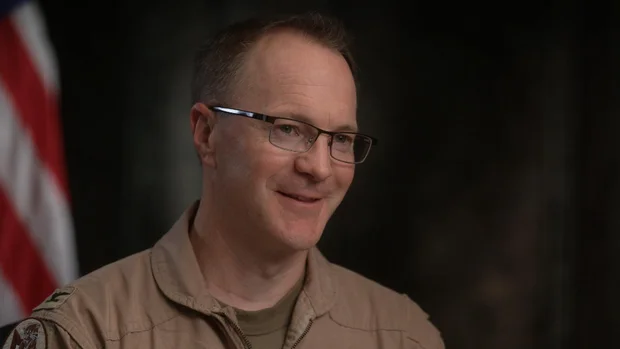





A U.S. Air Force weapons-systems officer, known by the call sign Bravo, has shared his harrowing account of surviving behind enemy lines after his F-15E was brought down over Iran this past April. The officer, serving as the backseater on a mission designated Dude 44, faced a desperate situation when an Iranian shoulder-fired missile struck their aircraft, effectively destroying his parachute.
Recounting the terrifying descent, Bravo described free-falling toward the ground at speeds between 70 and 100 mph. At that critical moment, he looked up to find his parachute canopy shredded, prompting him to offer a final prayer: “Lord, your will be done. But if I’m getting through this, I need help.” He ultimately survived the impact, which he considers a modern-day miracle that prevented any catastrophic injuries despite causing a broken back, arm, and shoulder.
The mission that night, which aimed to strike industrial facilities linked to Iran’s drone and missile programs, took place near a mountainous region south of Isfahan. Adm. Brad Cooper, commander of U.S. Central Command, noted that while the U.S. maintained air superiority, the region was far from secure. The F-15E crew—Bravo and his pilot, referred to as Alpha—attempted to salvage the aircraft after the hit, but were ultimately forced to eject.
Alpha was rescued during a high-risk daytime raid just six hours after the crash. Bravo, however, landed approximately five miles away and remained undiscovered by Iranian forces for two days. Despite his severe injuries, he climbed a 7,000-foot ridgeline to remain hidden in the high desert valleys, where he endured freezing conditions with minimal supplies. During this time, he communicated his status to the military, famously sending the message “God is good” once he was able to collect his thoughts.
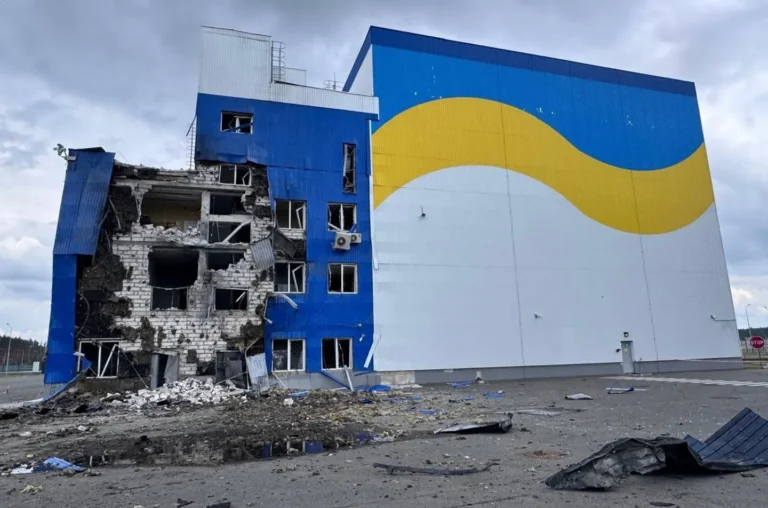
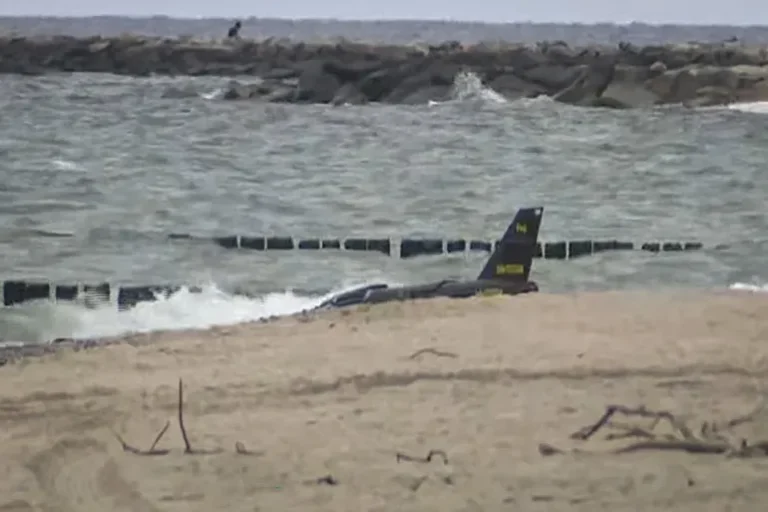
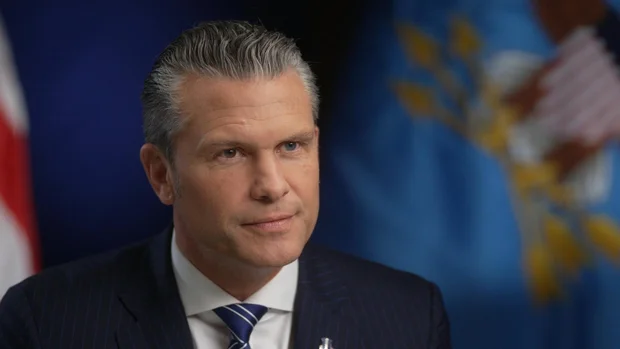
The U.S. government mobilized an extensive rescue operation once the loss was confirmed. Secretary of Defense Pete Hegseth recalled being awakened in the middle of the night to coordinate the response, declaring that the U.S. would go to any lengths to recover the missing crew. Evidence of the wreckage, shared by local media and online videos, confirmed that Iranian ground forces were actively hunting the airmen, creating a dangerous race against time for rescue teams.
The mission to extract Bravo eventually required the deployment of more than 90 elite U.S. service members, marking the first time in 46 years that American forces operated on the ground in Iran. To facilitate the rescue, the CIA launched a complex deception campaign to mislead enemy forces, while American bombers and drones targeted nearby Iranian Revolutionary Guard positions. The extraction team landed on a makeshift desert airstrip, utilizing “Little Bird” helicopters to infiltrate the area.
As the operation reached its conclusion, U.S. forces were compelled to destroy two marooned aircraft—valued at roughly $100 million each—along with the rescue helicopters to ensure sensitive technology did not fall into Iranian hands. For Bravo, the sight of his rescuers remains one of the greatest moments of his life. He credits the successful recovery to the remarkable teamwork, tactical prowess, and leadership of the Combat Search and Rescue specialists who executed the mission, fulfilling the military’s solemn promise to leave no man behind.
Admiral Cooper confirmed that the U.S. military has conducted approximately 13,000 missions during the conflict with Iran. General Dan Caine, chairman of the Joint Chiefs of Staff, emphasized that the decision to commit such a significant force was driven by a commitment to the crew, noting that the military would have sent even more resources if necessary to ensure Bravo’s safe return. While Alpha has since returned to flight status, the operation stands as a major historical example of American military resolve in contested territory. The report also notes that and what went wrong, dude 44’s mission in Iran. The report also notes that close to where Iran had been keeping much of its highly enriched nuclear material, dude 44’s mission the night of April 2 was near a mountainous area south of the city of Isfahan. The report also notes that a workhorse of American air combat operations for decades, was brought down by a shoulder-fired missile, which can cost around $100,000, the $30 million two-seat F-15E. The report also notes that a moment Bravo describes as “getting hit by a freight train,” Bravo said he and Alpha did everything they could to try to save the fighter jet, when the missile hit. The report also notes that so the pair ejected, it quickly became clear the plane couldn’t be saved. The report also notes that he declined 60 Minutes’ request for an interview due to security considerations. The report also notes that alpha expressed his gratitude for the rescue of both himself and Bravo in a statement provided to 60 Minutes. The report also notes that i am still in awe of the professionalism and tactical prowess of the Combat Search and Rescue specialists and the Joint Force who executed the rescue missions of me and DUDE 44 Bravo, both those in theater and behind the scenes,” Alpha said in a statement. “Words cannot capture how thankful my family and I are and how proud I am to serve alongside each and every one of them.