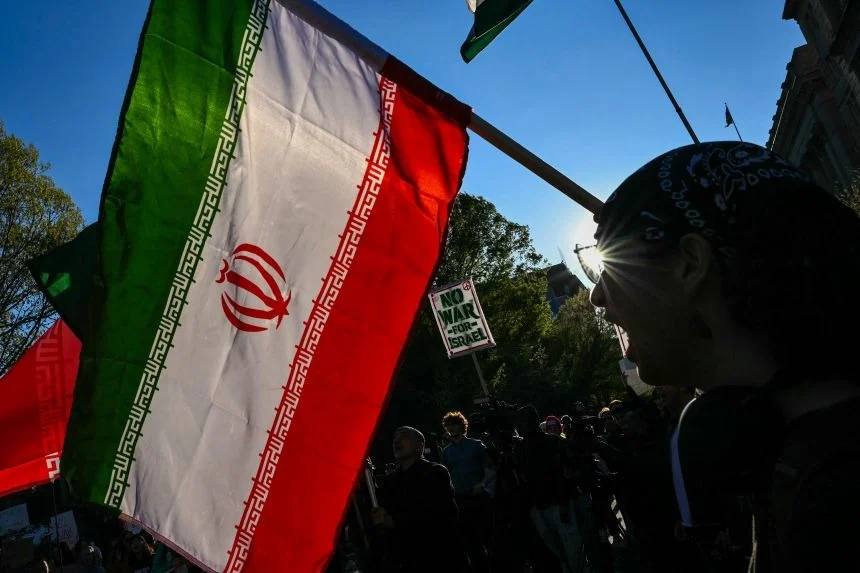





Six months have passed since the United States and Israel initiated military strikes against Iran, a conflict that has left the vast Iranian American diaspora deeply fractured. The community, which spans generations ranging from those who fled the 1979 revolution to more recent arrivals escaping domestic crackdowns, remains split over the war’s origins and its ultimate outcomes.
For many anti-regime activists, the initial military escalation was a welcome development. Arezo Rashidian, a Los Angeles-based monarchist activist aligned with Crown Prince Reza Pahlavi, previously expressed hope that targeted attacks on bases would successfully dismantle the Islamic Republic. However, half a year later, that optimism has largely soured into frustration. “We really wanted regime change, but it’s been six months now, and it didn’t get to that point,” Rashidian noted, highlighting a growing sense of uncertainty among those who once championed intervention.
Reports from inside Iran suggest a darkening atmosphere. Rashidian stated that her contacts and family members describe a renewed climate of fear, with the secret police mobilizing as the intensity of the fighting has subsided. She noted that citizens are increasingly hesitant to discuss politics or their participation in January’s protests due to fears of surveillance and retaliation. These concerns coincide with reports of a renewed focus on enforcing mandatory hijab laws, alongside allegations of increased arrests and security crackdowns.
Despite the lack of the desired regime change, some activists remain committed to a strategy of economic pressure. Rashidian continues to support rigorous sanctions, hoping they will further tighten the grip on the government. While the administration recently threatened additional measures to target networks used by Iran to evade existing restrictions, many were left underwhelmed by the decision to focus on enforcement rather than implementing the anticipated “economic D-Day” strategy. Iran has responded to these pressures with warnings of potential retaliation, including threats to expand strikes on regional oil producers and European nations, or even the weaponization of its nuclear program.
The conflict has also created significant social friction within the diaspora. Aria Rostami, a 38-year-old museum professional in New York, described feeling alienated by the enthusiasm some community members showed for the war. “I was really disheartened by the community when they were on the streets cheering the war,” he said. For Rostami, the experience has fundamentally altered his perception of fellow Iranian Americans, replacing a sense of shared identity with suspicion and uncertainty regarding their political beliefs.
Rostami, who grew up in Southern California, rejects the “Iranian exceptionalism” argument often used by interventionists—the idea that Iran is uniquely positioned to benefit from military action. Drawing parallels to the last two decades of conflict in Iraq, Afghanistan, and Libya, he remains highly critical of the interventionist stance. “Why would you want the United States to be involved in a war or have any military action in Iran, given what we’ve seen in the last 20 years?” he asked. While he acknowledges the pain felt by those who supported the war, he believes they were ultimately manipulated by false expectations. “People are being lied to, manipulated, played for a fool,” he stated, while noting that the divide reflects deep-seated trauma and conflicting visions for the future of their homeland. The report also notes that the physical, financial and emotional impacts of the war have reverberated from Tehran across the world, including to the vast Iranian community in the US, which has been divided with varying opinions on how the war started and what is has – or hasn’t – accomplished, six months since the United States and Israel launched the first strikes on Iran. The report also notes that those experiences helped shape sharply different reactions to the conflict. The report also notes that others feared the human cost of military escalation and warned that civilian suffering and regional instability could outweigh any political gains. The report also notes that but competing experiences of exile, repression and what many believed the future of Iran should look like, the divide reflects not only differing political views. The report also notes that with videos showing women being publicly admonished over their clothing and businesses facing scrutiny for alleged dress-code violations, her comments come as has reported on a renewed focus on enforcing Iran’s mandatory hijab laws. The report also notes that executions and broader security crackdowns – claims cannot independently verify, rashidian also described accounts of arrests. The report also notes that this week, Washington threatened further measures, which Treasury Secretary Scott Bessent said will target a complex network built by Iran that allows its entities to evade the wide-ranging sanctions. The report also notes that the conflict, Rostami said, exposed divisions within the diaspora that have left him questioning assumptions he once took for granted.