
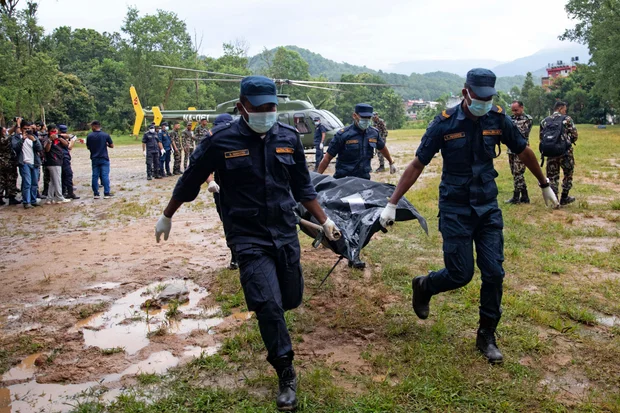



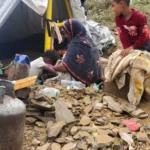





Emergency rescue operations are underway in Nepal and Tibet as authorities scramble to locate survivors following a series of catastrophic flash floods and landslides. The disaster, which has claimed at least 579 lives, has left approximately 2,500 people missing, according to official data. While more than 3,700 individuals have been rescued in Nepal alone, the search continues under high-alert conditions as responders navigate treacherous, mud-covered terrain.
The scale of the crisis remains immense, with the Red Cross estimating that roughly 90,000 people have been impacted by the deluge. The flooding is believed to have been triggered by the collapse of a rocky ledge and a significant portion of a glacier in the high Himalayas. This sudden failure sent massive torrents of water and debris rushing into the valleys below, devastating infrastructure in both Nepal and the Tibetan border region.
Security forces and relief workers remain on high alert following reports that a dam on the Tibetan side of the border was overflowing. Although Chinese state broadcaster CCTV indicated that the risk from this barrier lake is considered manageable, officials are not taking chances. Police spokesperson Abi Narayan Kafle confirmed that rescue efforts have not stopped, even as teams face the daunting task of clearing deep, dark brown mud from affected sites.
One of the most critical search areas is the Upper Trishuli-1 Hydropower Project in Rasuwa, where Nepali Army rescuers are working to reach people trapped inside a hydropower tunnel. Brig. Gen. Raja Ram Basnet noted that the operation is extremely complicated because the entry and exit points of the tunnel have been completely buried by mud and debris. The primary focus remains on locating and extracting any survivors who may still be inside.
The disaster has drawn international concern, with the U.S. State Department confirming that 90 Americans are among the missing. Five U.S. citizens have been rescued so far. The U.S. Embassy in Nepal is coordinating with the local government to deliver essential supplies, including food, blankets, mosquito nets, and insulating materials provided through partners like Catholic Relief Services. President Trump has expressed his condolences, describing the destruction of sturdy buildings as akin to toothpicks being wiped away, and has offered full U.S. support to Nepalese leaders.
Among the missing are members of a pilgrimage group organized by the Isha Foundation, which was traveling to the sacred site of Mount Kailash in Tibet. Leslie Crespi, a liaison for the foundation, reported that approximately 80 pilgrims from 19 countries, including 22 Americans, are currently unaccounted for. Deepak Dandu, whose wife Sridevi Vejella was part of the group, stated that she was crossing from China into Nepal when the flood hit. The foundation noted that this is the first time in 21 years of organizing such pilgrimages that they have faced such a tragedy.
Climate scientists warn that the disaster may be a harbinger of future risks in the Hindu Kush Himalayan region. Geoscientist Jakob Steiner of the University of Utrecht explained that the area is warming rapidly, causing significant instability in glaciers, permafrost, and mountain slopes. With approximately 78% of the glacier area at high elevations exposed to these warming trends, experts fear that such extreme events are becoming the new normal for the region.
On the Chinese side of the border, information regarding survivors remains limited, though state media reported that the death toll has risen to five. Evacuations of villages continue as officials monitor the stability of the landscape. For those who survived the initial surge, the experience was harrowing; one survivor in Kathmandu described the event not as a flood, but as a tsunami, recalling how a black storm of mud and water swept through the vibrant town of Timure, which had been home to over 1,500 people. The report also notes that kathmandu, Nepal — Rescuers pulled out survivors caked in dark brown mud and helicopters lifted stranded people to safety Friday as Nepal and China raced to respond after catastrophic flash floods and landslides killed almost 600 people and left roughly 2,500 missing. The report also notes that more than 3,700 people have been rescued in Nepal so far, but 1,924 people remained unaccounted for in the country, according to authorities. The report also notes that china’s state media previously said 558 people were missing on the Chinese side. The report also notes that local Nepalese media said there could still be as many as 12,000 people unaccounted for, but that much higher figure was not confirmed by any officials. The report also notes that security personnel and rescue and relief workers were told to stay on high alert and immediately move to a safe location if necessary. The report also notes that the border crossing with Nepal that was decimated by a wall of mud and water on Wednesday morning, it said the risk of flooding was high, although Chinese state broadcaster CCTV reported Friday that the lake was more than 6 miles from Gyirong Port. The report also notes that it said the lake was at an elevation of 9,680 feet, about 3,280 feet above Gyirong Port.