
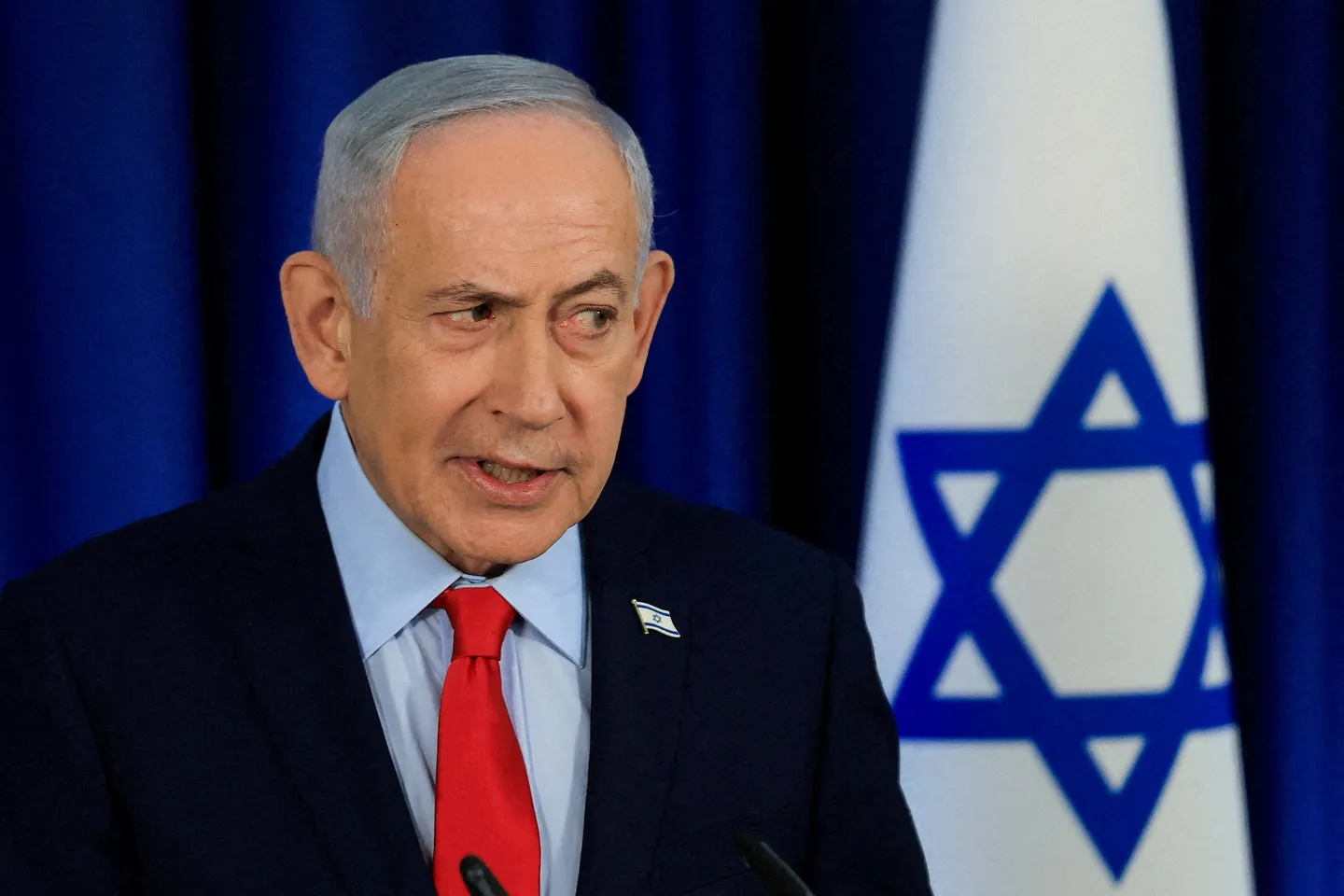






With the Israeli national election set for October 27, Prime Minister Benjamin Netanyahu’s Likud party has launched a legal bid to disqualify Arab-majority parties from the ballot. The party has petitioned Israel’s Central Elections Committee to ban both the Ra’am party, led by Mansour Abbas, and the Joint List—a coalition comprising the Hadash, Ta’al, and Balad groups. Justifying the move, the Likud party has argued that there is “no room in the Knesset for those who harm” members of the Israeli security forces.
Political observers view this disqualification drive as a calculated tactic to suppress Arab political power, thereby easing the path for Netanyahu to return to office. Public polling ahead of the vote indicates that Netanyahu’s right-wing bloc is unlikely to secure the 61-seat majority required to form a government in the 120-member Knesset. Similarly, the Zionist opposition led by Gadi Eisenkot and Naftali Bennett appears unlikely to hit that same threshold independently. Consequently, both sides face a reality where they may need the support of Arab parties to form a stable coalition. Palestinian citizens of Israel, who account for one-fifth of the nation’s 10.3 million residents, have become essential power brokers in the current political landscape.
Arik Rudnitzky, a researcher at the Moshe Dayan Center for Middle Eastern and African Studies at Tel Aviv University, suggests that Likud’s strategy has two distinct goals. First, it aims to delegitimize Arab parties as potential governing partners for an opposition led by Eisenkot. By attempting to force these parties off the ballot, Likud makes it significantly more challenging for opposition leaders to build a viable governing coalition. Second, the move is intended to discourage Palestinian-Israeli citizens from participating in the election altogether, with the calculation being that voter boycotts would indirectly boost Netanyahu’s chances of maintaining power.
Rudnitzky notes that this current push to disqualify Arab factions is distinct from previous iterations. Unlike earlier periods where there was pressure for Palestinian-Israeli citizens to abstain, the current climate encourages high voter turnout, with many in the community viewing the upcoming election as vital to their future. Despite this, the pressure on the Ra’am party is particularly acute. Abbas’s faction broke historical barriers in 2021 by becoming the first Arab list to participate in an Israeli cabinet during the Bennett-Lapid government. Because Ra’am has positioned itself as a plausible partner for future coalitions, it has become a primary target for delegitimization.
In an effort to diversify its appeal, Ra’am has included a Zionist candidate in the second position on its electoral slate, increasing his chances of securing a seat in the Knesset. Rudnitzky observes that as Ra’am’s relevance to the formation of a potential alternative government grows, so does the intensity of the political campaign to paint it as an unfit governing partner.
Ozden Zeynep Oktav, head of the international relations department at Istanbul Medeniyet University, argues that the disqualification attempt reflects a weakened Netanyahu, who is increasingly relying on polarizing policies to retain support. Oktav links the growing assertiveness of leaders like Mansour Abbas to the widespread domestic protests against the current administration. As opposition to the government mounts, the Ra’am leader has felt more confident in calling for the recognition of an independent Palestinian state, a stance that the ruling party is now using to frame them as illegitimate.
The underlying tension in Israeli politics since 2018 is rooted in the increased electoral participation of Palestinian-Israeli citizens, according to Middle Eastern studies scholar Zahide Tuba Kor. When Arab parties began winning between 10 and 15 seats, it became significantly more difficult for purely Jewish-majority coalitions to form, leading to a record five parliamentary elections between April 2019 and November 2022. Prior to 2021, Netanyahu attempted to manage this by encouraging Arab voters to support Likud directly or by fracturing the Arab vote to ensure lists fell below the 3.25 percent national threshold. With the current attempt to ban the parties entirely, the political deadlock continues to evolve, as the ruling party seeks to consolidate its base by challenging the judiciary’s role in adjudicating such controversial matters. The report also notes that experts say the latest disqualification drive led by Likud is not merely an attempt to achieve a legally sanctioned clean-up of the electoral field. The report also notes that which means voters don’t vote for a particular member of the Knesset, israeli elections use nationwide proportional representation. The report also notes that many Palestinian-Israeli citizens see the coming election as “crucial to their future in the country” as polls point to higher turnout than in 2022. The report also notes that the first time an Arab list sat inside an Israeli cabinet, abbas’s party joined the 2021-22 Bennett-Lapid coalition. The report also notes that it focused much of its work on crime and civic needs in Arab communities.