
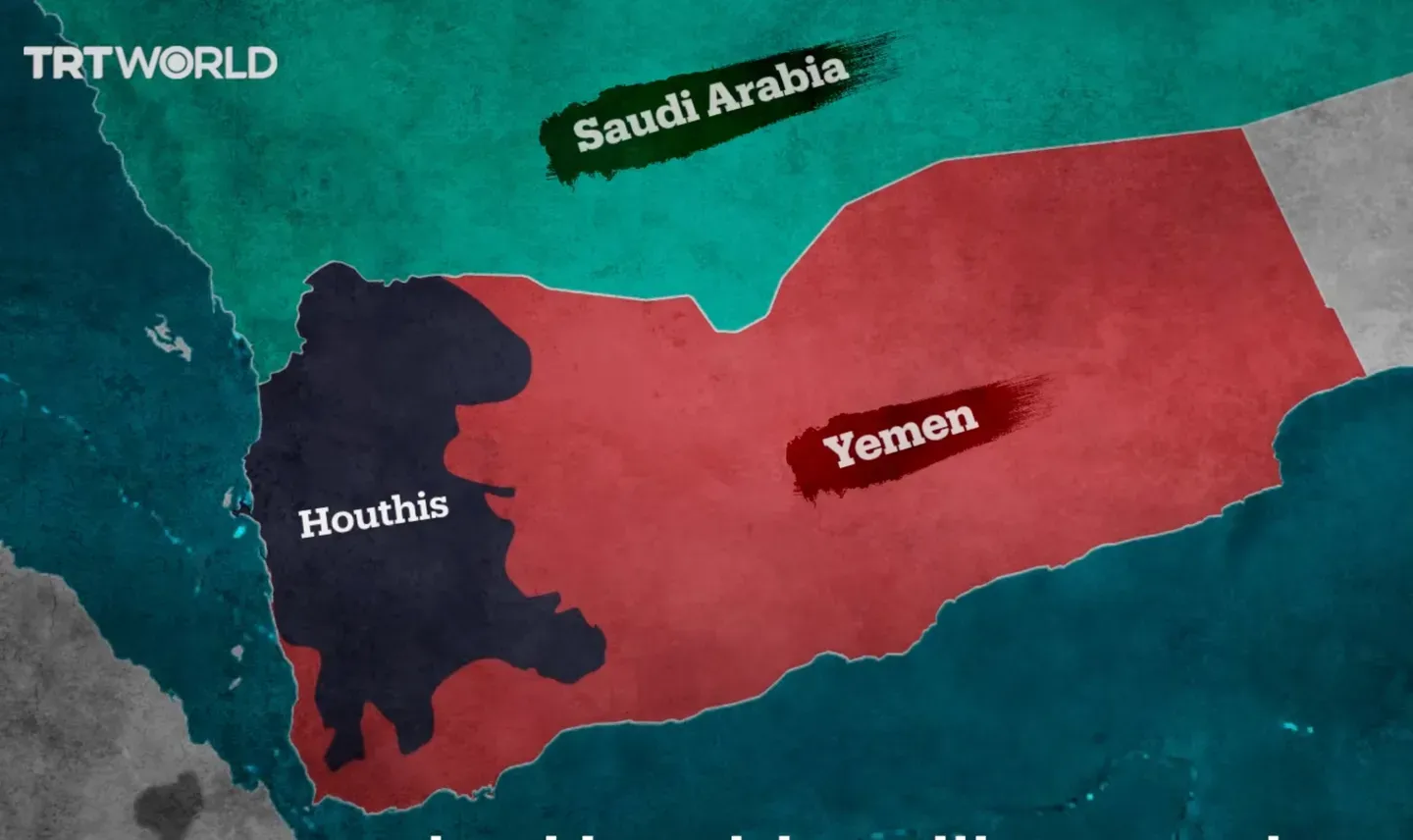




The Houthi movement has escalated its military operations, capturing the Red Sea port of Mocha along with critical islands near the strategic Bab al Mandab Strait. This expansion coincides with recent footage released by Houthi channels depicting the wreckage of a Saudi F-15 fighter jet allegedly downed by the group. Since 2014, the Iran-backed Shia faction has maintained control over Yemen’s capital, Sanaa, and significant western territories, marking a major departure from the relative stability that followed the 2022 UN-brokered truce.
The current offensive has disrupted the fragile status quo established after the 2023 China-brokered rapprochement between Tehran and Riyadh. Tensions flared this past July when Iran resumed direct commercial flights to Sanaa. A diplomatic row ensued when Saudi-backed forces intercepted a Mahan Air flight, eventually forcing it to divert to Hudaida. Riyadh officials viewed these flights as a violation of airport oversight agreements, while the Houthis asserted they were a matter of national sovereignty over Yemeni airspace.
Yemeni political analyst Esam Alahmadi suggests the group’s resurgence is driven by a desire to leverage their coastal territorial control for broader political gains. By securing positions around Bab al Mandab—a chokepoint handling approximately 12 percent of global shipping—the Houthis are positioning themselves as a regional power that cannot be sidelined. Furthermore, the group is utilizing the current regional instability to solidify its domestic narrative, portraying itself as the primary defender against external interference.
Military experts observe that the Houthis likely utilized the two-year truce period to significantly upgrade their arsenal. With the assistance of Iranian advisors and Hezbollah operatives, the group has enhanced its drone and missile technology and consolidated control over abandoned military infrastructure. Analyst Mohamed Nagi notes that while the Houthis have demonstrated impressive mobility and strike capabilities, their ability to permanently hold these newly seized regions remains uncertain.
Regional power dynamics have shifted significantly, impacting the conflict. Observers suggest that Tehran, having become disillusioned by recent US-Israel military actions, now sees fewer reasons to restrain its regional proxies. Some experts believe Iran is attempting to draw focus away from its own vulnerabilities in the Strait of Hormuz by intensifying the theater of conflict in the Red Sea. Additionally, the recent reconciliation between Iran and the UAE has introduced new complexities into the regional landscape.
The offensive has also complicated the agenda for the internationally recognized Yemeni government and its Saudi backers. The UAE continues to support the Southern Transitional Council, leading to occasional frictions with Riyadh’s own objectives in the country. Former President Ali Abdullah Saleh, who was killed by the Houthis in 2017, remains a symbolic reference for the fragmented opposition that continues to struggle against the Houthi advance.
Despite these territorial gains, analysts like Luciano Zaccara warn that the Houthis face significant obstacles. Ruling a country with a non-Shia majority amid a severe humanitarian crisis presents a massive long-term challenge. Moreover, the group’s increased presence near global shipping lanes risks inviting a more unified counter-response from Saudi Arabia, regional players, and potentially the international community. While the current US administration has adopted a cautious stance toward the escalation, experts emphasize that this policy could shift if the threat to international commerce deepens.
Ultimately, the battle for control remains fluid. While the Houthis have successfully projected power beyond their traditional borders, the combination of a fragmented domestic opposition and the sheer difficulty of occupying hostile territories suggests that the conflict is far from a decisive conclusion. The report also notes that on Wednesday, Houthi accounts published a video showing the debris of an apparently Saudi F-15 fighter jet shot down by the group, which has controlled Yemen’s capital, Sanaa, and other areas in the country’s west with large Shia populations since 2014. The report also notes that the Houthis have largely stayed away from the confrontation in the Gulf, while the US-Iran war has heightened tensions. The report also notes that the dispute went beyond a single flight. The report also notes that conflicts across the Middle East have seen regional actors, including Israel and Iran, seek to extend their influence beyond their borders through alliances with armed groups and other regional partners, particularly in areas surrounding strategic waterways, in recent years. The report also notes that with Iran’s blockade of the Strait of Hormuz already disrupting global oil shipping, Tehran would also benefit from further disruption around Bab al Mandab under Houthi pressure, particularly if it drives energy prices higher, he adds. The report also notes that despite being on opposing sides of several regional conflicts, have agreed to strengthen ties and expand cooperation, iran and the UAE. The report also notes that allowing Israel to increase pressure on Saudi Arabia to normalise relations with Tel Aviv, according to al-Shuja’a, the Houthi offensive has also altered regional calculations.