
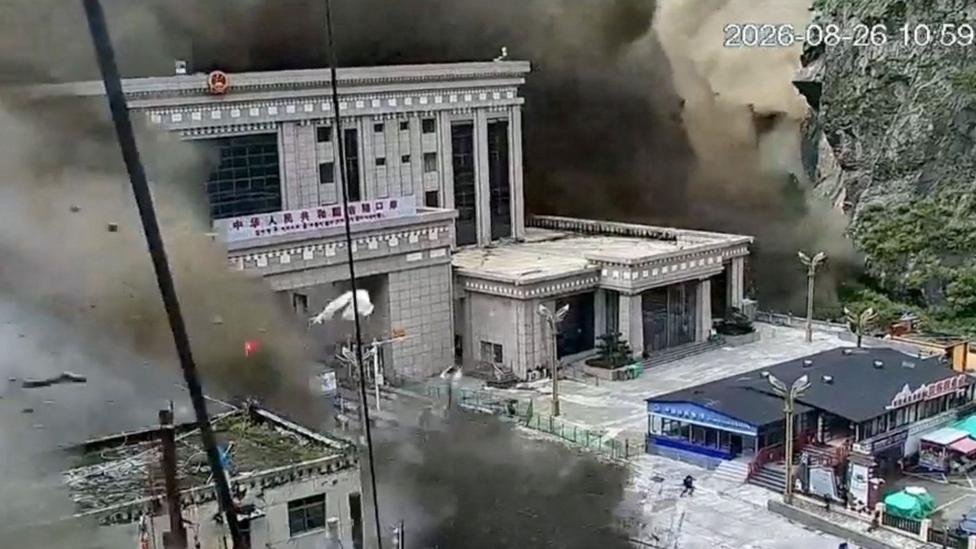





Dramatic video footage showing a massive torrent of water tearing through Gyirong Port, a key border crossing between Nepal and Tibet, has captured global attention. The clips, recorded by CCTV cameras, depict the terrifying moment hundreds of people fled the flash flooding that has claimed hundreds of lives since Wednesday, with an equal number of individuals still reported missing.
Despite the scale of the disaster, the Chinese public has seen almost none of this footage. State-run media has broadcast only a single still frame of the event, and the videos are largely absent from the country’s heavily censored internet. Finding even basic social media posts describing the catastrophe has proven difficult, highlighting the reach of China’s digital firewall.
Beijing has initiated a large-scale rescue operation involving hundreds of emergency personnel. President Xi Jinping recently chaired an emergency meeting to coordinate the response, and Premier Li Qiang was dispatched to the region to inspect debris removal efforts—a rare, rapid appearance by such a high-ranking official following a disaster.
The government’s response appears driven by a desire to maintain social stability. Local party offices have issued directives urging members to provide emotional support and maintain public order, warning that those who fail to perform effectively will be held accountable. This climate of control is particularly intense in Tibet, a region annexed by Beijing in the 1950s that has long resisted Communist Party rule.
Rights activists note that Tibetans face significant risks, including detention or arrest, for posting content that contradicts the official government narrative or for speaking with journalists. The International Campaign for Tibet has urged Chinese authorities to release complete and verifiable information regarding casualties and damage, noting that Beijing has been actively scrubbing first-hand accounts from social media platforms.
For those outside the region, the lack of information is agonizing. Families are struggling to contact relatives, a task that is notoriously difficult even under normal circumstances. Foreign journalists are barred from entering Tibet without specific government permission, and those attempting to report on the situation face a race against time before information is suppressed.
The contrast in media coverage was stark on Thursday night; while international outlets led with the Himalayan tragedy, China’s state broadcaster prioritized a report on the launch of a new book containing President Xi’s “fundamental works.” While Beijing points to its significant investments in regional tourism and infrastructure as evidence of its commitment to Tibet, the region remains under heavy surveillance.
Last year, during a visit to the Kirti monastery in Aba, monks described a life of constant monitoring and alleged persecution. While Beijing denies these claims of rights violations, the current situation underscores the deep sensitivity surrounding the region. As search teams continue to navigate treacherous mountain terrain and rivers, the true extent of the tragedy remains obscured by a government that prioritizes the appearance of stability over public transparency. The report also notes that the scenes, captured by CCTV cameras, quickly spread on social media and onto screens around the world. The report also notes that but when you compare the country’s internet content to what much of the world has been seeing online these past few days, China’s firewall becomes more visible than ever. The report also notes that sometimes violently, and has been accused of grave rights violations in the Buddhist region, china has quashed protests over the years. The report also notes that the Dalai Lama, a separatist, it has labelled the exiled spiritual leader. The report also notes that that history means the very name Tibet draws China’s censors. The report also notes that beijing’s sensitivities are especially apparent at times likes this. The report also notes that and Beijing has also been posting updates on the rescue operations, as well as the dangers posed by a barrier lake that has been at risk of overflowing, there have been daily updates on the missing and the dead. The report also notes that but there is little detail beyond that.