









Since the conclusion of World War II, Germany has built its identity around a migrant-friendly framework, deep integration into the NATO alliance, and a robust economy anchored by its status as Europe’s premier automotive manufacturer. Following the collapse of the Berlin Wall, the nation became a primary architect of European Union expansion into the East, while maintaining a steadfast commitment to its transatlantic partnership with the United States.
However, the current geopolitical and economic landscape has shifted significantly. Germany now contends with a combination of stagnant growth, energy instability following the severance of ties with Russia, and mounting pressure from the Trump administration regarding NATO defense spending. These systemic challenges, coupled with concerns over globalization and the rise of Chinese electric vehicles, have created a fertile environment for the Alternative for Germany (AfD) to gain traction.
The AfD’s platform—which calls for the expulsion of migrants, a rejection of EU policies that it claims undermine national sovereignty, and a restoration of relations with Moscow—has resonated with segments of the electorate. Raoul Motika, a professor at Hamburg University, suggests that these promises, while often viewed as illusory, appeal to voters who feel ignored by the political establishment. “People do not trust politicians anymore,” Motika noted, explaining that many citizens are seeking parties that promise “radical changes” to address their grievances.
This sentiment culminated in a significant electoral victory for the AfD in Saxony-Anhalt, a state in former East Germany. While the result did not grant the party an outright majority, it has served as a catalyst for national debate. Analysts suggest the AfD intends to leverage this momentum to challenge the coalition government led by Chancellor Friedrich Merz. Motika observed that the result is an undeniable signal of public dissatisfaction with the current administration, though he cautioned that an AfD-led state government would have limited influence over federal policy.
Internal pressure on Merz is mounting, particularly within his own Christian Democratic Union (CDU). Disappointment is growing over perceived policy reversals, including the Chancellor’s decision to abandon campaign promises regarding state debt limits. Critics argue that Merz’s attempts to mirror populist rhetoric have backfired. “All kinds of populist propaganda he made before the elections turned out against him afterwards because now the AfD is using the term that he’s a liar, that he betrayed the population, that he made wrong promises,” Motika stated.
Bulent Guven, a Hamburg-based political scientist, echoed this sentiment, noting that while the AfD is perceived as an authentic voice for populist ideas, Merz is increasingly viewed as a “copycat.” Guven warned that the party’s trajectory is concerning, particularly regarding its “radicalised rhetoric.” He contrasted the AfD with other European far-right movements, such as Marine Le Pen’s National Rally or Giorgia Meloni’s Brothers of Italy, which have moderated their stances on the EU and migration over time.
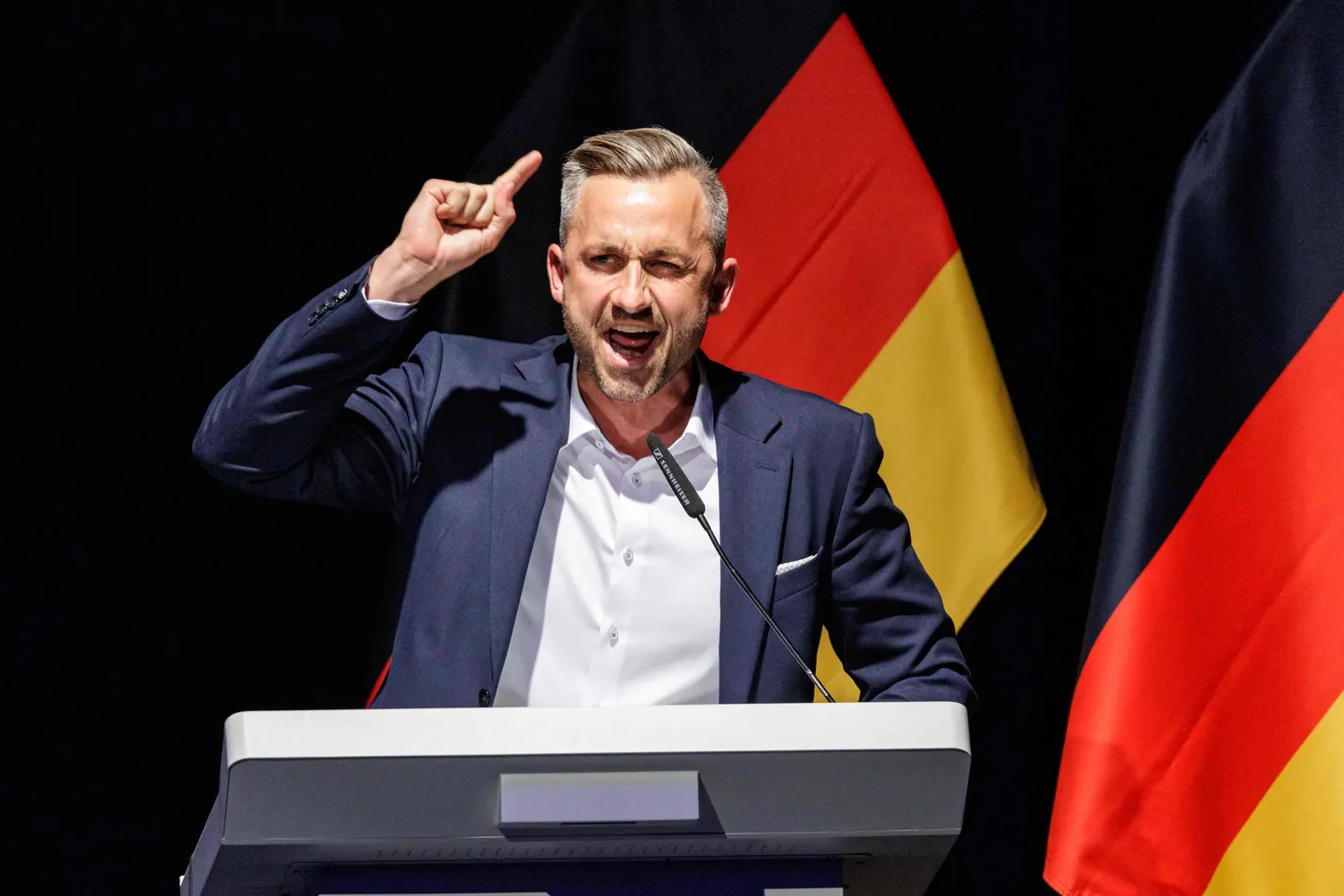
The AfD has shown no signs of softening its position. Ulrich Siegmund, the party’s potential premier for Saxony-Anhalt, has labeled their proposals on security, migration, and energy as “nonnegotiable.” The party has also signaled an intent to revise how Germany addresses its historical legacy and to reduce funding for initiatives it deems to have “anti-German goals.” Motika emphasized that the AfD’s evolution is distinct from its European counterparts, noting that the party has become increasingly radical and open to fascist groups.
For many, the political shift is deeply personal. Guven, a German citizen of Turkish descent, expressed concern for the future of the approximately 21 to 25 million people in Germany who have non-German or immigrant roots. “Not good days are ahead for us,” he said, fearing that these communities could face targeting under an AfD-influenced government. He pointed out that if migrant-background voters are excluded from the data, the AfD’s support among ethnic Germans is remarkably high, potentially reaching one in every two voters.
Despite these developments, experts agree that Merz’s government is not in immediate danger of collapse. While the AfD now holds roughly a quarter of the seats in the German parliament and is gaining strength in western states like Bavaria and Baden-Württemberg, it remains to be seen if this regional success can be sustained at the federal level. Nevertheless, with polls suggesting the party could capture nearly 30 percent of the vote in future federal elections, the political landscape in Germany remains in a state of flux. The report also notes that reunified after the fall of the Berlin Wall, Germany has driven EU enlargement into Eastern Europe and supported the Western alliance through close US ties. The report also notes that meanwhile, globalisation favours Chinese EVs over German cars. The report also notes that in addition, the Trump administration pressured European countries, especially Germany, over NATO’s defence contributions, citing insufficient spending. The report also notes that “In any case, it’s a real sign of mistrust against the Merz government. The report also notes that but after becoming chancellor, he backed loosening Germany’s debt rules, merz had previously promised to limit state debt. The report also notes that among the largest in Europe, is another subject of debate in the country, germany’s social welfare system. The report also notes that “German life expectancy is not better than in Italy or even worse than in Italy and in other European countries, and this means the system overall is ineffective,” Motika says.