
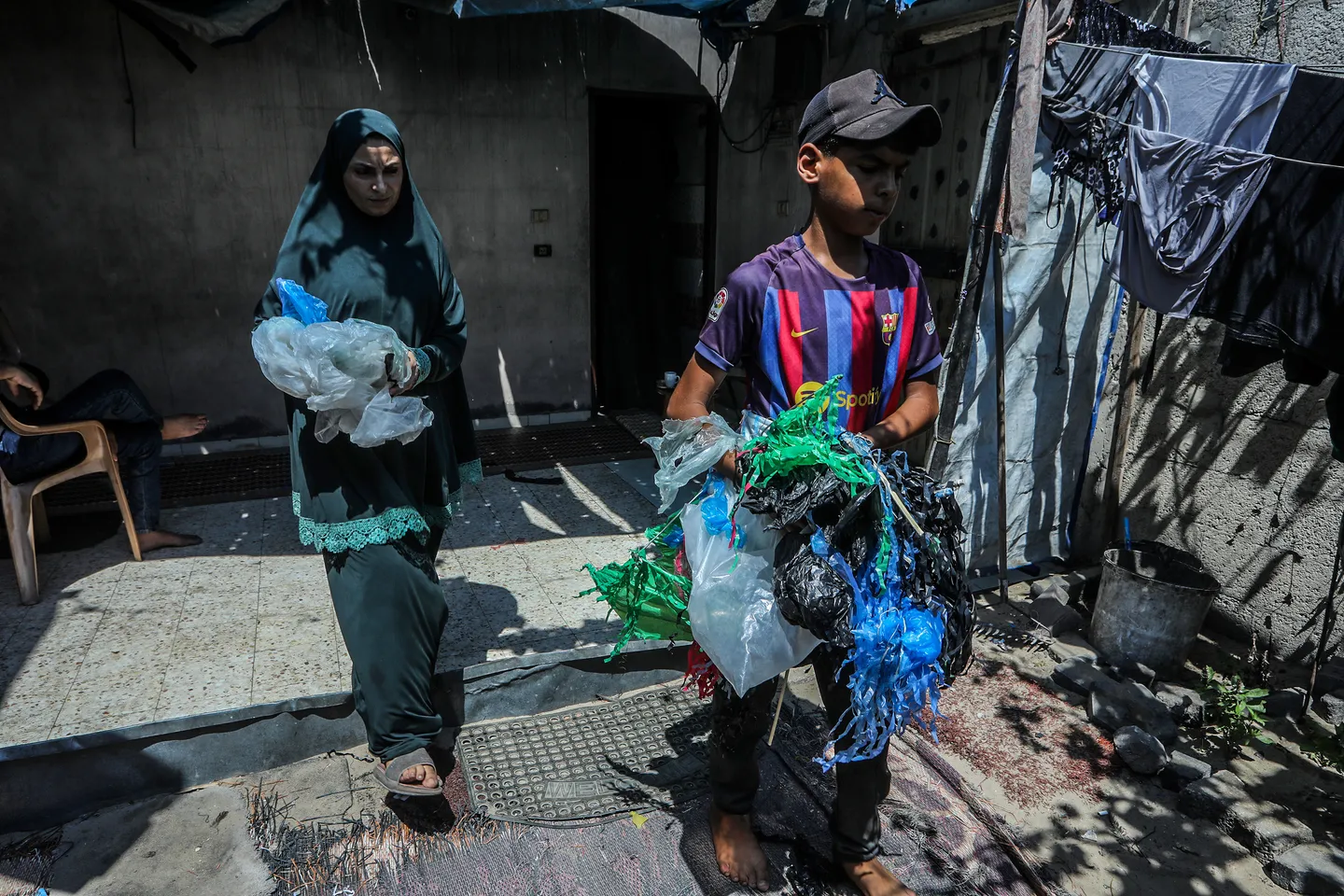



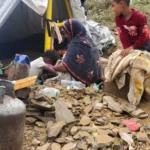





For 11-year-old Abdul-Hadi Arafat, a displaced resident from Gaza City’s Zeitoun neighbourhood, the simple act of crafting kites from nylon bags, wooden sticks, and string was a vital source of joy. His mother, Salwa Arafat, recalls how he took pride in watching other children fly his handmade creations. However, that sense of wonder has been replaced by fear following an August 23 directive from Israeli Defence Minister Israel Katz, who ordered the military to “act immediately and forcefully” against kites, balloons, or drones launched from Gaza.
The order, prompted by four kites drifting into the Israeli kibbutz of Nahal Oz, has transformed a traditional pastime into a perceived security threat. While the Israeli military previously acknowledged that no suspicious materials were attached to kites from the enclave, the new directive has had a chilling effect. Salwa Arafat explains that the ban fundamentally altered her son’s perception of his toys. After his father’s death earlier in the conflict, the boy felt compelled to destroy his kites, weeping as he dismantled the last remnants of his play.
This distress is shared by many. Eight-year-old Mohamed Mostapha also destroyed his kites, fearing he would be targeted by Israeli forces. His grandmother, Kariman Abu Ras, notes that children in Gaza, already deprived of schools, parks, and safe spaces, have few options left for childhood activities. “It’s terrifying for our children,” she says, emphasizing that they have been largely stripped of their basic rights to live in safety.
In response to the military order, local “popular committees” and aid organizations coordinated with Hamas authorities to urge parents to prevent children from flying kites. They clarified that the request was intended to protect innocent lives rather than further restrict childhood, noting that these children have already been denied basic safety. The emotional toll is evident in viral footage, such as that of Muhammad Ahmad al-Mufti, who was filmed crying while tearing apart his kites on rubble-strewn ground.
Rights advocates are sounding the alarm over the implications of these military threats. Alaa Skafi, director of the Al-Dameer Foundation for Human Rights, argues that such statements risk blurring the line between combatants and civilians. “This is a call to kill children,” Skafi states, citing Article 77 of Additional Protocol I to the Geneva Conventions, which mandates special protections for children in armed conflict.
The psychological impact of these conditions is profound. Psychologist Dr. Yasmine Sukkar explains that children require a stable environment to distinguish between safe and dangerous zones. When common objects like kites become associated with the threat of being targeted, children may enter a state of hypervigilance. She warns that if these conditions persist, the long-term consequences could include emotional regulation difficulties, behavioral disorders, and social withdrawal.
The scarcity of play is compounded by a broader lack of resources. Toy vendor Omar el-Khodary reports that standard toys, including plastic cars, airplanes, and building sets, are effectively banned from entering the territory. Items that do occasionally arrive, often smuggled as fabric among clothing shipments, are prohibitively expensive; simple building blocks now cost between 250 and 300 shekels. This void extends to education, as the Palestinian Ministry of Education and Higher Education announced that schools would not reopen until September 19, leaving roughly 658,000 students without formal, in-person education for three consecutive years.
The physical landscape for children is also shrinking, with Israel now restricting access to 65 percent of the enclave. This follows a period of intense displacement, with nearly 90 percent of Gaza’s 2.1 million residents forced from their homes. The threat against kite flyers coincides with ongoing military strikes, including an August 23 attack in al-Zawayda that killed two people, and subsequent strikes that destroyed one of the oldest mosques in Gaza and claimed the lives of four individuals, including two children.
The cumulative effect of these losses is staggering. With estimates of child amputations ranging from 1,000 to over 4,000 since October 2023, UNRWA Commissioner-General Philippe Lazzarini has noted that Gaza currently holds the highest number of child amputees per capita globally. As the conflict continues, the loss of simple joys like kite flying serves as a stark reminder of the broader deprivation facing the next generation in Gaza. The report also notes that his mother, Salwa Arafat, said, it kept him busy and brought joy not only to him but to other children around him. The report also notes that “What made him happiest was watching a child run through the neighbourhood flying something he had built himself,” she says. The report also notes that in July 2011, children in the enclave set a Guinness World Record for the most kites flown simultaneously. The report also notes that “His father asked him to get rid of them. The report also notes that “It’s terrifying for our children,” Abu Ras, 66, said. The report also notes that israel has tightly restricted the movement of goods into Gaza throughout the war. The report also notes that toy vendor Omar el-Khodary, 35, said that regular shipments of toys have disappeared entirely. The report also notes that “We tried hard to bring in goods from outside, even at higher prices, and we couldn’t manage it.