
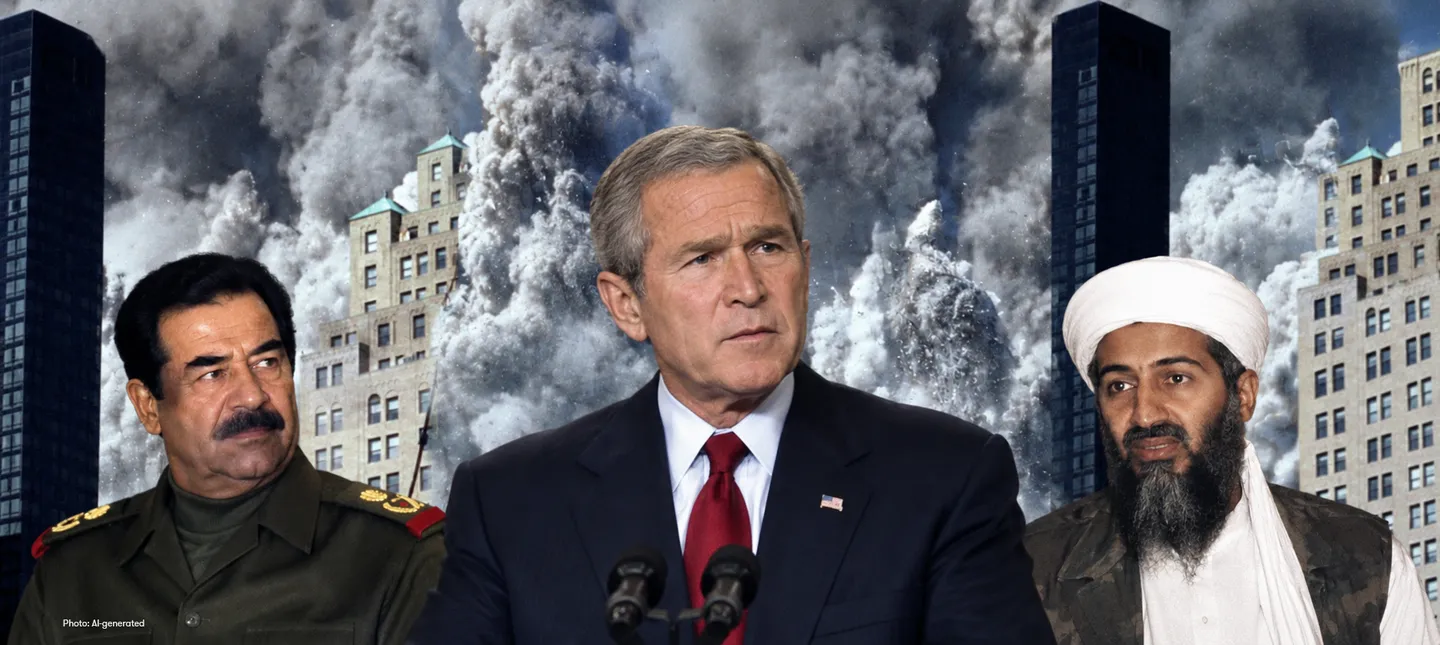







Twenty-five years have passed since the September 11 attacks, a period defined by the United States’ extensive war on terror. While Washington successfully dismantled major global terrorist organizations like Al Qaeda and Daesh through prolonged military campaigns in Afghanistan, Iraq, and Syria, the broader strategic outcomes remain deeply contested. The US utilized its immense military power to topple regimes in Kabul and Baghdad, justifying these interventions by citing the support these governments allegedly provided to groups planning attacks against American soil.
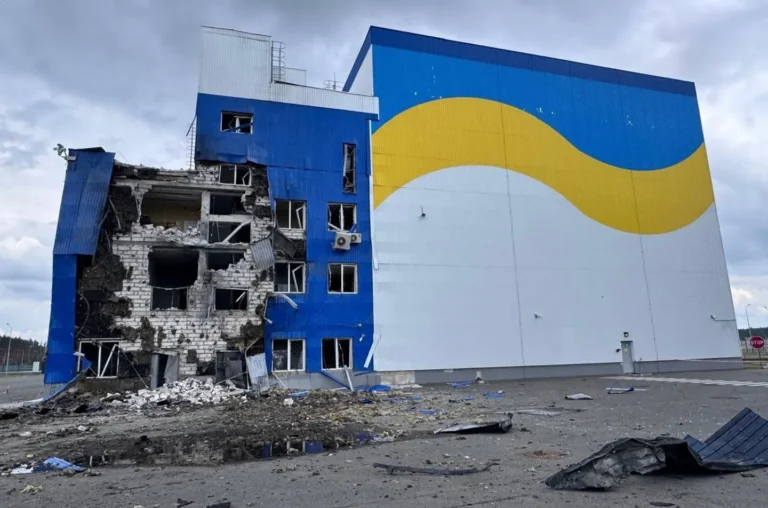
However, this post-9/11 strategy has left a significant trail of instability and destruction across the Middle East and Central Asia. In Afghanistan, the US spent two decades ousting the Taliban, only to facilitate their return to power in 2021 following a chaotic and hasty withdrawal. Similarly, the removal of Saddam Hussein in Iraq triggered internal sectarian clashes and armed resistance, which ultimately created the conditions for the rise of Daesh. These outcomes highlight the recurring difficulty the US has faced in translating military dominance into durable political order.
Currently, the United States is entangled in a conflict with Iran, a nation Washington frequently labels a terror regime. This ongoing confrontation is viewed by many analysts as a direct outgrowth of the post-9/11 approach. Despite initial hopes for a short-term resolution, the conflict shows few signs of ending. Top American officials have warned President Donald Trump that the hostilities, which have disrupted oil trade via the Hormuz blockades, could persist throughout his presidential term, potentially locking the US into another “forever war.”
Iftikhar Firdous, a senior Pakistani investigative journalist, notes that while the initial objective of dismantling terror networks achieved some success, the strategy faltered when it expanded into state-building, regime change, and political engineering. “Once you start trying to engineer societies through military power, you enter a completely different strategic environment,” Firdous explains. He argues that the central contradiction of the post-9/11 era lies in the assumption that military superiority could resolve complex ethnic, tribal, and sectarian conflicts.
Ali Mammadov, a political science researcher at George Mason University’s Schar School, emphasizes the disconnect between American military capabilities and political objectives. “The US could remove hostile governments and severely weaken terrorist organisations relatively quickly, but establishing durable political orders afterwards proved considerably more difficult,” Mammadov observes. Official US government reviews of the Afghanistan campaign have identified systemic failures, including incoherent strategies, unrealistic timelines, and a profound lack of understanding regarding local conditions.
The consequences of these policies extend beyond the Middle East. Former US diplomat Matthew Bryza, who served on the National Security Council during the 9/11 attacks, suggests that Washington never truly assembled a clear, unified post-9/11 strategy. He notes that the repeated interventions have proven difficult to control and have generated significant political backlash. Furthermore, the focus on these regional wars has diverted strategic attention and resources away from other global priorities.
Critics point out that this preoccupation has left American power vulnerable to emerging challenges from China and Russia. A recent analysis by the Wall Street Journal suggests that the US strategy has inadvertently empowered these rivals, as the distraction of endless wars has allowed them to challenge American global supremacy. As Dania Koleilat Khatib, an expert on Arab-US relations, puts it, the strategy has undeniably failed, resulting in endless wars that have damaged the American image worldwide and created immense regional instability. The report also notes that however, the so-called war on terror strategy adopted following the 9/11 attacks has also left a trail of death and destruction across a vast swathe – crippling nations from Afghanistan to the energy-rich Middle East. The report also notes that it facilitated the return of the same group in 2001 following the hasty and chaotic US withdrawal from the Asian nation, two decades after the US ousted the Taliban from power. The report also notes that leading to armed resistance and internal clashes, which paved the way for the emergence of Daesh across the country, saddam Hussein’s ouster from the Iraqi leadership also produced dangerous results. The report also notes that helping Tehran increase its influence over Iraq, the US invasion also led to the empowerment of pro-Iran armed groups in a country with a large Shia population. The report also notes that experts see many gaps, disorientation, and implementation problems in America’s post-9/11 strategy, which has fluctuated as Washington has occasionally tried to seize opportunities to pull back from turbulent regions, in the face of mixed outcomes from Afghanistan to Iraq and most lately Iran. The report also notes that but military superiority does not automatically translate into political legitimacy or sustainable political outcomes, the US had overwhelming military superiority. The report also notes that the US has come to terms with a grim reality: the tech-powered American military supremacy is unable to bring down the Iranian power structure backed by the powerful IRGC, as the Iran war meanders on. The report also notes that at the alliance level, NATO unanimously invoked Article 5 after 9/11, but divisions became more pronounced as the broader agenda expanded, particularly over Iraq.”.