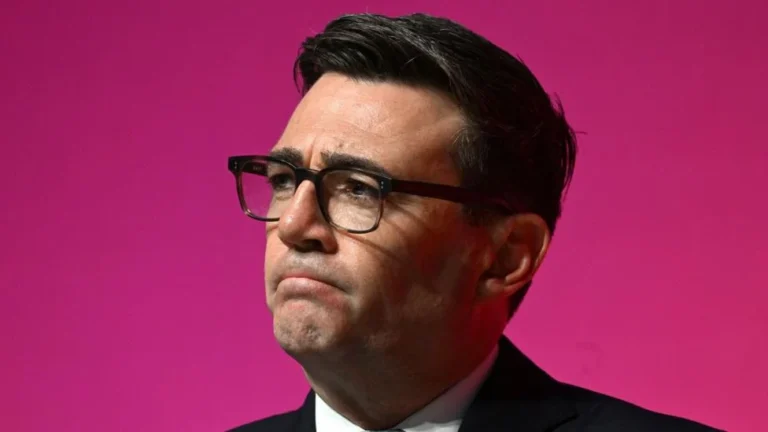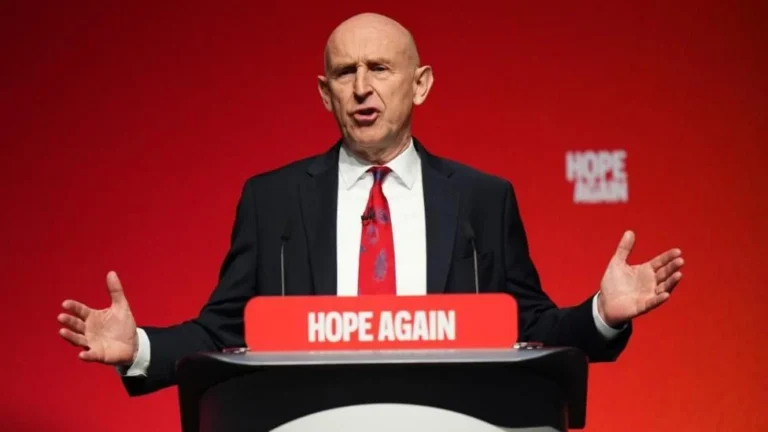

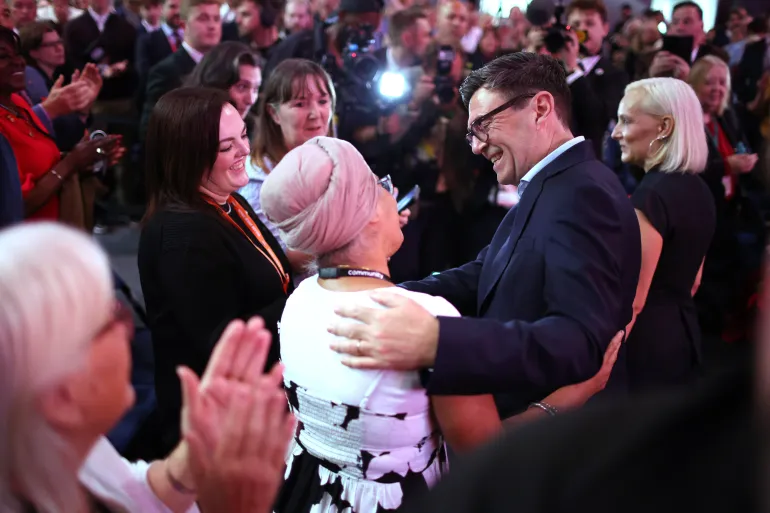








British Prime Minister Andy Burnham has vowed to steer the United Kingdom onto a new trajectory of equitable growth, delivering this promise during his inaugural Labour Party conference speech as both the nation’s leader and party head. Speaking on Tuesday, Burnham addressed a wide array of issues, including healthcare, pensions, electoral reforms, affordable housing, and publicly-owned utilities, asserting that the UK must embrace drastic change to avoid a slow and painful decline.
Burnham, who assumed the role of UK prime minister in July, succeeding Keir Starmer, told delegates that “Britain has been on the wrong path for a long time.” He declared his readiness “to do things my predecessors wouldn’t,” aiming to “make a break with the direction of the past 40 years and put Britain on a new path, build a new economy and a new politics.” He articulated a pervasive feeling that “the powers-that-be [are] pulling against the people, not with them.”
The former mayor of Liverpool, where the conference was held, emphasized that “more of the same isn’t good enough” and called for a fundamental shift, stating it was time “to break the mould today.” This year’s Labour Party conference brought together legislators, party members, trade unions, and businesses.
A significant portion of Burnham’s address focused on social reforms, particularly for caregivers and healthcare. He proposed the creation of a “National Care Service… free at the point of use,” describing it as a “person-centred, high-quality” service where “everyone contributes and everyone is covered.” This service, he added, would prioritize “people not profit,” prevent the erosion of savings, and provide “proper recognition” to care workers.
Regarding pensions, Burnham discussed adjustments to the “pension triple lock,” which dictates state pension increases. He indicated that changes would be implemented by April 2030, following the next general election. He also committed that low-income pensioners would not pay income tax in the current Parliament, ensuring they would receive annual state pension rises without additional care charges, thereby allowing pensioners to “always share in the rising prosperity of the nation.”
The Prime Minister also addressed housing affordability, confirming his party’s commitment to facilitate homeownership for young people by reducing the required property deposit. Furthermore, he spoke about restoring public control over utilities like water and electricity, specifically by eliminating “Margaret Thatcher’s ideological ban on public ownership of water companies.” For electricity, Burnham announced a new publicly-owned “Great British Grid” designed to “challenge the private sector operators,” “increase competition, drive down costs and speed up delivery,” and simplify connections to the electricity grid.
Burnham’s speech also touched upon foreign policy, where he pledged to “stand up to” Russian and Iranian “threats.” He affirmed his unwavering support for Ukraine and his commitment to confronting threats from any source. On the issue of Israel, the occupied West Bank, and Gaza, Burnham commended his foreign secretary, Ed Miliband, for his approach since taking office in July, stating, “We will be principled in our leadership in securing a two-state solution between Israel and Palestine, as Ed Miliband has done.”
Milena Veselinovic, observing the speech, noted its “fiery rhetoric” and highlighted the “very dire position” of Britain’s finances. She pointed out the immense pressure on Burnham’s new government as it prepares to unveil its first budget at the end of October. The UK’s annual consumer price inflation (CPI) rose to 3.1 percent in the 12 months to August, up from 2.9 percent in July, according to the Office of National Statistics. Veselinovic suggested that Burnham is aware he might “pay a political price for all the reforms he’s promising,” but understands that “somebody has to rip out the plaster on that because the costs are too high.”
Danny Sriskandarajah, CEO of the New Economics Foundation, described Burnham’s address as “a remarkable speech.” He said that Burnham possesses a “knack to be able to come across as authentic, as genuine,” noting that the Prime Minister “was tearful at moments.” Sriskandarajah added that Burnham “was honest about what challenges Britain faces. But he also generates a sense of hope which I think is much needed.” However, Sriskandarajah cautioned that a key challenge for Burnham will be securing the funding for his ambitious promises, stating, “All of these things that he wants to do will cost money, which means they’ll have to raise those resources somewhere.”