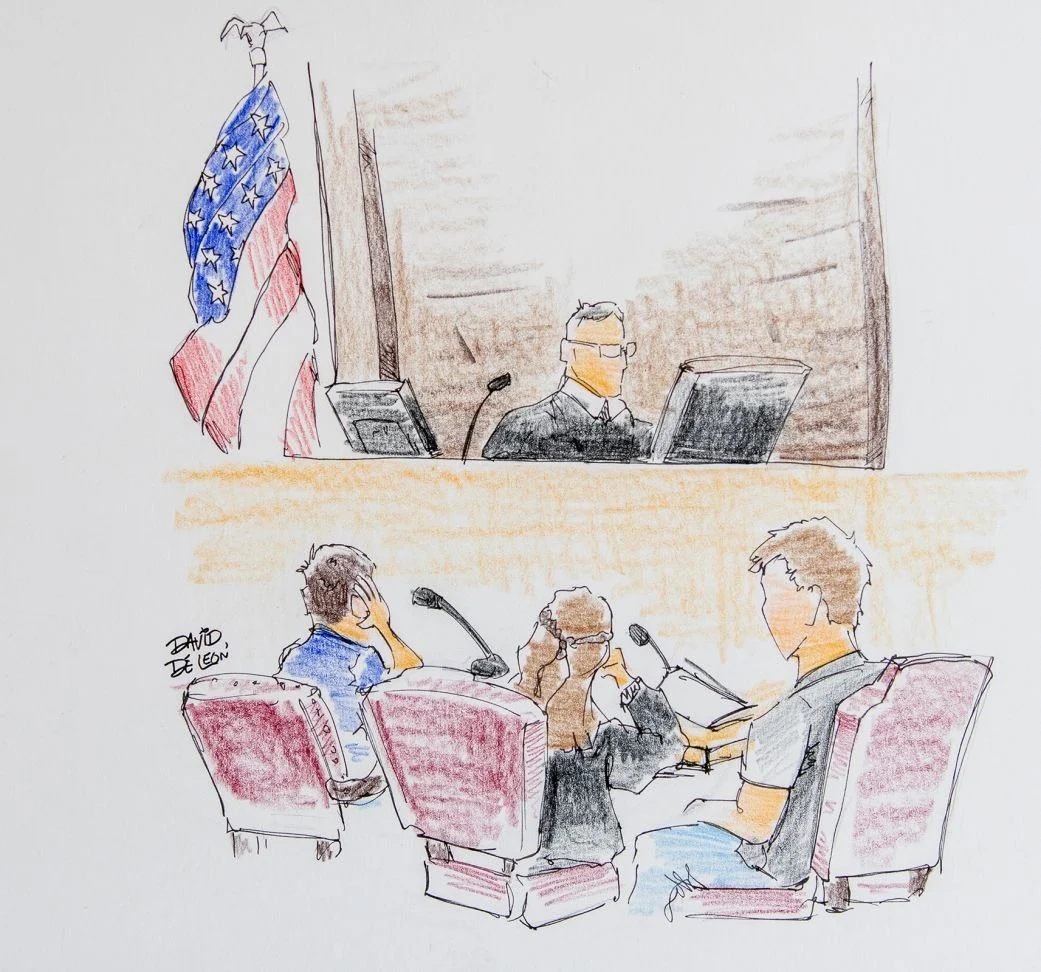









Inside a Harlingen, Texas courtroom on a recent Monday, 25 migrant children sat in rows of pews, waiting for hearings that could permanently alter their futures. The scene highlighted the vulnerability of young migrants, with a 6-year-old pretending to fly a toy airplane, a 3-year-old fidgeting with a microphone, and a teenage girl struggling to maintain composure. A judge intervened when the teen girl smiled, cautioning her that the proceedings were serious and could determine whether she remains in the United States or faces removal. The judge reminded everyone of what was at stake. “I see you’re smiling and think these proceedings are funny, but I need you to pay attention,” the judge told the teen girl. “They could determine whether you remain in the country or are removed.”. Dressed formally with neatly styled hair, waited impatiently for the judge, most of the children.
These children, some as young as two, are increasingly appearing in immigration courts across the country without legal representation. Caseworkers assist them by explaining the roles of courtroom staff, from the interpreter and court secretary to the judge. During one session, a 13-year-old Honduran boy named Angel appeared before the bench. When asked if there was a reason he could not return to his home country, he stated that his mother and nearly his entire family were already in the U.S. and that it was dangerous for him to return. The judge ruled that he did not qualify for asylum and offered him a choice between voluntary departure or a formal removal order. When Angel broke down in tears and stated he had no one else, the judge insisted that immigration laws were rigid and granted him until the end of the month to appeal the removal order. Many without attorneys, to make their case to stay in the US and avoid deportation, migrant children as young as 2 are showing up at immigration courts nationwide. “I don’t know,” Angel replied before bursting into tears. Eventually saying: “I have no one, he stared ahead stoically and continued to cry.
This environment is reflective of a broader, accelerated immigration process currently facing unaccompanied minors. Under the current administration, the timeline for these hearings has shifted from months to days or weeks. Internal procedures have changed frequently, often with little advance notice, creating significant hurdles for children attempting to present complex asylum claims. While the Executive Office for Immigration Review stated that the agency prioritizes the timely completion of all cases and denies that proceedings are being intentionally fast-tracked, advocates argue that established legal protections for these children are being systematically undermined. They have been increasingly forced to navigate a complicated and accelerated immigration process with dwindling help after the administration ended a long-standing contract for legal services this summer — and as officials try to wrap their cases at an unprecedented pace, under President Donald Trump.
A major point of contention is the expiration of a $200 million annual contract for legal services in July. Previously, this contract with the Acacia Center for Justice mandated legal representation for children at the pleading stage while in detention. That agreement was not renewed, and while the Office of Refugee Resettlement later awarded up to $20 million to the US Committee for Refugees and Immigrants to provide services, critics argue the change has left children with dwindling resources. Department of Health and Human Services spokesperson Emily Hilliard noted that the new contract aims to facilitate the ability of children in custody to participate in immigration proceedings. Hundreds of unaccompanied migrant children who were detained trying to cross the southern border or whose families were picked up by Immigration and Customs Enforcement are being held in shelters operated by the Department of Health and Human Services’ Office of Refugee Resettlement, which is tasked with the care of unaccompanied migrant children.
To cope with the lack of direct representation, advocates have launched new initiatives like the “Dory” hotline, which has received over 200 calls since early August. ProBar attorney Katherine Beck described the situation as exceptionally challenging, noting that 14 staff members are working to provide guidance to children who are often traumatized or shut down. Meanwhile, the Department of Homeland Security has offered a $3,000 stipend to some migrant children who choose to voluntarily leave the United States. Advocates remain concerned that these combined pressures and the speed of the court system are creating a environment where children are being pushed toward removal without an adequate opportunity to present their claims.