
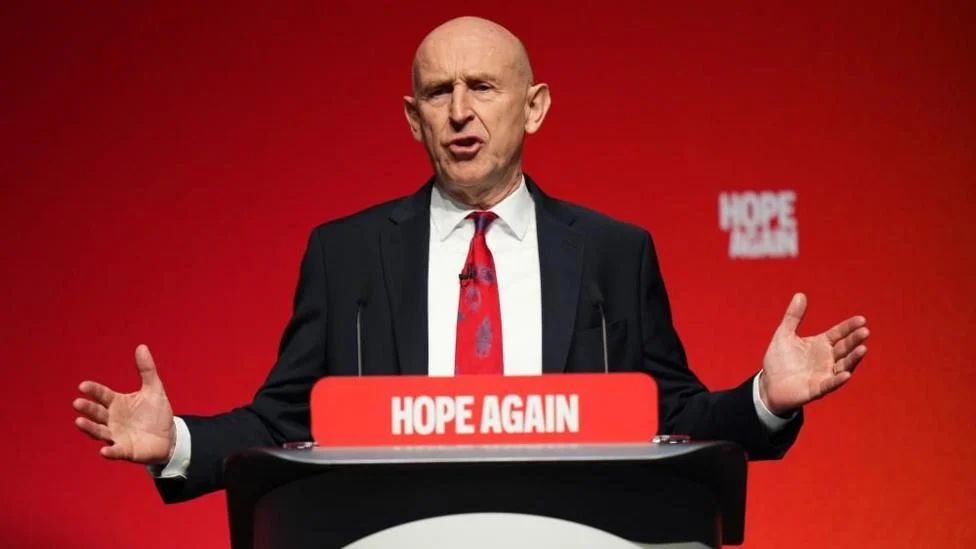









Chancellor John Healey addressed the Labour Party’s annual conference in Liverpool on Monday, declaring that reducing welfare spending is both an economic necessity and a moral imperative. He argued that the most effective support the government can provide to young people is a career pathway rather than benefit payments, stating that a first job with training and a wage offers more than a static income. According to through the scheme, which the Treasury, Will roll out across England from March 2027, local teams plan to match young people with employers, including small businesses that have never taken on a trainee. Which colleges are delivering, which estates have been left behind,” Healey said, powers to implement the scheme will rest with mayors because “they know which firms are hiring.
The Chancellor is currently managing significant pressure to curb public spending or increase taxes ahead of the upcoming Budget. To reassure financial markets, he emphasized that government commitments would be grounded in strict fiscal discipline, noting that he and Prime Minister Andy Burnham are united in their adherence to the government’s self-imposed fiscal rules. While these rules provide a framework for managing spending and tax decisions, Helen Miller, director of the Institute for Fiscal Studies, cautioned that such policies alone may not be sufficient to lower debt, as they essentially represent a future promise. The chancellor said, the Budget would “give families and businesses a bit of breathing space”.
Key Policy Announcements
- Apprenticeship Expansion: A Local Apprenticeships Service will be extended to all mayors in England to help connect young people with employers, including small firms.
- Funding Source: The Treasury states the £100 million initiative is fully funded by savings generated from the Department for Work and Pensions’ efforts to combat fraud.
- Skill Development: The government plans to revive the Union Learning Fund—originally established in 1998 and later abolished—to assist workers in building skills for an artificial intelligence-driven economy.
- Industrial Investment: Rolls Royce has committed to investing an additional £300 million across its manufacturing sites in Bristol, Derby, Glasgow, and Rotherham.
Healey highlighted the plight of approximately one million young people currently not in employment, education, or training, often referred to as “Neets.” Describing them as “digital natives” who have been “signed off” and “written off,” he stated the government intends to transition them from a state of jeopardy to opportunity. He asserted that a system offering only income without a future is not progressive, and suggested that benefits must be redesigned to serve as a bridge to employment rather than a trap. Whip-smart, questioning, ambitious, brave” who could move from “generation jeopardy to generation hope”, healey praised young people as “digital natives.
The Chancellor acknowledged that the fiscal resources available to New Labour in the 1990s are no longer present, and he blamed the previous Conservative administration for leaving Britain in a position where debt servicing costs exceed the combined budgets of the Ministry of Defence, the Home Office, and the Ministry of Justice. In response, Conservative shadow chancellor Andrew Griffith criticized the speech, suggesting that Labour remains committed to higher taxes for workers and expanded benefits. And he admitted that “the money New Labour had in the ’90s is simply not there now”. He said, the Local Apprenticeships Service was initially planned as a pilot in a limited number of areas but would now be available to any English mayor who wants it.
Despite mounting pressure, Healey declined to set a specific timeline for reducing the benefits bill before the next election. He also did not outline a concrete plan for increased defence spending and, when questioned by Radio 5 Live’s Matt Chorley, refused to confirm that the pensions triple lock would be included in Labour’s next manifesto, amid speculation it could be diverted to fund social care reform. When he appeared on Newscast later on Tuesday, Healey would not commit to the benefits bill falling, saying he “won’t set a timeline” for the UK’s benefits bill coming down by the time of the next election, asked how quickly the bill might come down. When he was defence secretary, john Healey visits apprentices in January 2025.