
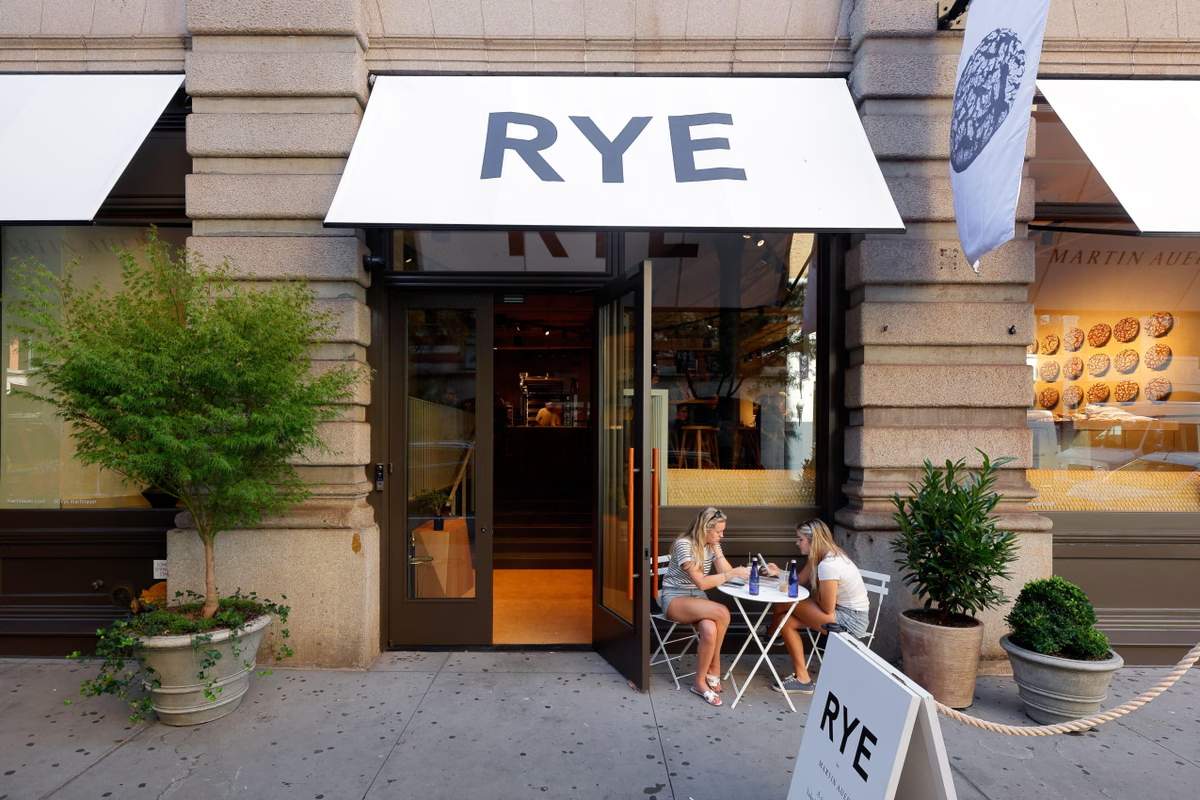








A 3.3lb loaf of 100% rye sourdough has become a viral sensation and an unlikely status symbol in New York City. Sold at Rye—the first US location of the Austrian bakery Martin Auer—the bread commands a $60 price tag in the SoHo neighborhood. While the full loaf is priced at $60, the bakery also offers half-loaves for $30 and quarter-portions for $15.
Co-owner Tim Auer defended the pricing by highlighting the labor-intensive production process. He told People that the rye sourdough requires a daily feeding schedule and a 24-hour fermentation period before the dough can even be prepared. This method is central to the brand’s identity, which leans on the tradition and legacy of Tim Auer’s great-grandfather, who founded the original business. That takes about 24 hours before you can use it again. Ferment the dough of the bread, shave the bread, ferment the dough again, bake it, and then you have to let it rest.”, then you need to make the dough.
Gadi Peleg, founder of Breads Bakery and a prominent figure in the NYC baking scene, is among those defending the product. He praised the bakery’s approach, calling the bread amazing and describing Martin Auer as a rye genius. Peleg cautioned observers against fixating solely on the $60 figure, noting that the sheer size of the loaf makes it a substantial item. He argued that a quarter-loaf is comparable to a standard-sized offering elsewhere and expressed enthusiasm that rye is receiving renewed attention in the city. Flour, salt and time, the bread has attracted the kind of attention once reserved for rainbow bagels, cronuts and skyscraper milkshakes, made with just water. There’s the expense of operating in lower Manhattan, importing organic rye flour from Austria and producing the bread on site, and of course.
However, not all culinary professionals are convinced by the price-to-value ratio. Dimitri Viaud, executive chef at Mille-Feuille Bakery, noted that while his shop also utilizes 24-hour fermentation methods, they sell a 2lb loaf for approximately $12. Viaud emphasized that bread is traditionally a popular, accessible staple. He suggested that Rye is selling the novelty and the experience rather than just the bread itself, noting that even as someone comfortable spending on high-quality food, the $60 price point for a single loaf seems excessive. In part, on what someone believes they are really buying, the answer depends.
Nicolas Buchot, an executive sous-chef at Mille-Feuille, echoed these sentiments after visiting the SoHo shop. He described the bakery as a gorgeous space with a presentation akin to a luxury fashion boutique. While he acknowledged the high-end aesthetic, he questioned the long-term sustainability of a business model so heavily reliant on a single, expensive signature item. He wondered if the shop can attract enough repeat customers to remain viable beyond the initial wave of social media curiosity.
Rick Camac, executive director of industry relations at the Institute of Culinary Education, views the phenomenon through the lens of modern consumer habits and social currency. He suggests that for many, the bread acts as a conversation piece, similar to other internet-famous foods like exotic burgers or rare ingredients. Camac noted that while he is accustomed to expensive dining in New York, the allure of this bread is driven significantly by the fear of missing out—or FOMO—a term coined by Patrick J. McGinnis in 2004.
This trend highlights a shift where participating in viral food culture provides consumers with shareable content. While some critics dismiss the trend as a marketing ploy, others suggest it taps into a desire for connection and novelty in an increasingly difficult economic climate. Food & Wine magazine succinctly captured the skepticism surrounding the hype, stating that while the bread is good, it is not necessarily at a level that justifies such a extreme price point. Ultimately, the question remains whether the bakery can evolve its concept to retain a loyal customer base once the initial viral novelty fades. Which begs the inevitable question – is it actually worth that much.