
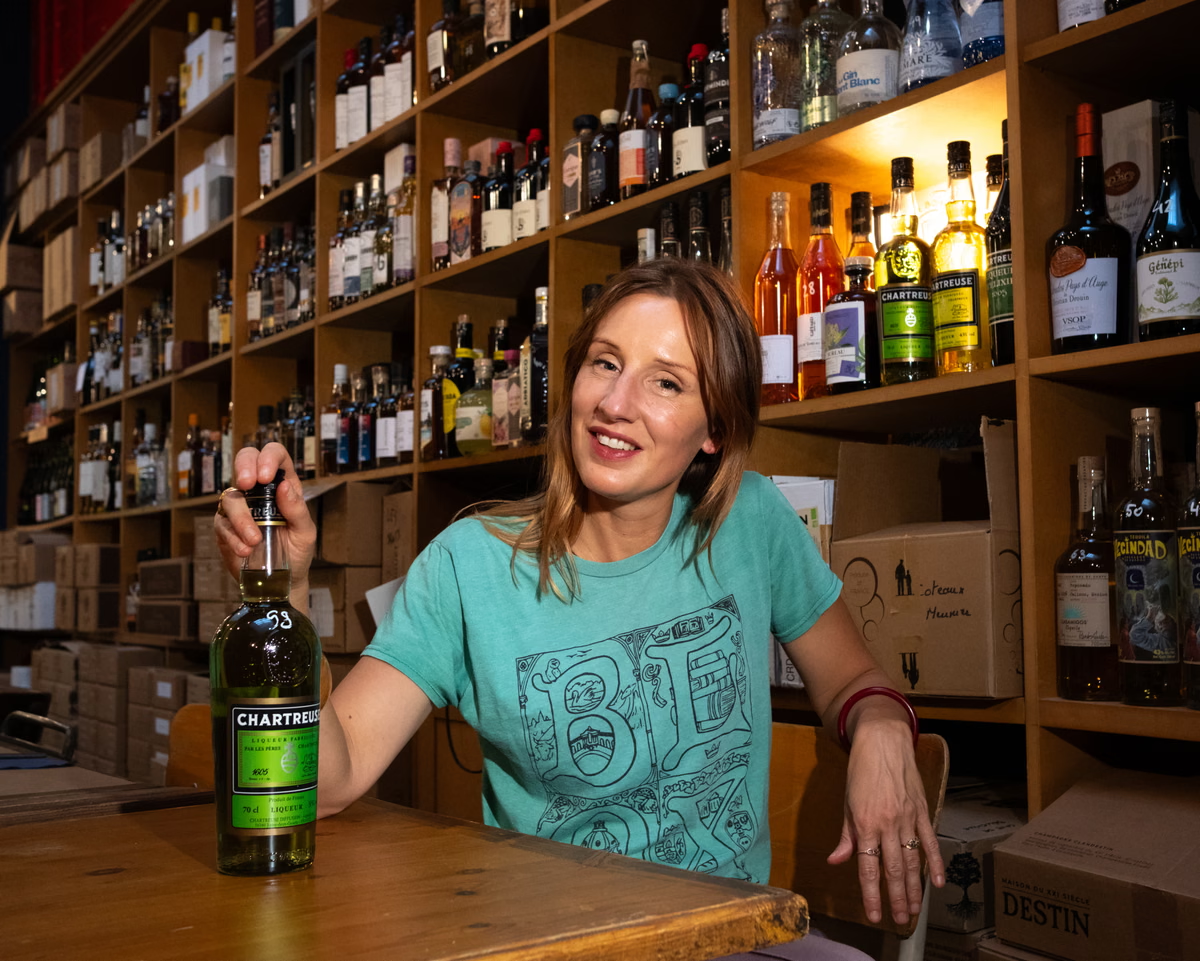








In the hills overlooking the 19th and 20th arrondissements of Paris, the ritual of the digestif has taken on a new level of prestige. Among the growing numbers of enthusiasts seeking out the drink is a cross-section of residents who are turning to Chartreuse, a potent herbal liqueur defined by its distinctive green or yellow hue and a history rooted in secrecy. At La Commune, a local favorite where tequila shots remain accessible, the stock of the spirit was depleted within a single night. A short walk away, at Les Triplettes de Belleville, bartender Hugo Césard serves a navy-strength 40% ABV yellow version to patrons. Césard notes that while the drink offers a sweet, fennel-forward profile that shifts into complex Alpine meadow notes, consuming the high-proof green variety at room temperature is generally discouraged unless one specifically aims to get very drunk. Too early for bedtime, but up the steep hill that straddles the 19th and 20th arrondissements, digestif hour is in sight, too late for cocktails. Of varying strengths, colours and prices, but none are that easy to find, there are several types. A cultish leftwing hangout in Belleville, where tequila shots cost less than €4, they finished the Chartreuse the night before, at La Commune. A few doors down at Les Triplettes de Belleville, I spot a third-full bottle of the cheaper yellow stuff sandwiched between the gins. Hugo Césard, the 19-year-old bartender, pours me a €7 shot, my third of the night. It behaves like ouzo: sweet, fennelly, cloyingly thick, on first taste. While the green version is about 55%, this one is a navy-strength 40% ABV. In theAlps, you’re more likely to drink it in hot chocolate.
The cultural fascination with the spirit extends across various demographics, from students to long-time bar regulars. At the Paris bar Combat, the liqueur is frequently served chilled in crystal glassware or mixed into The Last Word cocktail alongside gin, lime, and maraschino cherry. Bartender Marie-Paule Corby praises its complicated flavor, though the drink remains polarizing; some, like 30-year-old customer Nour, find its sweetness overwhelming, often associating it strictly with its origins in the Alps. This trend is not confined to France; industry experts at La Cave Pigalle observe that interest surged post-pandemic, reflecting a broader consumer shift toward authentic, traditional, and storied products.
Production of the spirit is famously controlled by the Carthusian monks, who have maintained a policy of extreme discretion regarding their 130-ingredient formula. The origins trace back to 1605, when Duke François Annibal d’Estrées entrusted the monks with a manuscript for an elixir of long life. After more than a century of research, the monks finalized the recipe for the “élixir végétal,” which remains the base for today’s product. By 1840, the line had expanded to include the herbal green version and the sweeter yellow variation. In earlier centuries, the green liquid was even administered to cholera patients, not as a cure, but as a potential means of easing symptoms.
Scarcity has only fueled the brand’s allure. In 2021, the monks announced a cap on production to prioritize their monastic life of prayer and solitude, rejecting the notion of mass manufacturing. While rumors persist that the Vatican intervened to remind the monks of their spiritual calling over business interests, official representatives maintain that the goal is to shift focus back toward herbalism. This production limit has left retailers like Remy Pousse-Vaillant of La Cave de Belleville struggling to secure stock. With an annual allocation of only 24 green and 24 yellow bottles, many shops keep their inventory hidden in basements to avoid the pressure of consumer demand.
Despite the lack of aggressive advertising compared to other major spirit brands, Chartreuse has maintained a presence in popular culture through references in the works of Bruce Springsteen and Tom Waits, as well as its appearance in classic literature like The Great Gatsby. Currently, only three monks worldwide are privy to the full recipe, assisted by five anonymous lay people at the distillery. As the brand spokesperson notes, their motto remains that the cross stands firm while the world turns, a sentiment that resonates with a modern audience fatigued by digital saturation and seeking tangible, historical products.