
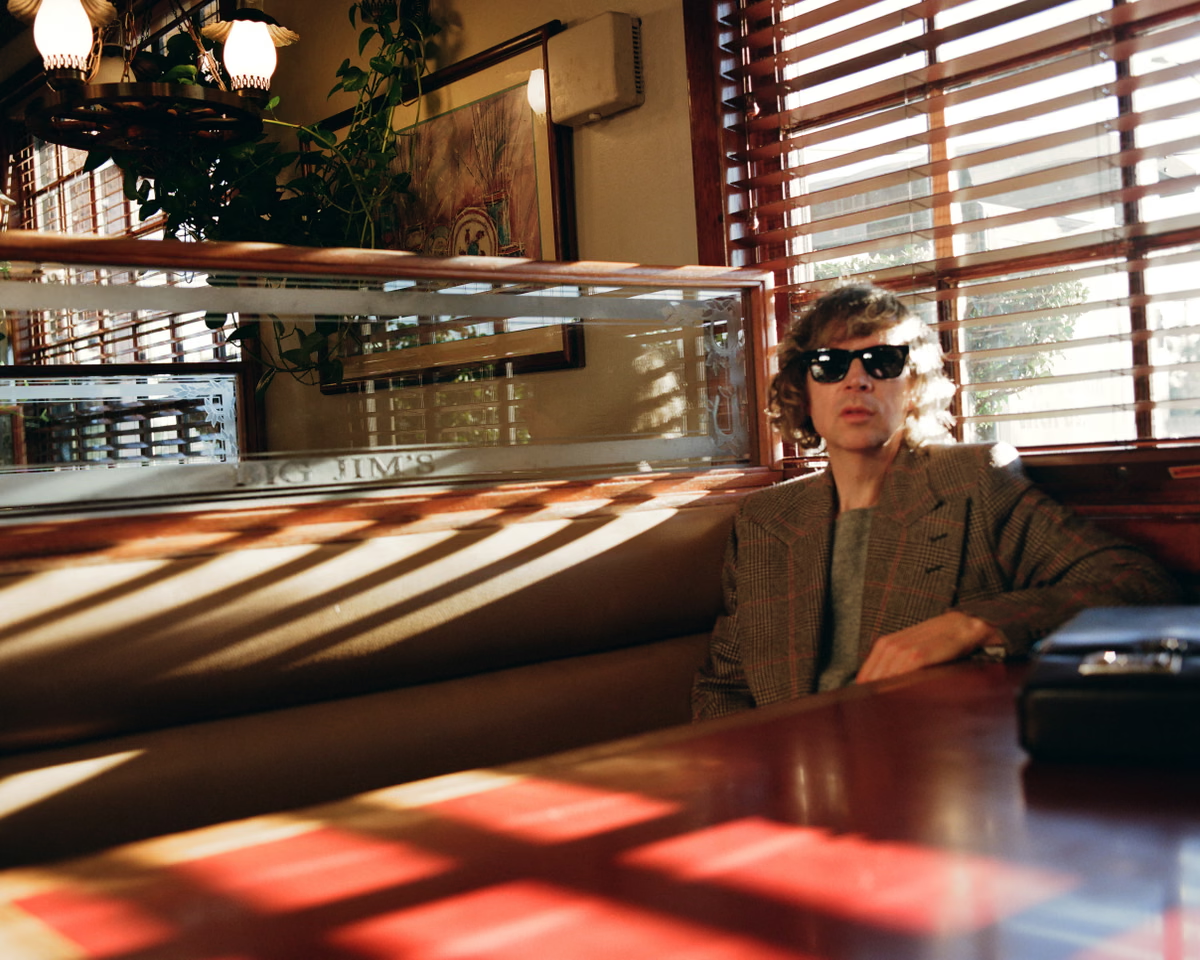









Reflecting on a career that has spanned from the late 1980s to the present, Beck admits he remains driven by the singular goal of assembling a meaningful body of work. Despite the industry’s tendency to shift focus, he views his time in music as an ongoing process of returning to the proverbial mine to unearth songs that endure. When asked about the dichotomy between his funk-inspired output and his more melancholy, lonesome tracks, he acknowledges that the latter aligns more closely with his intrinsic nature. However, he credits the funk-oriented material for pulling him out of his shell and preventing him from becoming overly self-reflective or ponderous.
Addressing the 1994 MTV interview with Sonic Youth’s Thurston Moore—frequently cited as one of the most chaotic in the channel’s history—Beck explains that the ramshackle performance was largely intentional. He notes that the pair filmed several segments that executives refused to air out of fear of lawsuits. Among the off-screen antics, Beck recalls bringing an old-fashioned telephone to the set, which the pair eventually destroyed with baseball bats. For Beck, these moments were essential challenges to the highly curated and airbrushed culture of 1980s television, which he felt desperately needed real, jarring ruptures in its smooth, content-driven machine.
The musician also disputes the validity of the “slacker rock” label applied to him early in his career. He characterizes the term as reductive, noting that his rise coincided with a massive influx of underground music that had been quietly developing throughout the 80s and early 90s before finally surfacing in the mainstream. He recalls his early days attempting to sign with record labels, where he was repeatedly told his appearance was too rough and messy to succeed in a market that demanded polish. Regarding his sustained career, Beck emphasizes that he never held specific expectations, focusing instead on the essential task of writing quality songs as the primary metric for long-term survival.
When questioned about his aesthetic inspirations, specifically the “devil’s haircut,” Beck suggests it would likely feature a rockabilly edge, drawing comparisons to a bizarre variation of the mullet sported by a subculture of proto-punk youths in Australia known as “sharpies.” He notes that he actually possesses a collection of 1980s salon hairstyle books that feature many such dramatic, architectural looks. On a different note, he addressed his inclusion in the 1998 New Radicals hit “You Get What You Give,” which famously threatened him alongside Hanson, Courtney Love, and Marilyn Manson. Beck recounts that he eventually crossed paths with the group’s songwriter, Gregg Alexander, at an Erewhon supermarket; rather than a confrontation, Alexander expressed his admiration and suggested they collaborate.
Addressing queries about past collaborators, Beck confirms he remains in touch with the production duo the Dust Brothers, with whom he worked on his 2005 album *Guero*. Despite their relative disappearance from the industry, he sees them occasionally and notes that they still hold some unfinished collaborative projects. His selective nature regarding projects—a trait that led him to decline requests for the *Austin Powers* sequels and *Shrek*—also extended to his eventual cameo on the animated series *Futurama*. Although he initially rejected the offer, his bandmates later encouraged him to reconsider after finding the script on their tour bus. He ultimately said yes to the appearance because the concept of a chain-smoking alcoholic robot appealed to him, similar to his decision to record “Everybody’s Got to Learn Sometime” for Michel Gondry’s *Eternal Sunshine of the Spotless Mind*.
When asked for his go-to tracks for dancing, Beck points to the funk era of the early 1980s, highlighting the work of Sly Stone, James Brown, Prince, and Talking Heads as his definitive classics. These influences continue to shape his perspective as he promotes his latest release, *Ride Lonesome*. The report also notes that i don’t really know any other life. The report also notes that and out of that, maybe there’s a few songs at the end that are not bad, i’ve spent a lot of my time trying to create a body of work. The report also notes that trying to come back with a couple of things worth keeping, so I just keep going down into the mine. The report also notes that if I had to stop and get a job painting houses or something, I would still make songs just for myself, because that’s how it started. The report also notes that the other side of what I do – Loser or Odelay – was more of a fluke. The report also notes that quiet songs, and stuff that’s a little more genreless, now it’s kind of reversed – they prefer the more introspective.