









President Donald Trump recently announced that Russia and Ukraine have reached a mutual agreement to cease strikes on energy infrastructure. The administration characterizes this move as a critical effort to stabilize global diesel prices, which have climbed significantly as the war enters its fifth year. While Washington maintains that these energy attacks are the primary driver of international fuel instability, analysts suggest the push is heavily influenced by the president’s desire to mitigate domestic inflation ahead of the November midterm elections.
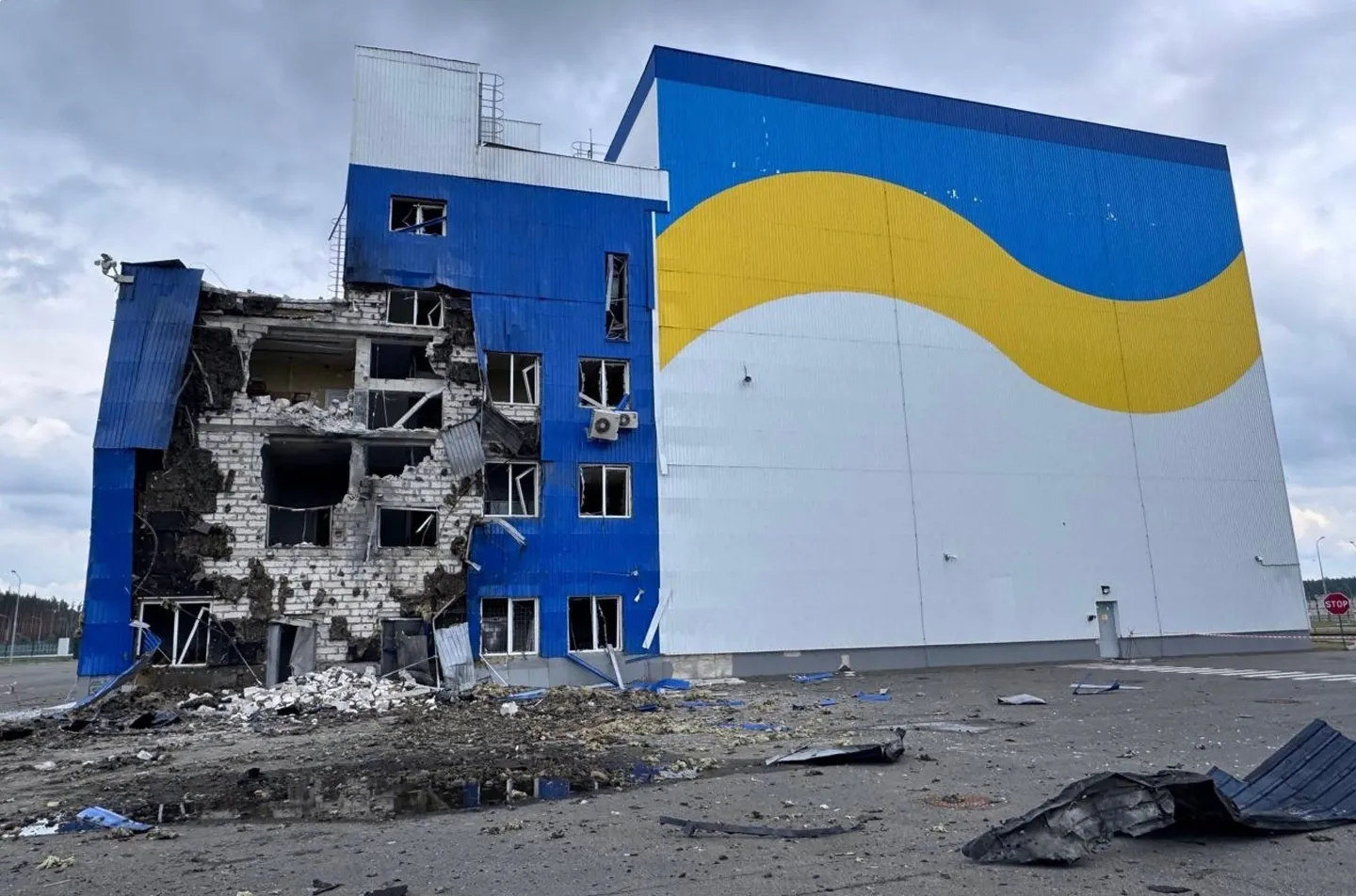
Moscow responded to the proposal by calling it a good idea, though officials stopped short of confirming that attacks on Ukrainian energy facilities would immediately cease. Meanwhile, Kiev has pledged to implement de-escalatory steps, provided that the United States successfully secures a concrete commitment to compliance from Russia. Despite the announcement, conflict has persisted on the ground; reports indicate that Russian forces have targeted petrol stations in Kiev, while Ukraine claims to have launched a drone strike against a Russian oil refinery.
Market experts and regional analysts, including Arkady Moshes of the Finnish Institute of International Affairs, argue that Trump’s framing of the energy crisis does not fully reflect the complexities of the global market. While the president claims the Russia-Ukraine conflict is the sole cause of rising diesel costs—contending it outweighs the impact of the US-led war on Iran—many observers point to broader disruptions. These include shipping crises in the Strait of Hormuz and ongoing attacks near the Bab al Mandab Strait, which have severely strained global oil logistics.
The economic stakes remain high as US average retail diesel prices recently surged past $6 a gallon. Data from the International Energy Agency reveals that Ukrainian drones have historically struck Russian refineries approximately every three days, causing logistical bottlenecks for repair efforts. Some experts, such as Rachel Ziemba of the Center for a New American Security, suggest that halting these strikes could provide Russia time to conduct necessary repairs, though she notes that this would offer limited relief if transit channels in the Gulf remain blocked by wider geopolitical tensions.
Diplomatic efforts to reach a more comprehensive resolution remain ongoing, though they have yet to produce a breakthrough. Special envoys Steve Witkoff and Jared Kushner have held discussions with both President Vladimir Putin and President Volodymyr Zelenskyy. Although the Kremlin described these interactions as positive, fundamental disagreements regarding sovereignty persist. Moscow continues to demand that Kiev cede territory, particularly in the Donbass, and renounce future NATO membership, while Ukraine maintains that any settlement must ensure its territorial integrity and defensive capabilities.
Despite the lack of a formal peace agreement, both nations have indicated a tentative willingness to engage in US-mediated talks currently scheduled for October 2026. Kyrylo Budanov, head of Ukraine’s Defence Intelligence, confirmed preparations for these discussions, and Kremlin spokesperson Dmitry Peskov acknowledged that the talks are being viewed within the context of the foreseeable future. However, political scientists like Mikhail Alexseev suggest that without a more forceful diplomatic strategy—such as officially designating Russia as the primary aggressor and increasing support for Ukraine—these negotiations are unlikely to yield lasting results.
Critics also point out that past attempts to negotiate energy pauses have largely failed. An agreement in January 2026 lasted only a few days, and a proposed 30-day truce in 2025 never materialized. As the political calendar moves toward November, the administration faces the dual pressure of managing an unpopular conflict in the Middle East and addressing the economic strain of domestic energy prices. With both sides continuing to use the battlefield to shape their leverage, observers warn that the current diplomatic push may struggle to overcome the entrenched positions that have characterized the conflict since its inception. The report also notes that this is Trump’s motivation,” Arkady Moshes, director of the EU’s Eastern Neighbourhood and Russia programme at the Finnish Institute of International Affair, said. The report also notes that meanwhile, inflation in the country remains elevated — and the Democratic Party is seeking to capitalise on politically. The report also notes that meanwhile, attacks by the Houthi group near the Bab al Mandab Strait have jeopardised commercial shipping in the southern Red Sea, further exacerbating global oil supply pressures. The report also notes that this would be one step down the escalation ladder,” he says, but adds the situation would still be nowhere near a lasting truce, noting that since 2014 not a single ceasefire agreement has held even for several days, but even if this were true. The report also notes that US average retail diesel prices rose above $6 a gallon for the first time last week. The report also notes that with US diesel up 65 per cent, while Russian and Middle Eastern exports fell by roughly 90 and 75 per cent, experts cited by The New York Times say tensions involving Iran drove price rises. The report also notes that adjunct senior fellow at the Center for a New American Security, a Washington-based think tank, told Bloomberg that “the thought here is that a stop in attacking refineries would give Russia time to repair and reduce risk of further outages, rachel Ziemba.