







The international border between International Falls, Minnesota, and Fort Frances, Ontario, has long been defined by deep-rooted personal and economic ties. Residents of these two communities, separated by the Rainy River, frequently cross the boundary for work, shopping, and family visits. However, the current trade dispute between the United States and Canada is placing significant strain on these relationships, as local business owners report a noticeable decline in cross-border commerce.
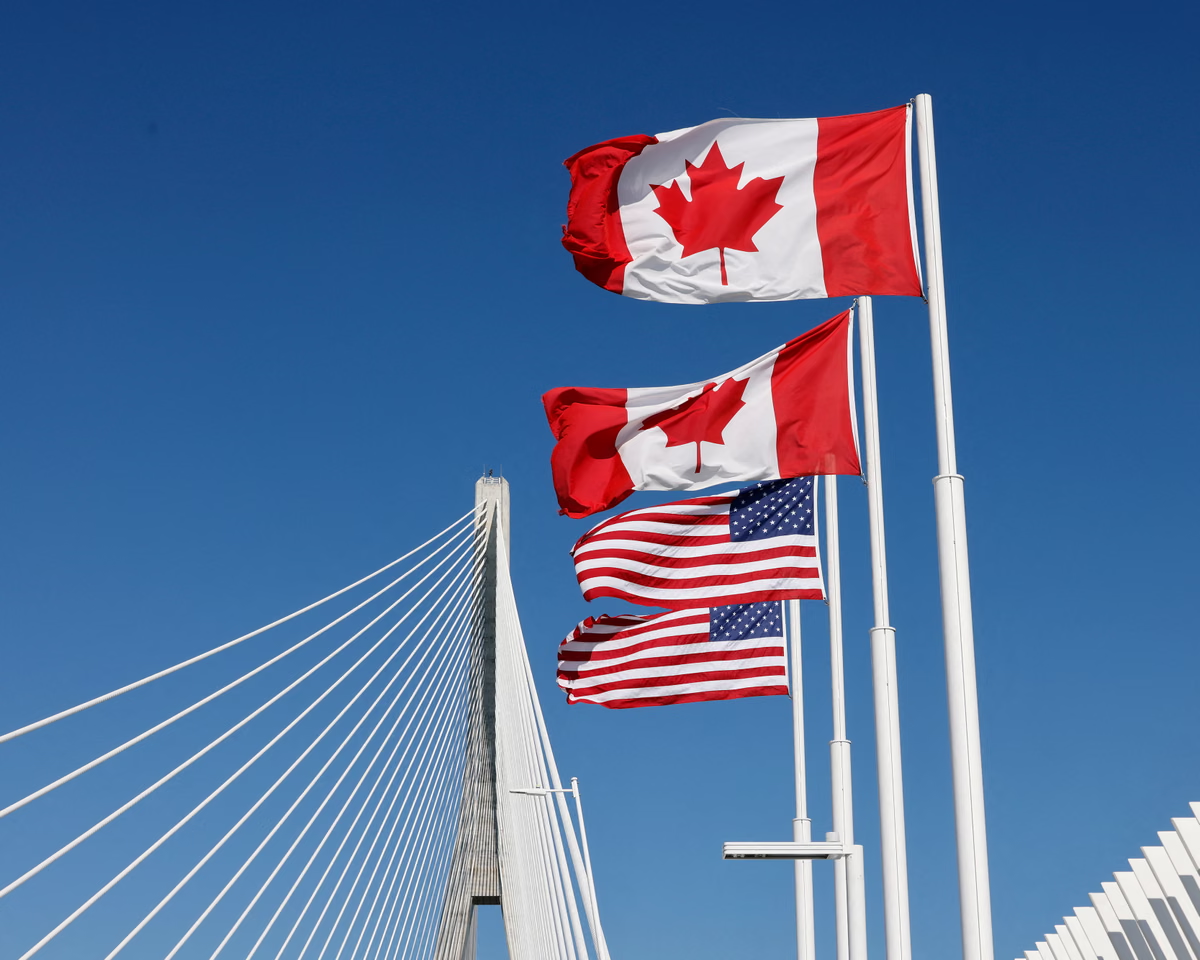
Tom Reid, who operates a duty-free shop in Fort Frances, illustrates the personal impact of the cooling relations. Reid, who previously crossed the border regularly for errands—including visiting a stylist in International Falls whose sister is married to his wife’s cousin—now finds himself staying on the Canadian side. He has shifted his purchasing habits, increasingly opting to “buy Canadian” as a response to the ongoing uncertainty. “I don’t have that much choice, eh?” Reid noted, gesturing toward the Canadian flag displayed in his shop.
The economic friction is compounded by political rhetoric from Washington. Andrew Hallikas, the mayor of Fort Frances, emphasized that while his residents share a strong affinity for their American neighbors, they are increasingly “irate” over the current administration’s trade policies. Hallikas specifically condemned suggestions that Canada should become the 51st US state, stating, “You cannot imagine how angry that makes us. I cannot make this clear enough: we will never become the 51st state.”
This sentiment is echoed by local leaders who feel caught in the middle of a conflict directed from over a thousand miles away. Drake Dill, the mayor of International Falls, described the situation as a “donnybrook,” comparing the breakdown in relations to a falling out between two lifelong friends. “That’s like driving a nail in a fence,” Dill explained, “and then you pull it out, and even if the fence still stands, there’s a hole where the nail was.” Despite their personal friendship and a joint declaration signed in 2025 to affirm their towns’ bond, both mayors acknowledge that local officials have limited power to mitigate the broader economic fallout.
The impact on local businesses is becoming increasingly tangible. In International Falls, craft store owner Guba reported seeing fewer Canadian customers, noting that they are becoming more selective about their visits and purchases. Meanwhile, Minnesota state senator Grant Hauschild, who represents the majority of the state’s border region, confirmed that many businesses are struggling with lost revenue and the unpredictability of new tariffs. Hauschild expressed concern about the long-term damage to the bilateral relationship, hoping for a return to normalcy once the current period of instability passes.
The physical crossing itself, a century-old toll bridge that charges $10 for an average car, remains a symbol of the interdependence between the two towns. Historically, both communities developed around paper mills, and their economies have long relied on tourism, particularly fishing for walleye. Today, however, the political climate has altered these interactions. Some residents, such as a man interviewed in an International Falls coffee shop, expressed fear about displaying American symbols while in Canada, citing the aggressive nature of the current trade attacks.
The push to prioritize domestic goods has also gained momentum. Ontario Premier Doug Ford has ordered the removal of American liquor from government-run stores, a move that reflects the broader shift toward economic nationalism. While some business owners like Reid have seen average tourist seasons, others are struggling to adapt to the changing landscape. For many, the primary concern is the lack of a clear timeline for a resolution, leaving businesses unable to plan for the future with any degree of certainty.
As the trade war continues, the residents of International Falls and Fort Frances remain in a state of uneasy waiting. Leaders like Dill continue to hope for the best, even as the political divide complicates daily life. For families who have spent generations crossing the Rainy River for groceries, hardware, or social visits, the current situation represents a frustrating departure from the neighborly cooperation that has defined the region for over a century. The report also notes that dine, go bowling, take their kids to sports and visit each other, people cross the border frequently to shop. The report also notes that and his derogatory comments about their country, has Canadians – known for their politeness – angry, but Trump’s trade war against the US’s northern neighbor. The report also notes that and, in an unusual show of patriotism, encouraging consumers to “ buy Canadian instead ”, they’re shopping less at US businesses. The report also notes that and the leaves starting to change into yellows and oranges, the two towns are quieter, with tourist season winding down. The report also notes that though no one who lived in the towns had seen that directly reflected in prices yet, canada’s retaliatory tariffs went into force this week. The report also notes that it was the latest heated battle between the two countries in the last nearly two years.