


Twenty-five years after the September 11, 2001, terror attacks, retired NYPD Detective Greg Semendinger has provided a rare look at the tragedy through a collection of aerial photographs. As a helicopter pilot for the New York City Police Department, Semendinger was among the few individuals to capture the destruction of the World Trade Center from the air, preserving a historical record of the events that unfolded that morning.
Semendinger, who served 35 years with the NYPD including 18 years in the Aviation Unit, was on duty at Floyd Bennett Field in Brooklyn when the first plane struck the North Tower at 8:46 a.m. Initially believing the incident might involve a small private aircraft, he looked toward Manhattan and realized the scale of the disaster upon seeing the massive amount of smoke billowing from the skyline. He and his partner, Jim Ciccone, departed for the site immediately, arriving within eight minutes of the initial impact.
Although not an official police photographer, Semendinger frequently carried a camera to document his unit’s rescue operations. He had his equipment with him that morning as he and Ciccone flew an L-shaped pattern around the burning North Tower, searching for survivors on the roof. They soon realized a rooftop rescue was impossible due to the extreme danger. The situation escalated at 9:03 a.m. when a second plane hit the South Tower, confirming the event was a coordinated terrorist attack.
The pilots were briefly diverted to the Bronx to pick up a commanding officer, but they were returning to the site when the South Tower collapsed at 9:59 a.m. By this time, Semendinger had switched to a digital Canon camera, which featured early image stabilization technology that proved crucial for capturing clear shots while navigating the turbulent air in a helicopter. He continued to document the scene for approximately 90 minutes, capturing about 150 images in total.
As they hovered near the burning North Tower, Semendinger noticed the structure beginning to buckle. He issued a warning over the police radio, later cited in the book “102 Minutes,” urging the evacuation of all personnel in the immediate vicinity. Reflecting on the images he captured, he pointed to the visible gaps in the building’s steel columns, explaining that the streams of smoke and debris were caused by people trapped inside who were using tablecloths and other items to signal for help. The North Tower ultimately collapsed at 10:28 a.m.
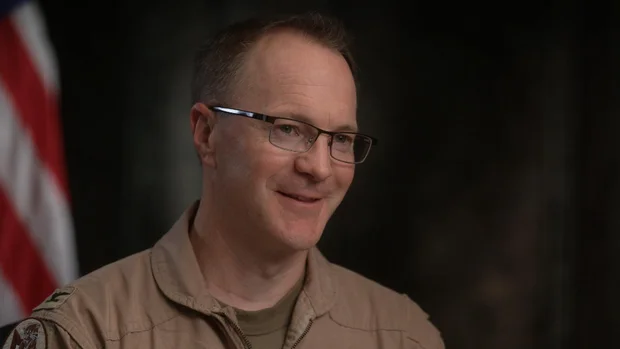
While some of these photographs have appeared in memoirs by former police and fire commissioners, news articles in 2010, or the 9/11 museum at Ground Zero, many remained private until recently. Semendinger, now 77 and retired since 2002, recently reviewed his digital archive at a Long Island airport. He noted that the compression from the second plane’s impact and the sheer volume of paper and debris ejected from the buildings remain vivid in his memory.
The collection serves as a stark, frozen-in-time account of the horror witnessed by first responders. For Semendinger, the process of reviewing these images remains a deeply personal experience, as they continue to transport him back to the events of that fateful day. His archive provides a unique perspective on the collapse of the towers, documenting the final moments of the structures and the immense scale of the tragedy that reshaped Lower Manhattan. The report also notes that retired NYPD Detective Greg Semendinger was a helicopter pilot who took some of the only aerial photos of the Twin Towers’ destruction 25 years ago. The report also notes that he could see the giant gash where an airliner had sliced through seven floors near the top of the north tower, and black smoke was billowing out, as his chopper approached. The report also notes that he grabbed it and started snapping away. The report also notes that with his copilot at the controls and hovering above, Semendinger trained his lens as the second tower vaporized in a plunging cascade of debris, and an immense grey cloud mushroomed across Lower Manhattan. The report also notes that some of the photos he took 25 years ago have emerged into public view in various ways: appropriated by other people for their books; displayed in news articles in 2010; mounted in the 9/11 museum at Ground Zero with his permission. The report also notes that when he shared his trove with Network for 9/11 anniversary coverage, but many have remained unseen until recently. The report also notes that the horrific scenes he witnessed and preserved for history, he recounted his fateful flight as he clicked from one photo to the next.