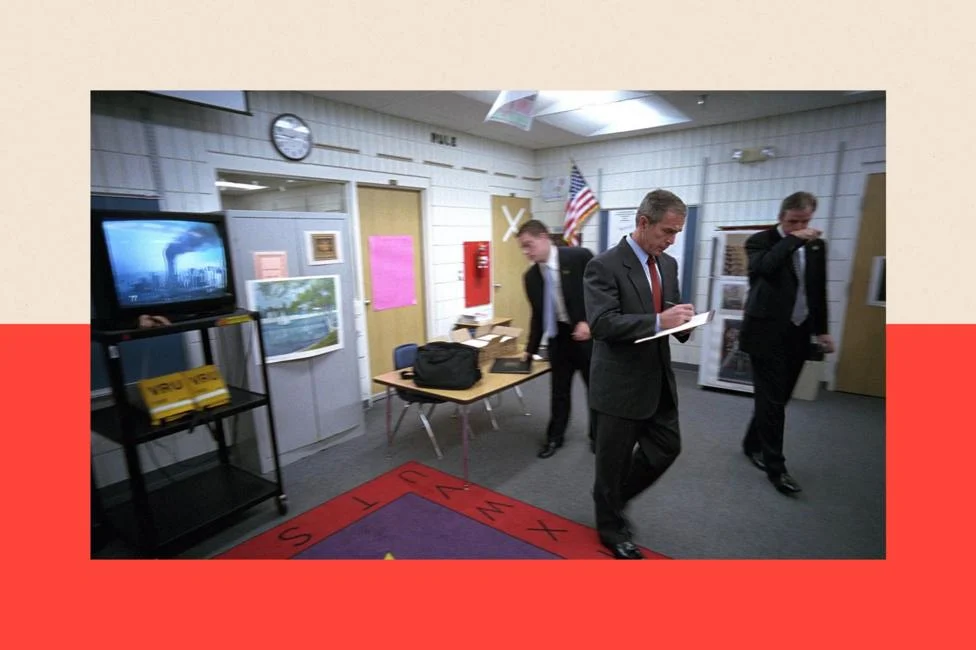









The fundamental obligation of any government is to ensure the safety of its citizens, a duty the United States failed to uphold on September 11, 2001. The tragic events of that day, which claimed 2,977 lives, fundamentally altered the trajectory of global foreign, security, and intelligence policy for the first two decades of the 21st century.
Reflecting on the anniversary, the scale of the intelligence failure remains stark. While the CIA had tracked the al-Qaeda network and its leader, Osama Bin Laden, for years—even maintaining a dedicated task force—the intelligence community suffered from what the 9/11 Commission Report later identified as profound “failures of imagination, policy, capabilities and management.” Intelligence agencies possessed fragmented pieces of the puzzle but failed to synthesize them into a clear picture of the impending threat.
Nine days after the attacks, President George W. Bush, who was visiting a Florida school when the tragedy unfolded, declared the “War on Terror.” This declaration initiated a massive shift in strategic focus. In the 25 years since, Western intelligence agencies have achieved numerous successes, including the foiling of various plots and the successful prosecution of suspects. However, these accomplishments have been punctuated by significant setbacks.
Organizational changes followed the attacks, most notably the creation of the National Counter Terrorism Center and the office of the Director of National Intelligence. Cooperation between Western agencies has improved significantly since 2001, with the sharing of information becoming more fluid and less hindered by the rivalries that previously hampered efforts.
Despite these structural reforms, intelligence assessments have faced severe criticism. In the lead-up to the 2003 invasion of Iraq, MI6 provided information to the UK government regarding Saddam Hussein’s alleged weapons of mass destruction that was later deemed seriously flawed and overly reliant on unreliable sources. General Sir Richard Shirreff, who served as a divisional commander in Iraq, noted that the conflict was built upon deeply compromised intelligence. The subsequent Butler Review confirmed these systemic failures, leading to a complete overhaul of how MI6 processes raw field intelligence.
Domestic security has faced similar challenges. MI5, while successfully preventing many attacks, has struggled with the sheer volume of “Subjects of Interest.” Lord Jonathan Evans, who led the agency from 2007 to 2013, highlighted the constant pressure of prioritizing leads. A notable failure occurred in 2005, when the agency was aware of 7/7 ringleader Mohammed Sidique Khan but could not determine his specific intent, resulting in the London suicide bombings that killed 52 people.
The moral landscape of the post-9/11 era also drew intense scrutiny. Human rights organizations condemned the abuse of detainees in US custody in Iraq and Afghanistan. Similarly, in 2004, MI6 was involved in the rendition of Libyan Islamist Abdelhakim Belhaj and his wife from Thailand to Libya, a move that remains a point of controversy.
The nature of the threat has shifted significantly over the last quarter-century. While non-state terrorism remains a concern, state-level threats from nations like Russia, China, Iran, and North Korea have become increasingly prominent. These countries are now classified as “hard targets” for intelligence gathering. Experts note that Western intelligence previously misunderstood the trajectory of China’s rise, incorrectly assuming that economic integration would inevitably lead to political alignment.
Modern intelligence operations also face technological hurdles. While biometric data—including facial, iris, and gait recognition—has advanced, these same technologies make it increasingly difficult for intelligence officers to operate across borders without detection. Sir Alex Younger, Chief of the Secret Intelligence Service from 2014 to 2020, observed that the first two decades of the century were dominated by counter-terrorism, but the focus has now broadened to address these complex state-based challenges.
Strategic miscalculations remain a risk. Some analysts argue that the decision by Donald Trump to join Israel in attacking Iran this year demonstrated a failure of intelligence imagination, ignoring the clear risks identified by Gulf allies. As the world marks 25 years since 9/11, the lessons of that day continue to be integrated into a landscape where the threats are more diverse, technologically advanced, and geopolitically complex than ever before. The report also notes that yet tragically, nobody joined up the dots in time, the intelligence was there. The report also notes that 9/11, as the attacks on the US became known, came to define â along with the response â a generation of foreign, security and intelligence policy for the first two decades of this century. The report also notes that as al-Qaeda’s suicide pilots flew those hijacked planes into the World Trade Centre, I was just finishing a deployment in our Middle East bureau, on 11 September 2001. The report also notes that as a Palestinian taxi driver drove me through the pine-clad hills west of Jerusalem to Tel Aviv’s Ben Gurion airport he suddenly turned up the car’s radio. The report also notes that something big has happened in America,” he said. The report also notes that the attacks did not come out of nowhere. The report also notes that it even had a taskforce dedicated to hunting him down. The report also notes that in the ensuing 25 years there have been numerous intelligence successes as well as failures on both sides of the Atlantic.