

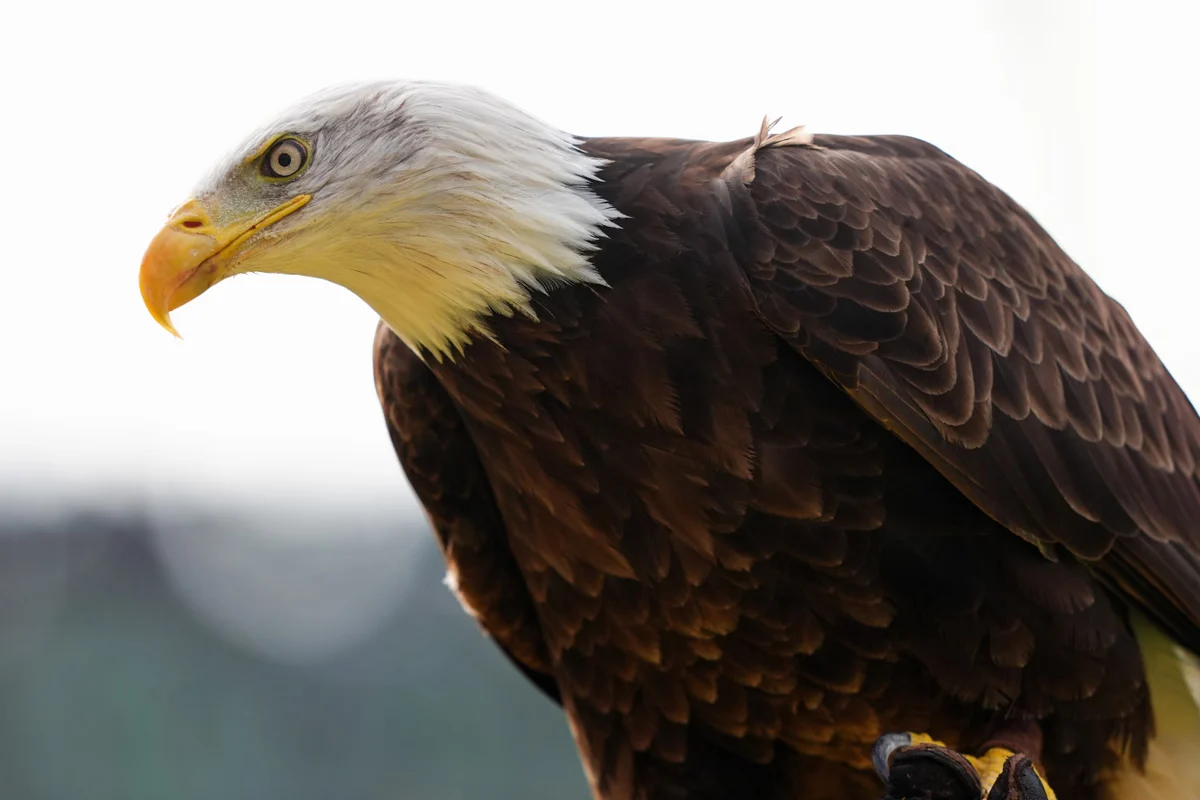









In late August, a photograph shared by the White House on social media depicted a bald eagle standing over a Canada goose. The image, which showed the raptor pinning the goose into winter slush, was widely viewed as a symbolic statement of defiance during a period of strained trade relations between the United States and Canada.
However, the symbolism ignores a significant historical reality: the bald eagle, which became the official U.S. national bird in 2024, was once nearly wiped out across the country. Its recovery was largely made possible by the very nation the White House image seemed to challenge, as Canada played a pivotal role in repopulating the species.
Before European settlement, an estimated half-million bald eagles thrived across North America near open water. By 1782, the bird was featured on the Great Seal of the United States. Yet, as settlements expanded, the birds were increasingly viewed as threats to livestock and fish resources. David Bird, a professor emeritus of wildlife biology at McGill University, noted that these perceptions were ultimately proven false, but the damage was already done.
A government-sanctioned bounty program, which began with a 50-cent reward for eagle feet and reached $2 by 1949, led to the killing of over 100,000 birds before the program ended in 1953. This pressure was compounded by the widespread use of the pesticide DDT, which caused eggshells to thin and break prematurely. By 1963, only 417 breeding pairs remained in the lower 48 states.
To save the species, biologists turned to Canada, where DDT usage had been less extensive. A 1983 report detailed “Operation Eaglet,” a logistical effort involving float planes and cars to transport juvenile eagles south. In one instance, eight eaglets from Manitoba were distributed to Pennsylvania, New Jersey, and Massachusetts to help rebuild local populations. Over several years, 88 eagles were relocated from Saskatchewan to Pennsylvania, a state that now hosts 300 breeding pairs.
The recovery process often utilized a technique called “hacking,” where eaglets were raised in controlled environments to avoid human imprinting. While legal hurdles regarding the transport of endangered species sometimes complicated these efforts—as noted by author Darryl McGrath regarding New York’s reliance on states like Alaska—Canada remained a critical source. Other eagles were sourced from British Columbia and Nova Scotia, including 36 birds from Cape Breton that were sent to repopulate New Jersey and Massachusetts.
The specific photograph used by the White House was captured in New York, a state that had only a single breeding pair by the 1970s. Despite the current political climate, experts suggest the image of the eagle and the goose is more complex than a simple display of dominance. Canada geese, while often prey, are formidable birds capable of defending themselves with powerful, club-like wings.
The resilience of other Canadian wildlife is also notable. In 2020, a necropsy of a bald eagle found dead in a Maine lake confirmed that the bird had been killed by a common loon, which pierced the eagle’s heart with its beak during a territorial dispute. For Bird, the irony of the White House’s chosen imagery is difficult to overlook, given the deep, collaborative history of conservation that saved the American national bird from extinction. The report also notes that the eagle looks victorious and defiant, with its stark white head and brilliant yellow talons. The report also notes that the image, viewed millions of times, apparently proved irresistible to the social media handlers at the White House for sending a clear message: the United States could not be challenged by Canada, as trade talks failed and tensions between Canada and the US rose. The report also notes that long prized by Americans as a symbol even before becoming the country’s national bird in 2024, came perilously close to disappearing from much of the country – and that it was neighbouring Canada that played a critical role in its recovery, even going as far as to fly juvenile eagles south by plane to return them to US skies, but experts say the bald eagle. The report also notes that majestic presence left an imprint on the founders of the modern United States, who placed the bird on the Great Seal of the United States in 1782, the eagle’s hulking. The report also notes that (The use of the word “bald” doesn’t not mean hairless. The report also notes that instead, it comes derives from the Middle English word “balde” or “balled” which means marked by a white blaze). The report also notes that as rapidly expanding settlements put eagles on a collision course with humans, but crisis struck. The report also notes that “None of those things turned out to be true in the end.”.