
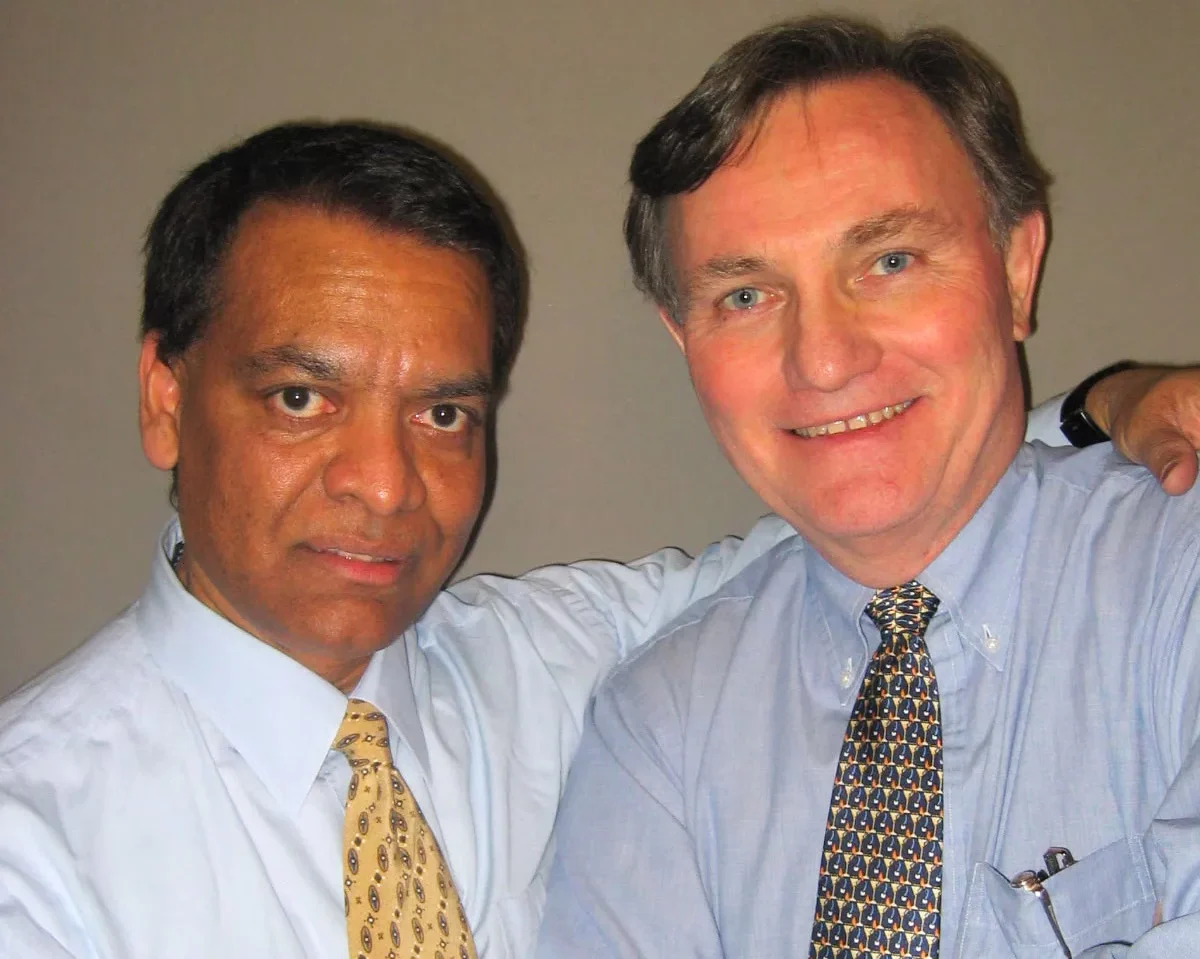







For Stanley Praimnath, the memory of September 11, 2001, remains as vivid as the clear, cloudless sky that hung over Manhattan that morning. Even after 25 years, the story he has recounted hundreds of times retains its weight. “Oh, gosh,” he says, his voice straining as if carrying a physical burden. “It’s like reliving that day.”
Nearly 3,000 people lost their lives in the terrorist attacks on New York City and Washington DC that day. Praimnath and Brian Clark, who were strangers at the time, were among only four individuals known to have survived from above the impact zone in the south tower. Their survival was the result of split-second decisions made in the smoke and fire of the 81st floor, leading them to descend 1,620 steps toward the rest of their lives.
Clark, a Canadian executive vice-president at the financial brokerage firm Euro Brokers, had arrived at his 84th-floor office at 7:15 a.m. The tranquility of the morning was shattered at 8:46 a.m. when American Airlines Flight 11 struck the north tower. As a volunteer floor fire warden following the 1993 World Trade Center bombing, Clark immediately grabbed an official torch and prepared to lead his colleagues to safety.
Three floors below, Praimnath was on the phone with a colleague in Chicago who had seen the north tower explosion on television and urged him to evacuate. As he looked out his window, he saw a plane flying directly toward him. “I made eye contact,” he recalls. He dived under his desk in a fetal position, praying as the Boeing 767 slammed into the building at 9:03 a.m., cutting through the 77th to 85th floors. The impact destroyed walls and severed electrical systems, leaving Praimnath trapped in a haze of fire and debris.
On the 84th floor, Clark’s office had exploded upon impact. He gathered a small group of colleagues and attempted to reach the stairwells, only to find stairwells B and C destroyed. They began descending stairwell A, but were stopped on the 81st floor by a woman who insisted they turn back. Clark, however, ignored the warning. He squeezed through a damaged door frame and entered the dark office, guided by the desperate shouts of Praimnath.
Using his torch, Clark located a hand reaching through a hole in a sheetrock wall. He hauled Praimnath over the partition, and the two men, who had been total strangers moments before, forged an immediate, life-saving bond. After navigating the debris and descending the stairs, they emerged onto the street just minutes before the south tower collapsed.
In the chaos of their escape, Praimnath handed Clark a business card for a small home business he operated. Over the next quarter-century, their lives remained deeply intertwined. They have shared family milestones, including the wedding of Clark’s eldest daughter, where Praimnath and his wife were seated at the head table. Clark, now 79, lives in retirement in northern New Jersey with his wife, 11 grandchildren, and two great-grandchildren. Praimnath, a decade younger, has also moved into retirement.
Both men have spent years sharing their story in schools, churches, and television studios. Clark estimates he has told the account hundreds of times, while Praimnath notes that people often refer to him as “the 9/11 guy.” For Praimnath, the experience led to a spiritual calling; he became a pastor in 2006, serving at the church where his father-in-law was senior pastor.
The aftermath of the attacks brought different challenges for each man. While Clark describes his lack of long-term post-traumatic stress as an unearned “gift,” Praimnath struggled with severe memory loss upon returning home to Long Island that evening. His wife, Jennifer, provided essential care as he slowly recovered. By October, when he returned to work at a temporary office in Jersey City, he still required a hand-drawn map to navigate his commute.
Reflecting on the passage of time, both men emphasize the lessons they have carried forward. Praimnath notes that the tragedy fostered a fleeting but profound sense of national unity, remarking that on the 81st floor, there were no divisions of race or political affiliation. He also expresses a deep realization regarding the “futility of war” after 25 years of reflection. Clark, meanwhile, maintained a strong aversion to vengeance, feeling repulsed by the public celebrations that followed the killing of Osama bin Laden in 2011.
As they look back, they remain mindful of the generations that have followed. “These children weren’t even alive when the towers fell,” Praimnath says, underscoring the importance of their ongoing testimony. For these two survivors, the events of that Tuesday morning remain a defining, yet shared, chapter of their lives. The report also notes that if anything, it only becomes more vivid. The report also notes that both saw US presidents come and go as old wars ended and new wars began. The report also notes that “It could be 800, 1,200, a number like that,” Clark estimates. The report also notes that like washing my soul with tears, it is like unloading baggage from my shoulder. The report also notes that the Guyanese-born Praimnath had settled into his desk at Fuji Bank, where he worked as a loan officer, down on the 81st floor. The report also notes that clark recalls: “The lights above me flickered and I spun around in my chair and my peripheral vision caught flames against the window. The report also notes that the flames dissipated and the airspace was filled with singed paper.”, two or three seconds later. The report also notes that he retrieved an official torch marked “WTC fire safety team” from an overhead cabinet and began shepherding staff toward the building’s central corridor.