









Iraqi authorities have temporarily closed three border crossings with Iran as part of an investigation into drone attacks that struck Saudi Arabia’s East-West oil pipeline. The government confirmed that the strikes originated from within Iraqi territory, prompting immediate security measures, including the dismissal of the military commander in the southeastern Maysan province.
A security official identified the shuttered crossings as Shalamcheh in Basra, al-Shib in Maysan, and Mandali in Diyala. Authorities implemented these closures to prevent those responsible for the drone launches from fleeing across the border. Additionally, security forces have sealed off the al-Tayyib border zone in Maysan to conduct an extensive search operation after discovering drone launch platforms in the area.
Prime Minister Ali al-Zaidi has formally approved a request from Tehran to conduct a joint investigation into the origin of these launch sites. While the specific number of drones used or their precise technical details remain undisclosed, the prime minister’s office acknowledged the threat was launched from within Maysan. In response to the breach, al-Zaidi replaced the regional military leadership.
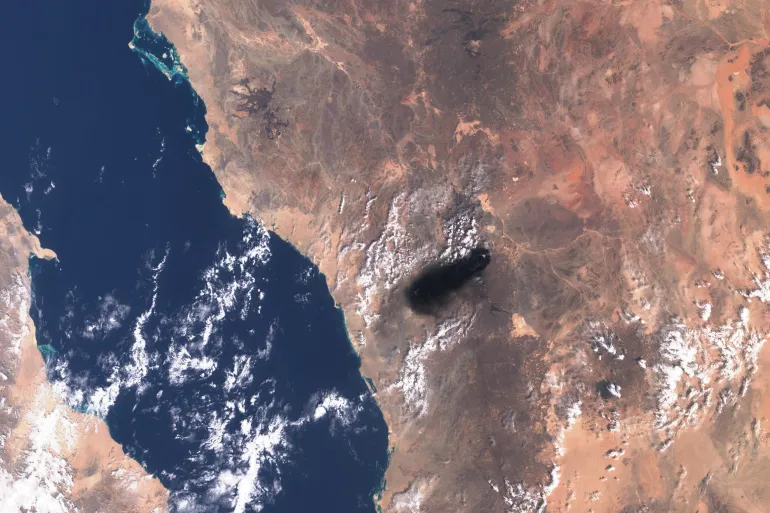
The attack, which occurred on Thursday, forced Saudi Arabia to suspend operations along the East-West pipeline as a “precautionary measure.” Riyadh stated on Friday that the projectiles originated from Iraq, where Tehran exerts significant influence over various armed factions. While no organization has claimed responsibility, the Islamic Resistance in Iraq (IRI)—an umbrella group of Iran-backed fighters—publicly disavowed the strike, calling it “an honour that we do not claim.”
U.S. President Donald Trump, currently visiting Ireland, alleged that Tehran was “probably” behind the infrastructure strike, though he did not provide evidence to support the claim. This development follows a history of Riyadh accusing Iranian-linked entities in Iraq of targeting its oil assets.
The suspension of the pipeline creates a critical energy bottleneck for Saudi Arabia. As the primary alternative to the Strait of Hormuz—which remains partially restricted amid ongoing tensions—the pipeline’s closure severely limits the kingdom’s capacity to export oil globally. Analysts warn that further disruptions in Gulf oil exports could drive up wholesale prices, particularly as the ongoing conflict between the U.S. and Iran continues to escalate.
The regional situation is further complicated by a rapid military offensive by the Iran-backed Houthi movement in Yemen. The group has seized the entire Red Sea coastline from the internationally recognized government, which is supported by Riyadh. Following these gains, the Houthis declared that all Saudi-affiliated vessels are now barred from passage through the Red Sea.