






The United States maintains an expansive global military footprint, relying on hundreds of bases and thousands of personnel to project power. However, this reach depends on a finite supply of ships, aircraft, and munitions. Six months into the conflict with Iran, these resources are being pushed to their limits, with recent assessments indicating that stockpiles of interceptors and missiles have fallen to levels described as “beyond critical.”
As Washington concentrates its military capabilities in the Middle East to secure the Strait of Hormuz and target Iranian positions, its strategic position elsewhere is increasingly compromised. Edward Erickson, a former military official, notes that maintaining high-readiness forces in the Persian Gulf inherently weakens the US posture in the Pacific and Europe. He emphasizes that concentrating forces in the Persian Gulf Area of Responsibility (AOR) is only possible through the “economy of force,” a principle that requires accepting greater risk in secondary theaters. “This is deliberate, dangerous, and always incurs risk,” Erickson adds.
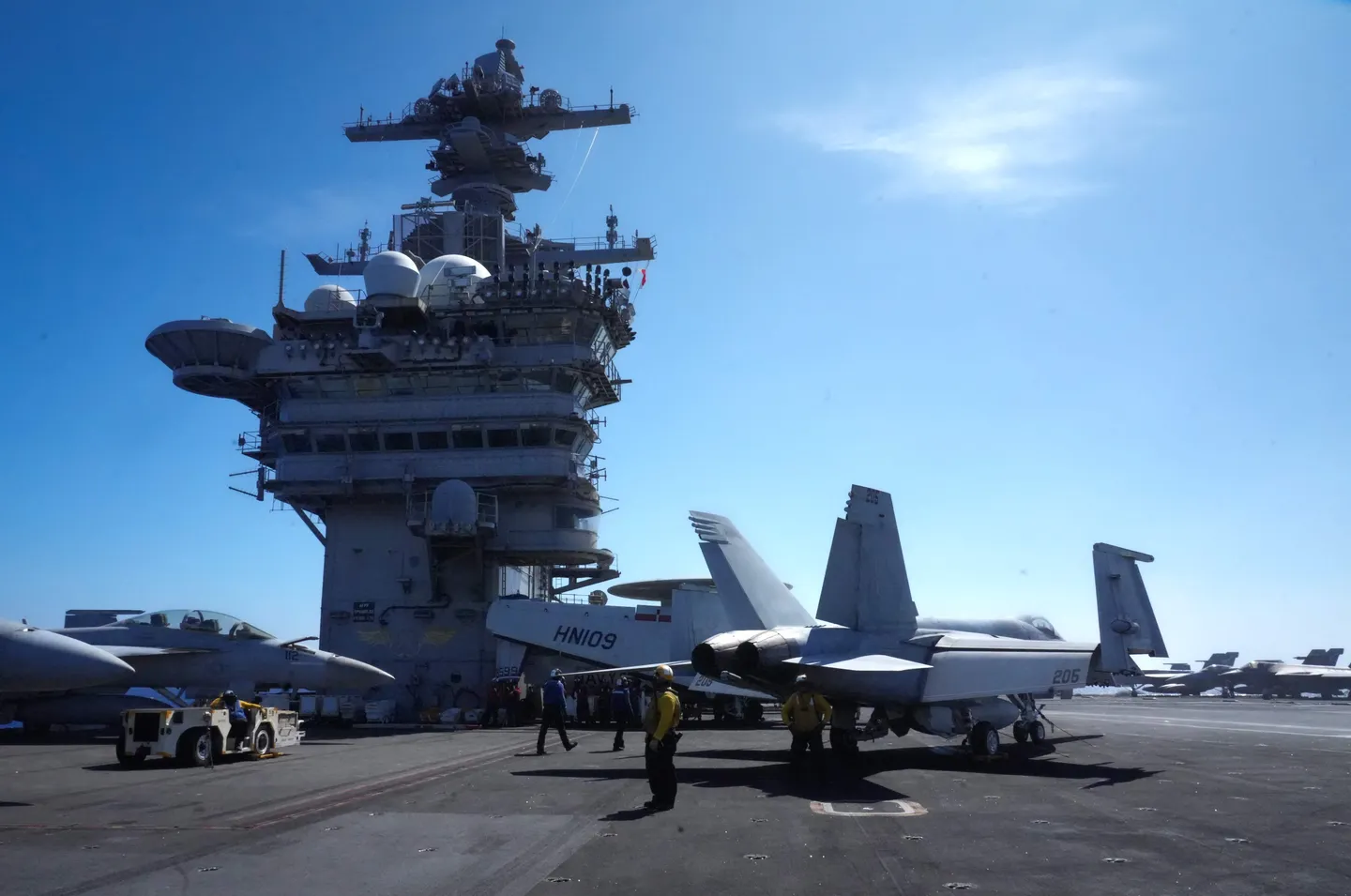
The physical toll of these extended operations is evident in the deployment of the USS Abraham Lincoln. The carrier departed San Diego in November 2025 and spent nearly seven months in the Middle East before finally reaching Thailand on September 2, 2026. After 286 consecutive days at sea, the ship’s 5,000 sailors and Marines faced significant challenges, including deteriorating living conditions and concerns over mental health, as they went months without a port call.
Internal friction within the Pentagon has further complicated the situation. Under Secretary of Defense Pete Hegseth, who has advocated for open-ended military action against Iran, at least 20 senior generals and admirals have either resigned or been fired over disagreements regarding overstretched resources and rigid policy decisions. While General Dan Caine reportedly warned the administration that military action against Iran risked a prolonged conflict, the government has remained committed to the fight.
Erickson points out that while military leaders typically utilize “branches and sequels” to adapt to changing battlefield conditions, political interventions from Washington have destabilized campaign planning. The assumption that the war could be resolved quickly through decapitation strikes proved incorrect, leaving the US in a protracted struggle.
The strategic consequences of this focus are being felt globally. Academic Ozgur Korpe warns that Washington’s preoccupation with the Middle East, compounded by domestic crises, may allow Russia and China to pursue their objectives in Europe and the Indo-Pacific. Reports suggest the US is considering relocating bases from Arab states to Israel, which could further diminish its presence in the Gulf. Meanwhile, European nations are alarmed by dwindling interceptor stocks, and analysts fear that Taiwan may lack the necessary munitions to defend itself against a potential Chinese offensive.
The diplomatic fallout is also growing. At a recent Shanghai Cooperation Council meeting, Russia and China issued the Bishkek declaration condemning the US-Israel war on Iran, signaling rising global fatigue regarding Gulf tensions. Korpe notes that the US hegemonic security model relies on the consent of allies, but Hegseth’s policies risk alienating partners by ignoring their concerns. This is particularly true for countries like the UAE and Bahrain, where exposure to Iranian retaliation is undermining confidence in US protective capabilities.
While Vice President JD Vance and other senior officials have pushed for an exit strategy to protect other global commitments, the administration shows no sign of ending the conflict. Tensions escalated further this week as US strikes hit IRGC targets, ensuring that the strain on American military resources remains a defining challenge for the current administration. The report also notes that extended deployments take a heavy toll on the American capability to conduct large scale global deployments,” Erickson adds. The report also notes that both possibilities indicate that the war in Iran makes it harder for the US to counter Russian activities in Eastern Europe and growing Chinese influence in the Pacific. The report also notes that despite all these negative developments, Washington signals no willingness to end the Iran war. The report also notes that army leaders have different alternatives, known in military jargon as ‘branches and sequels’, which allow commanders to adapt contingency options if the original plan goes wrong, says Erickson, in normal operational planning. The report also notes that most recently, Army Secretary Dan Driscoll has submitted his resignation to Trump following months of tension with Hegseth over the Pentagon’s direction and the departure of numerous top generals, including Randy George, Army chief of staff and Christopher Donahue, head of US Army Europe and Africa. The report also notes that washington has historically relied on those partnerships to share the military and economic burden of conflicts and sustain its presence across multiple regions. The report also notes that with several US allies reluctant to become directly involved, but the Iran war has also exposed the limits of that support.