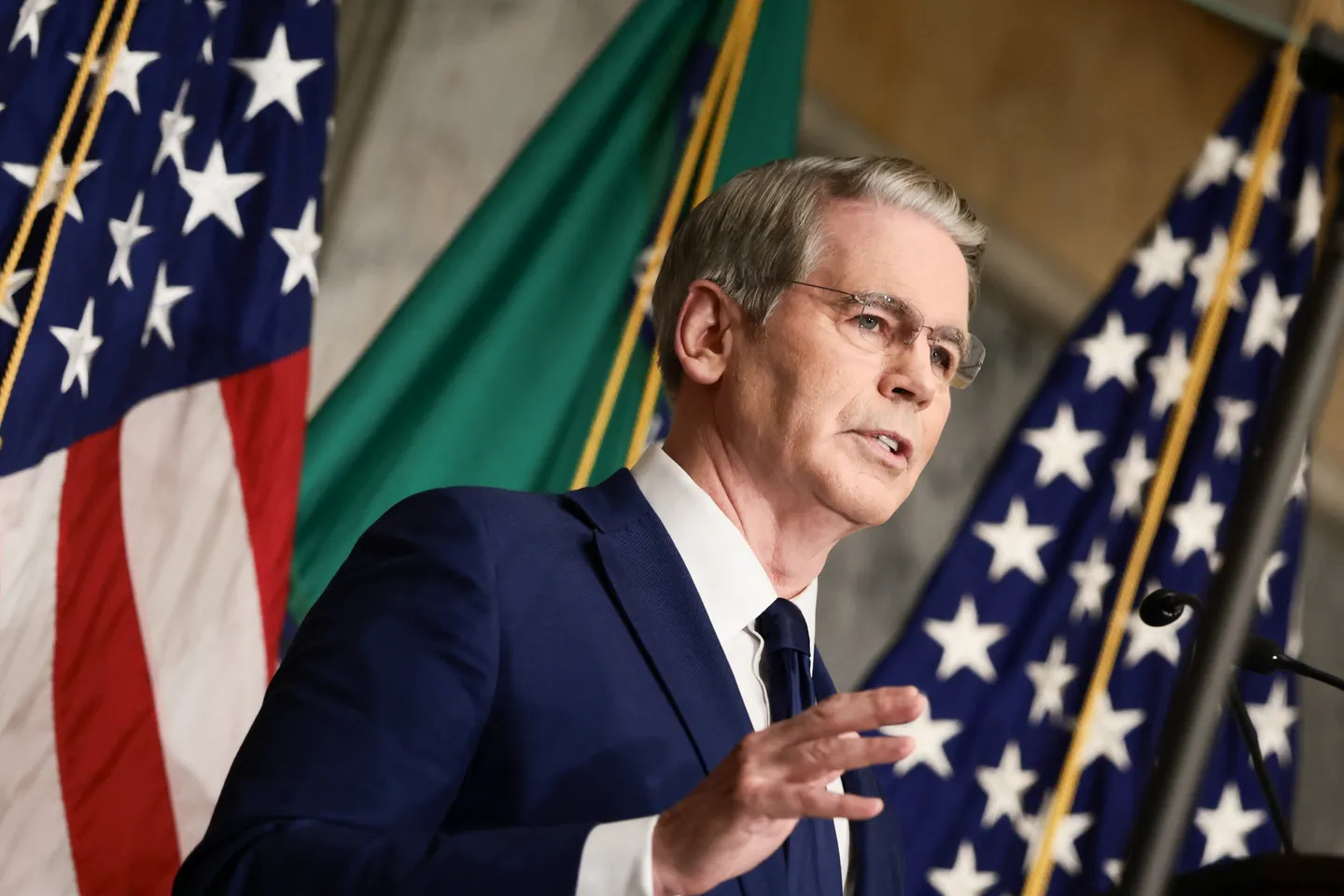







On August 24, US Treasury Secretary Scott Bessent introduced “Operation Economic Outcast,” a series of unprecedented financial restrictions designed to sever the final economic lifelines supporting the Iranian government. This move comes six months into the ongoing conflict between the US, Israel, and Iran, signaling a strategic pivot from direct military engagement to intensified economic pressure.
While the US has conducted months of bombing campaigns and enforced a naval blockade of the Strait of Hormuz—a critical chokepoint for one-fifth of global energy supplies—Tehran has maintained its de facto control over the waterway. Analysts suggest that Washington’s shift toward economic warfare indicates a belief that the Treasury Department may succeed where military efforts have stalled in forcing a change in Iranian policy.
The new measures specifically target five sectors deemed vital to Iran’s survival: digital assets, technology, gold, aviation, and shipping. By focusing on these areas, the US aims to restrict Iran’s access to major global currencies and the SWIFT payment network, which are essential for cross-border trade. This initiative relies heavily on “secondary” sanctions, which penalize third-party entities outside the US for engaging in business with Iranian interests, as primary sanctions against Iran were already extensively applied.
The impact of years of sanctions is evident in Iran’s struggling economy, which faces chronic inflation, unemployment, and stagnation. The Iranian rial recently plummeted to a record low of two million to the dollar. Even before the war began on February 28, Tehran was subject to a blanket ban on oil sales via Western shipping and banking channels.
To bypass these restrictions, Iran has historically relied on “dark-fleet” or “shadow-fleet” tankers—aged, uninsured vessels that disable tracking devices to move crude oil. Before the conflict, 90 percent of Iran’s crude exports went to China. These shipments were often rebranded as Malaysian or Middle Eastern oil by independent Chinese refiners, known as “teapots,” and paid for in yuan through banks like the US-sanctioned Bank of Kunlun. Iran then used these renminbi proceeds to fund imports, effectively avoiding Western-dominated financial systems.
Mustafa Caner, an Iran expert at Sakarya University’s Middle East Institute, describes the new US package as a qualitative shift that transforms sanctions into an “embargo-like instrument of war.” By bringing cryptocurrencies and digital assets under rigorous oversight, the US intends to plug the gaps that previously allowed Iran to circumvent traditional banking restrictions.
The strategy also involves leveraging US diplomatic influence to force other nations to isolate Tehran. However, this expansion of secondary sanctions carries inherent risks, as it could create friction between Washington and the very countries it hopes to enlist in its campaign. Caner notes that while military action often rallies a population around its government, economic deterioration can shift public blame toward the state, potentially undermining the regime’s stability.
The geopolitical landscape remains complex. The United Arab Emirates, previously a major trade partner with bilateral trade valued at approximately $28 billion in 2024, recently announced it would cut all trade relations with Tehran—a development expected to significantly impact the Iranian economy. Meanwhile, India’s historical commercial ties with Iran now face a critical test as it navigates its relationship with Washington under these new rules.
China’s position remains a point of contention. Beijing has vowed to protect its commercial interests, with a foreign ministry spokesperson asserting that its cooperation with Iran has always operated within the framework of international law. Caner remains skeptical that China will fully comply, noting that Beijing largely ignored previous US and UN sanctions.
Tehran has dismissed the new measures as an act of desperation, insisting they will fail to defeat the country. As the US attempts to close the net, the effectiveness of these sanctions will depend on whether they can truly neutralize the shadow networks and alternative payment systems, such as the Russian-integrated Mir card network, that Iran has utilized to sustain its economy. The report also notes that analysts say that Washington shifting focus from military to economic pressure suggests that it expects the Department of the Treasury to deliver meaningful results that the Department of War could not. The report also notes that successive US governments have used sanctions over the decades to pressure Tehran into ending its nuclear programme and support for regional proxies. The report also notes that “The new package covers digital assets and assumes robust oversight across a whole range of domains,” he said. The report also notes that second, the US is now deliberately targeting third parties doing business with Iran. The report also notes that this means the US is trying to use its diplomatic leverage and its superpower status to change other actors’ behaviour towards Tehran and isolate the country further, Caner says. The report also notes that “Beijing did not pay much attention to the existing US and UN sanctions in the first place. The report also notes that mir, an electronic card payment network created by the Central Bank of Russia in 2017 as a domestic alternative to US-backed Visa and Mastercard, is fully integrated across Iran.