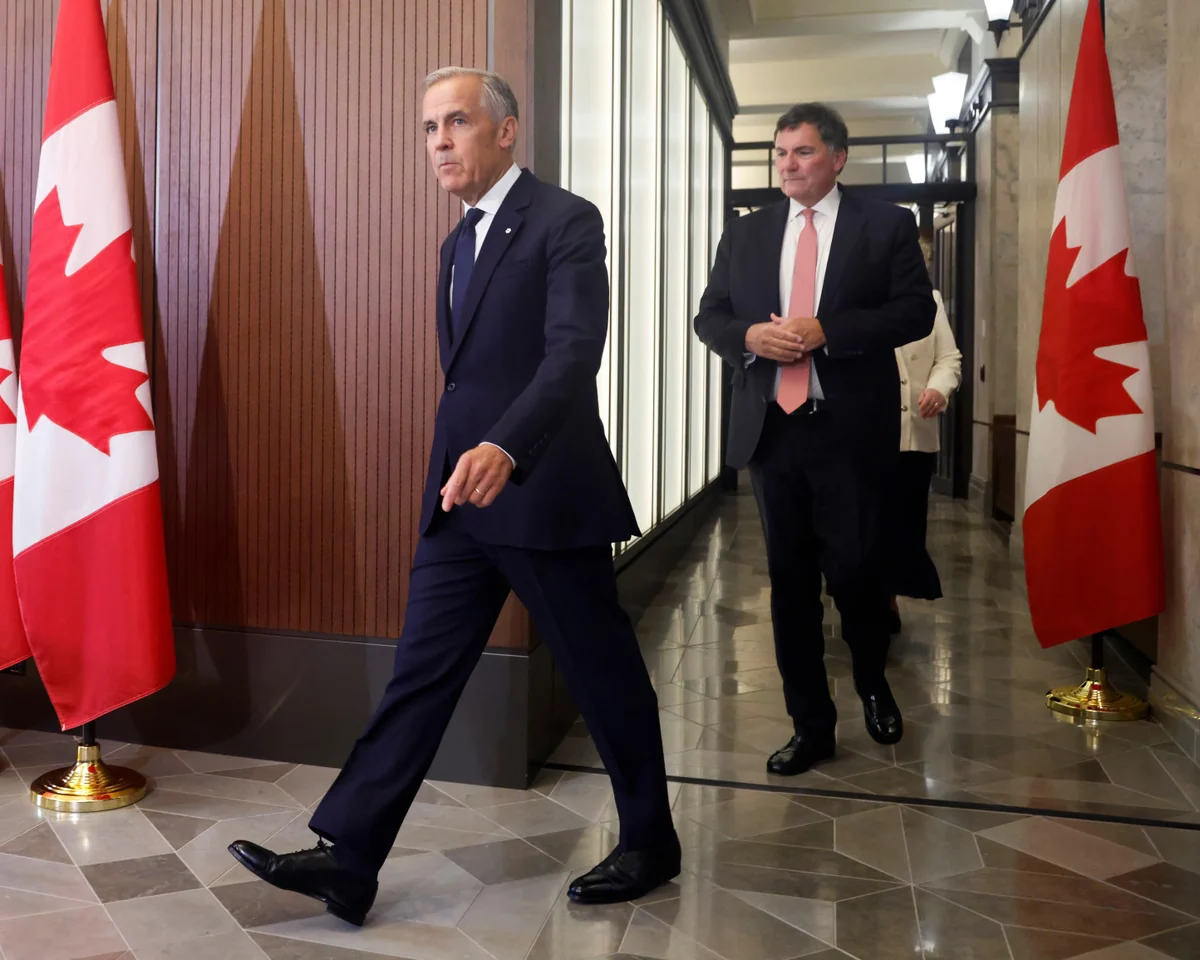









Prime Minister Mark Carney confirmed on Monday that his government would not accept a proposed trade deal with the United States that threatened to undermine French language protections in Quebec. Carney stated that while American negotiators characterized these cultural safeguards as mere trade irritants, his administration views them as fundamental rights.
The collapse of trade negotiations last week has led many political observers to suggest that Canada is now effectively engaged in an economic conflict with its primary ally. During a visit to a shipyard with Quebec’s premier, Carney emphasized that his government would not concede to US demands, noting that there remains an “enormous spread” in perspectives between the two nations.
The dispute has intensified as President Donald Trump continues to escalate his rhetoric. On Monday, the US president posted on social media that Canada has been “ripping off the United States of America for years.” Trump further threatened to impose additional tariffs on Canadian automobiles, trucks, auto parts, and steel starting January 1, declaring, “We don’t need Canada, they need us!”
Current tariffs, which took effect over the weekend, impact approximately 5% of Canadian exports to the US. Canada has signaled its intent to retaliate against these measures in early September. Ontario Premier Doug Ford responded sharply to the president’s stance, telling local media that Trump is a “bully” who is “arrogant” and “cocky,” adding that the president is in for a “rude awakening.”
At the center of the friction are Quebec’s provincial laws, such as Bill 96 and Bill 109, which mandate French descriptions for products and require streaming services like Netflix and Spotify to prioritize French-language content. US trade representative Jamieson Greer dismissed reports that these protections were a primary point of contention as a “funny fake story,” claiming he and his sons speak French and value the language.
Greer argued that the actual issue involved American concerns over Canada forcing streaming platforms to share profits to support local content—a position Canada had already moved to abandon. However, Quebec’s premier, Christine Fréchette, maintained that the province’s culture is a non-negotiable “red line” that must remain off the negotiating table, regardless of tariff threats.
The economic fallout is already being felt, with the Quebec Federation of Chambers of Commerce describing the situation as a “worst-case scenario” for local businesses. Fréchette noted that Quebec has been hit particularly hard by the trade war, with companies across the province already facing the loss of contracts.
The political climate in Quebec remains volatile. While polling indicates that disapproval of Trump is particularly high in the province, the economic pressure has also impacted the separatist movement. Paul St-Pierre Plamondon, a leading sovereigntist politician, announced that his party would delay any potential referendum on secession, arguing that Quebec’s future should not be dictated by the “outbursts of an unpredictable president” or American political instability.
As the trade dispute continues to unfold, the Canadian government remains firm in its refusal to compromise on its national identity. Carney’s rejection of the US proposal marks a significant hardening of the Canadian position as the country prepares for further economic measures from the Trump administration. The report also notes that quebec, Canada’s predominantly French-speaking province, has long sought to protect its distinct identity, at times with laws that clashed with the federal government and the Canadian charter of rights and freedoms. The report also notes that bill 96, for example, requires products sold in Quebec to have a French description and for trademarks using generic terms to be translated into French, while Bill 109 compels media services such as Netflix, Spotify and Apple to promote and prioritize French content for Quebec users. The report also notes that quebec’s premier, Christine Fréchette, said Carney had made the right decision in walking away from talks that looked to cross a “red line” for Francophones. The report also notes that “Our culture, our language is central to our identity and it is important to exclude that from the negotiation table,” she told reporters over the weekend. The report also notes that “It’s something that is crucial for us and it won’t change, even though we are threatened with different tariffs, it won’t change. The report also notes that polling from earlier in the month shows that dislike for Trump is highest in Quebec. The report also notes that separatists in the province have seen a sharp decline in support amid the economic wounds inflicted by the US. The report also notes that “In all our regions, businesses risk losing contracts.