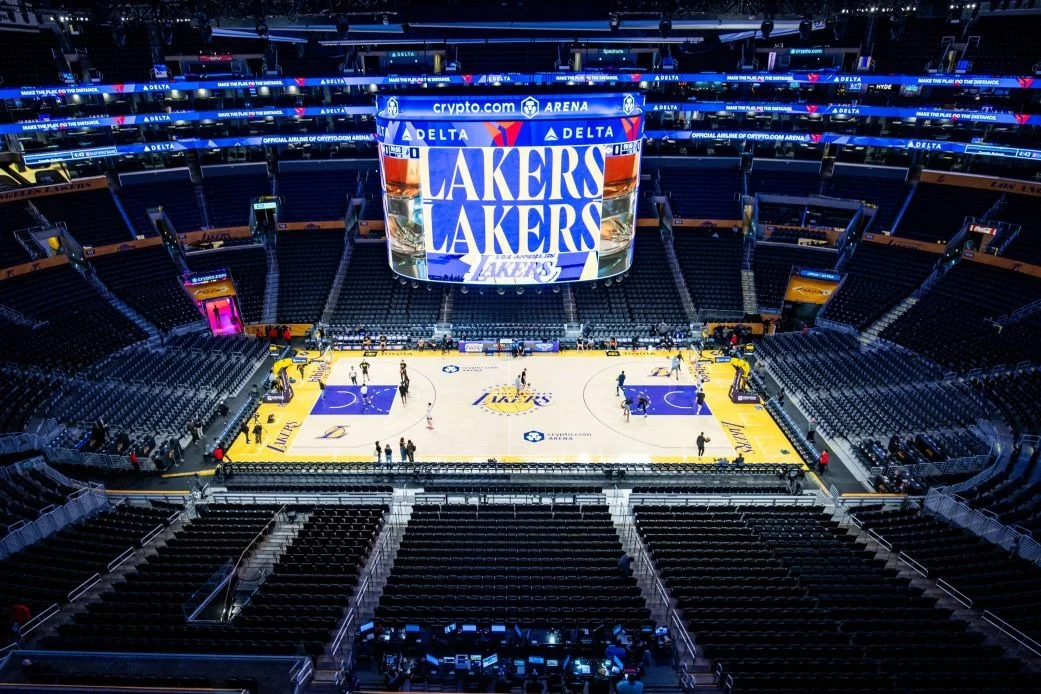









Professional sports franchises are changing hands at a rapid pace, pushing team valuations to unprecedented heights. From the Los Angeles Lakers and the Seattle Seahawks to significant stakes in the New York Yankees, the market for elite sports assets has become a focal point for global investors. This acquisition frenzy is driven by a combination of limited supply, the growing influence of sports betting, and a strategic shift toward assets perceived as resistant to technological disruption.
Investment banker Sal Galatioto, who has spent 30 years negotiating team sales, notes that he has never been busier. Galatioto argues that sports teams offer a unique form of security in an era of rapid digital change. “I’m willing to bet odds are greater that in 100 years that the Yankees will be here compared to IBM being here,” he said. According to Galatioto, investors are not primarily seeking immediate cash returns. Instead, they view these teams as long-term investments akin to fine art, providing ego gratification, scarcity value, and a hedge against the uncertainty of future technology distribution.
While some analysts suggest that other sectors, such as electric utilities, might also be immune to artificial intelligence, experts point out that sports teams hold a unique cultural appeal. Victor Matheson, an economics professor at the College of the Holy Cross, notes that while businesses like National Grid are stable, they lack the prestige of sports ownership. “No one has ever dreamed of being CEO of National Grid,” Matheson observed, “but everyone dreamed of being the owner or manager of the Yankees.”
The financial scale of these deals is staggering. This month, former Disney CEO Bob Iger and venture capitalist Josh Kushner led a deal to acquire a controlling interest in the Lakers, valuing the franchise at a record $12.5 billion. Simultaneously, Fenway Sports Group reportedly sold a 40% stake in Liverpool FC to a consortium involving Amazon founder Jeff Bezos. In baseball, Major League Baseball recently approved the $3.9 billion sale of the San Diego Padres, surpassing the $2.4 billion Steve Cohen paid for the New York Mets in 2020. Additionally, the Minnesota Timberwolves and WNBA’s Lynx were sold in a deal valued at $4.5 billion, while the Yankees secured a $2.6 billion injection from Apollo Global Management for a minority stake.
The integration of legalized sports betting, following a 2018 Supreme Court decision, has further supercharged the industry’s appeal. Matheson estimates that as much as a billion dollars annually in gambling money is now flowing into teams and leagues through sponsorships and increased fan engagement. This trend encourages higher viewership, as fans are more likely to watch games when they have a financial stake in the outcome, ultimately leading to more ticket sales and higher television ratings.
Irwin Kirshner, head of the sports law group at Herrick Feinstein, highlights that private equity firms are increasingly recognizing these opportunities as valuations continue to climb annually. Because teams are a finite commodity, owners often hold onto them for generations, with sales frequently triggered only by an owner’s death or a desire to divest partial stakes. This scarcity, combined with the global nature of modern ownership—where American investors target European soccer clubs and foreign investors purchase North American teams—keeps demand high.
Ultimately, many buyers operate on the assumption that the market will continue to appreciate. As Matheson explained, “You can afford to overpay as long as you believe that there will be people in the future willing to overpay by at least as much or more.” This cycle of rising valuations ensures that even if short-term profits remain elusive, the prospect of a massive future payday keeps the buying spree in full motion. The report also notes that “If you own the content, it doesn’t matter how it’s distributed.”. The report also notes that one reason for the sales boom you might expect: There are an ever-increasing number of billionaires with the resources to buy teams. The report also notes that sports is believed to be a relatively AI-proof investment. The report also notes that “Every year (valuations) seems to go up more, and so I think private equity started to recognize the value of this opportunity,” Kirshner said. The report also notes that “And there’s the thought that people who are gambling more are more likely to tune in, which means more butts in the seats, as well as more eyeballs on the TVs.”. The report also notes that who have been under the control of the Mara family for more than a century, that are willing to sell off a portion of their team, but there are also teams like the NFL’s New York Giants.