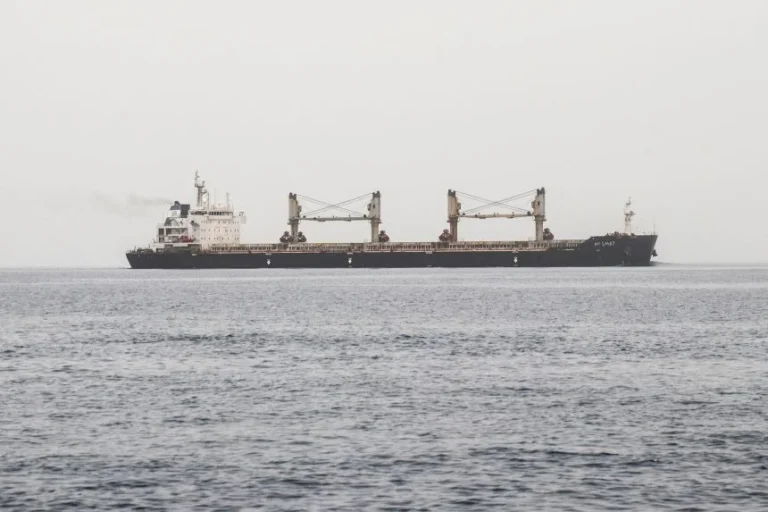









On July 25, the Greek-owned supertanker Kiku arrived at Qatar’s Mesaieed oil export terminal, a 30-berth facility located 25 miles south of Doha. Four days later, the vessel, a Very Large Crude Carrier measuring over 1,000 feet, departed with a full load of crude, maintaining a speed of 13 knots as it navigated the Persian Gulf. By July 31, shortly after 2 p.m. near the coast of Dubai, the Kiku vanished from tracking systems after disabling its AIS transponder. The ship reappeared on August 1 at 10 a.m. on the opposite side of the Strait of Hormuz, marking a successful transit.
This maneuver is part of a broader strategy employed by Saudi, Kuwaiti, Qatari, and Emirati oil producers to circumvent Iranian drone attacks. By operating with transponders off and receiving US military escorts, these companies are shifting the burden of insurance and security risks from commercial shippers to the US government and the producers themselves. According to the US Department of Energy, this approach has kept oil traffic through the Strait of Hormuz steady at 8 million to 9 million barrels per day.
The impact of these clandestine transits is significant, with approximately 80% of traffic through the strait over the past two weeks classified as “dark” to maximize distance from Iran, according to Kpler. Satellite imagery confirms this pattern, showing rows of vessels arcing around the coast of Oman. In one instance, the Kiku anchored near the Emirati port of Fujairah port of Fujairah port of Fujairah before conducting a week-long ship-to-ship transfer with the Nave Electron. The latter vessel exited the Gulf on August 8, bound for Ningbo, China, while the Kiku returned to the Persian Gulf on August 15.
The United States has shifted its own strategy to focus on a “crushing economic operation,” aiming to isolate Iran through a prolonged naval blockade of its ports. This geopolitical tension has pushed oil prices toward $100 per barrel. Meanwhile, global oil inventories have been depleted by roughly 1.9 billion barrels during the conflict. To mitigate supply disruptions, Saudi Arabia has rerouted 5 million barrels per day through its own pipeline networks, while producers in Brazil, Guyana, and Venezuela have collectively increased output by over 1 million barrels per day.
Despite these efforts, the market faces long-term instability. The US has released 400 million barrels from its Strategic Petroleum Reserve, leaving reserves at their lowest levels since the early 1980s. China’s reliance on its own massive oil stockpiles is also nearing a limit. Furthermore, the fuel market is under severe strain as three of the world’s four primary refining hubs struggle with disruptions. The war has damaged Middle Eastern refineries, while Russian output remains hampered by the conflict with Ukraine and subsequent drone strikes on its infrastructure. Additionally, China has curtailed its own refined fuel exports to ensure domestic supply, placing further pressure on US refineries along the Gulf Coast.
The situation remains a high-stakes gambit. While these dark transits provide temporary relief, the narrow 23-mile width of the Strait of Hormuz keeps the region vulnerable. Observers have noted numerous ship-to-ship transfers in the Gulf of Oman, with tankers heading to destinations including South Korea, Taiwan, the Philippines, Thailand, and Vietnam. As the war continues, the necessity of replenishing depleted inventories and finding a permanent resolution for the strait remains a critical, albeit elusive, objective for global energy security. The report also notes that a marine radio device that broadcasts a ship’s identity, speed, course and position, the vessel had switched off its AIS transponder. The report also notes that it was as if the Kiku simply disappeared, to tracking services that monitor worldwide maritime traffic. The report also notes that but failed to explode, the aim: Avoid Iranian drone attacks – like the one that struck the Kiku a month earlier. The report also notes that using transponder data, would suggest, that’s a meaningful amount of crude – roughly double what Wall Street oil analysts and shipping trackers like Kpler. The report also notes that this workaround buys time, but with permanent solutions – a negotiated end to the war and lasting plan for the strait – remaining elusive. The report also notes that the war, lasting far longer than many had imagined, has disrupted a fifth of the world’s oil supply for six months but reached an inflection point in recent weeks: Billions of oil and fuel barrels in commercial stockpiles have vanished. The report also notes that china’s reliance on its massive oil inventory – a key factor in preventing $150 oil – won’t last forever.