









The Russian embassy in London has issued a stern warning to the United Kingdom, suggesting that the country could face serious consequences for providing Ukraine with drones used in long-range attacks against Russian soil. In a statement released on Monday via Telegram, the embassy accused the UK of deliberately escalating the conflict while maintaining a facade of seeking peace. The diplomatic mission labeled Britain an accomplice and co-perpetrator in what it described as bloody crimes and terrorist attacks, warning that the deeper London’s involvement becomes, the higher the price it will eventually pay.
Former Russian Deputy Foreign Minister Andrei Fedorov suggested in a BBC interview on Tuesday that these threatened consequences could potentially include direct attacks. Fedorov noted that some military experts in Moscow believe Russia could strike the UK without triggering a forceful NATO response, citing potential instability within the alliance and the influence of Donald Trump as factors that might deter collective action. He contrasted Article 5 of the North Atlantic Treaty, which mandates a collective defense response, with Article 4, which only requires member nations to consult when security is threatened.
The diplomatic tension follows reports from The Times, which identified drones produced by two British companies as being involved in recent strikes on Russian logistical and energy infrastructure. While the UK Ministry of Defence has not officially confirmed the use of its specific drone technology in these operations, the Kremlin has long maintained that the supply of long-range weaponry constitutes a significant escalation of the war, which began with the Russian invasion in February 2022.
Despite the warnings from Moscow, British Prime Minister Andy Burnham reaffirmed the government’s commitment to supporting Ukraine. Speaking on Tuesday, Burnham stated that the UK would continue to support Kyiv “100 percent” against what he termed an illegal war led by Vladimir Putin. He emphasized that the current administration is maintaining the policy established by previous prime ministers, asserting that Britain is not a “fair-weather friend” to its allies.
Work and Pensions Minister Lilian Greenwood echoed this sentiment on Sky News, stating that the UK’s resolve to provide necessary equipment remains steadfast. The British government has significantly ramped up its military aid over the past year. In April, the Ministry of Defence announced a major package including at least 120,000 drones, followed by a June funding commitment of 752 million pounds ($996m) to deliver an additional 150,000 drones by the end of 2026. This initiative builds on a June 2025 agreement between former Prime Minister Keir Starmer and President Volodymyr Zelenskyy to begin the domestic coproduction of long-range drones.
Beyond drone technology, the UK has been a primary supplier of advanced weaponry, including Challenger 2 battle tanks and Storm Shadow long-range cruise missiles. The country has also provided extensive training, air-defense systems, and anti-armor munitions. These supplies have enabled Ukraine to increase its focus on Russian military-industrial and energy facilities, aiming to disrupt the revenue streams funding the war and bring the reality of the conflict to the Russian public.
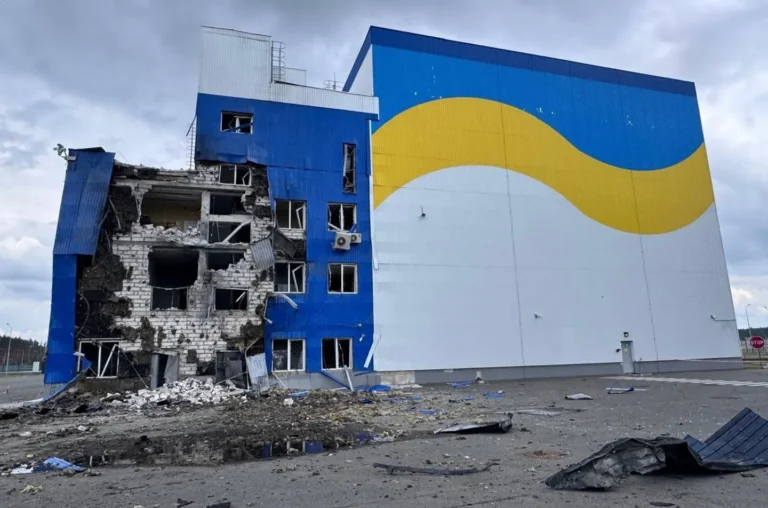
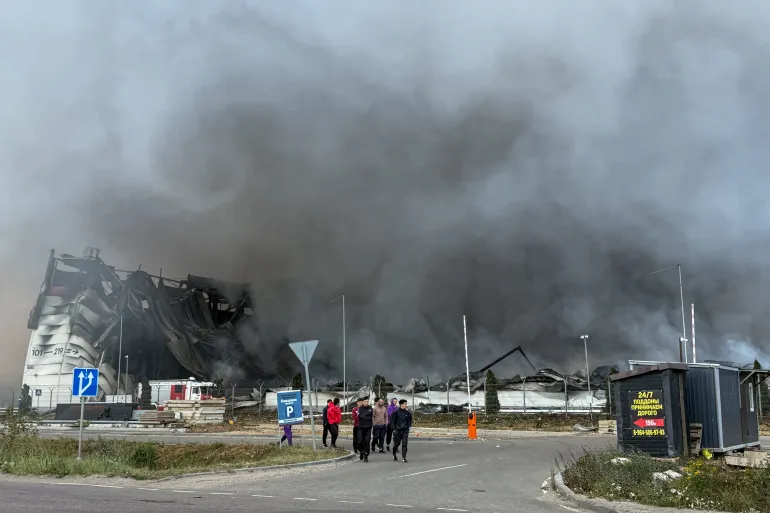
Russian Foreign Ministry spokeswoman Maria Zakharova specifically alleged that drones featuring British components have targeted facilities such as the Kamensky Plant in the Rostov region. Furthermore, recent reports indicate that Ukrainian forces have targeted warehouses belonging to the retail giant Wildberries, which Kyiv claims are being utilized to store military components. The company and the Kremlin have denied these allegations, though Wildberries has been forced to restrict operations following drone strikes in Yekaterinburg and near Moscow.
The intensity of the conflict has grown significantly, with the mayor of Moscow reporting that at least 637 drones were launched toward the capital between Monday night and Tuesday morning, with 197 intercepted by air defenses. This followed a massive assault over the previous weekend, where 822 drones were launched, resulting in seven deaths. Regional officials described the event as one of the most significant drone attacks in recent memory.
While the Russian embassy did not clarify the nature of the threatened consequences, analysts suggest Moscow could respond through increased cyberattacks, hybrid warfare, or by targeting British interests abroad. The situation remains precarious as both sides continue to escalate their military posturing, leaving observers to question whether the current friction could lead to a broader confrontation between Russia and NATO members. The report also notes that the UK was the first country to pledge modern Western battle tanks for Ukraine – Challenger 2 models – to replace Ukraine’s Soviet-era tanks. The report also notes that increasingly targeting military industrial and energy facilities in a bid to slash Moscow’s oil revenues funding the war and to make citizens feel the impact of the conflict, which began in February 2022 when Russia invaded Ukraine, ukraine has stepped up attacks inside Russia this year. The report also notes that last week, the company was forced to limit orders after Ukrainian drones hit a warehouse in Yekaterinburg, 2,087km (1,297 miles) from the Ukrainian border. The report also notes that the physical reality of the war has increasingly shifted towards the Russian capital, in addition to these high-profile attacks. The report also notes that on Saturday night and early Sunday, Ukraine launched one of its largest aerial assaults on Russia, launching 822 drones that killed seven people. The report also notes that “The Russians should be clear that our resolve remains completely steadfast in backing our friends in Ukraine and providing them with the equipment that they need,” she told Sky News. The report also notes that the European Union and the UK announced coordinated sanctions against Russia last month after reports of digital sabotage across Europe. The report also notes that but Russia’s threat also raises the question about whether Putin would be willing to attack Britain and risk NATO intervention.