









When President Donald Trump initiated military operations against Iran, he publicly predicted the conflict would conclude “pretty quickly.” Nearly six months later, that timeline has proven inaccurate, and the prolonged engagement is placing unprecedented pressure on American military resources. Beyond the economic impact of the Strait of Hormuz blockade, the Pentagon is struggling with the logistical and human costs of a sustained campaign.
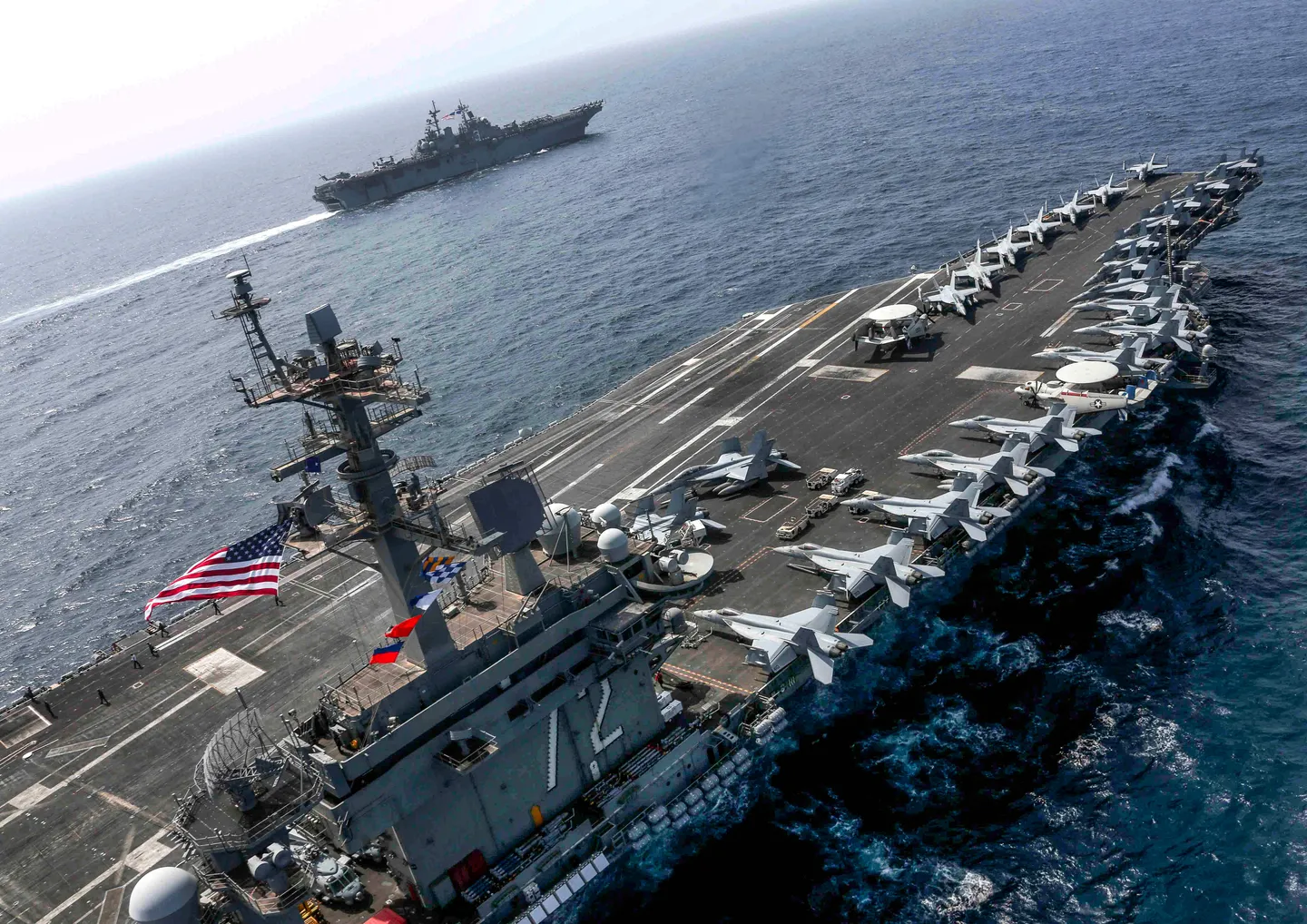
The USS Abraham Lincoln (CVN 72), deployed to the Arabian Sea in January, has become a focal point for concerns regarding troop welfare. Despite its capability for long-term endurance, the carrier’s crew has endured over 200 days without a port call, leading to widespread reports of fatigue and mental health challenges. Military families have raised alarms over conditions on the ship, citing allegations of food shortages, water contamination, mail disruptions, and multiple suicide attempts.
One parent of a deployed sailor told Stars and Stripes in July, “My son is currently on that ship and listening to him say that he and his shipmates constantly think about jumping off the ship just for relief is so hard to listen to.” She added, “We are all tucked in at night in our beds at night meanwhile our loved ones are out there fighting with no understanding as to what they’re defending.”
The Pentagon and the US Navy have officially denied reports of supply shortages and rising suicidal tendencies. However, three US officials confirmed to CNN that a sailor went overboard earlier this month; the individual was rescued by an air wing helicopter after approximately one hour. Additionally, during a San Diego town hall, a sailor’s spouse reported that her husband had expressed a desire not to wake up, highlighting the severe morale issues currently under scrutiny.
The conflict has also severely impacted US munitions inventories. According to data from the Center for Strategic and International Studies (CSIS), the US military’s stockpile of Patriot interceptors dropped from 2,330 to fewer than 1,000 by late July, while THAAD units declined from 452 to between 234 and 278. Furthermore, the military has lost 25 percent of its Reaper drone fleet, and long-range precision weapons like ATACMS and Precision Strike Missiles are reportedly nearly exhausted.
Restoring these levels will be a long-term challenge. CSIS analysts suggest that pre-war inventory levels for Patriot and THAAD systems may not be reached until mid-2029. More pessimistic projections from the American Enterprise Institute indicate that, at current production rates, fulfilling the Pentagon’s request for 857 THAAD interceptors could take roughly 27 years.
Internal friction has also surfaced regarding these shortages. Reports from the Washington Post alleged a heated dispute between President Trump and Secretary of Defence Pete Hegseth at Camp David, where the President reportedly accused the Secretary of failing to provide adequate briefings on the state of the arsenal. The White House has denied these claims.
To address the ongoing financial burden, Secretary Hegseth has requested an emergency $87.6 billion supplemental defence package from Congress. He noted that the United States has already spent $37.5 billion on the Iran conflict, warning that further funding will be essential as the war continues to strain the nation’s defence industrial base.
As the administration attempts to manage these resource constraints, the conflict shows no signs of a swift resolution. Tehran has resisted pressure, instead proposing new conditions for a potential settlement, leaving the US military to balance its operational requirements against the reality of dwindling munitions and a fatigued force.
USS Abraham Lincoln (CVN 72) was sent to the Arabian Sea in January, near Iranian shores, as tensions between the US and Iran increased earlier this year.
Although the nuclear-powered aircraft carrier can remain at sea for up to 20 years without refuelling, its crew faced fatigue and mental health issues after over 200 days without visiting a port.
The Iran conflict has caused a substantial reduction in American missile systems, including Patriots and THAADs, and the military has also lost 25 percent of its Reaper drones, raising concerns about the direction the w
While diplomatic efforts to end the fighting continue, the prolonged conflict is increasingly revealing the cost of an extended military campaign.
The Iran conflict has caused a substantial reduction in American missile systems, including Patriots and THAADs, and the military has also lost 25 percent of its Reaper drones, raising concerns about the direction the war is taking.
The situation is even more critical for the long-range precision missiles, including Army Tactical Missile Systems (ATACMS) and Precision Strike Missiles (PrCM), which sources familiar with military data say have been almost entirely used up.
Analysts also caution that restoring US missile inventories will be challenging, potentially costing American taxpayers significant payloads and taking years.
Some estimates are even more pessimistic.