









For nearly 90 years, the disappearance of Amelia Earhart has remained one of the most enduring mysteries of the 20th century, frustrating biographers, researchers, and enthusiasts alike. After a yearlong delay, a new expedition is scheduled for this fall, with some experts believing it offers the best opportunity yet to determine exactly what happened to the legendary aviator.
Lead archaeologist Richard Pettigrew expressed high expectations for the upcoming mission. “I am feeling very confident about this,” he told, adding that he is “pumped” for the endeavor. The research team will travel to Nikumaroro, a remote island located between Australia and Hawaii. A prominent theory suggests that Earhart and her navigator, Fred Noonan, landed on the island after failing to complete their historic 1937 round-the-world flight.
The mission is a collaborative effort between the Archaeological Legacy Institute and the Purdue Research Foundation. It focuses on the “Taraia object,” a visual anomaly in the island’s lagoon first identified via satellite imagery in 2020. The team intends to determine if this submerged feature is indeed the wreckage of Earhart’s Electra 10E aircraft.
Originally slated for October 2025, the expedition was postponed due to unfavorable weather and the need for final clearances from the government of Kiribati, which holds jurisdiction over Nikumaroro. With new cabinet approvals secured, a 16-person crew is set to travel by sea this October to search for definitive evidence.
Earhart and Noonan vanished on July 2, 1937, while flying from Lae, Papua New Guinea, toward Howland Island. The flight was the final leg of a journey that began in Oakland, California, on May 21, 1937. During the flight, Earhart communicated with the U.S. Coast Guard cutter Itasca, reporting that she was nearly out of fuel. Because the pair lacked knowledge of Morse code, two-way communication was impossible, according to Smithsonian Institute records.
Following their disappearance, the U.S. government launched its largest search operation for a missing aircraft to date. The effort concluded after two weeks without finding any trace of the plane or its occupants, and they were declared legally dead on January 5, 1939. Over the decades, millions of dollars have been spent on various searches, including a 2024 deep-sea mission near Howland Island that mistakenly identified a rock formation as the missing plane.
While many theories exist—including suggestions of a secret spy mission or capture by Japanese forces—the prevailing consensus remains that the duo ran out of fuel and crashed into the Pacific. Dorothy Cochrane, a retired aviation curator at the Smithsonian, noted that records strongly suggest they were in the vicinity of Howland Island when they disappeared.
The Nikumaroro theory has gained traction due to satellite imagery of the lagoon, which Pettigrew says matches anomalies seen in photographs taken shortly after the 1937 disappearance. Additional supporting evidence cited by the Purdue Research Foundation includes radio bearings pointing toward the island, bone fragments consistent with Earhart’s stature, and 1930s-era artifacts like a woman’s shoe and a medicine vial.
Despite these leads, some experts remain cautious. Author Rachel Hartigan, who has visited Nikumaroro twice, noted that while a discovery would be remarkable, many previous promising leads have failed to yield results.
During the upcoming operation, researchers will use a hydraulic dredge to carefully clear sediment from the lagoon to inspect the object. The team will prioritize identifying major structural components, such as the fuselage or wings, and will search for rivets specific to the Electra’s design. Pettigrew, 78, emphasized that the mission is a hypothesis that can only be confirmed through direct inspection.
If the aircraft is located, the team plans to return the following year for a full-scale excavation and recovery operation. Purdue University is currently in discussions with the Kiribati government regarding a potential agreement to house the wreckage. As Earhart was once a visiting adviser at Purdue, the university hopes to fulfill her original wish to donate the plane for aeronautical research.
Steve Schultz, senior vice president at Purdue, stated that the university envisions displaying the plane permanently to share its history with the world, while ensuring the benefits of any exhibit are shared with Kiribati in perpetuity. Both Schultz and Pettigrew maintain that even if the search does not yield the plane, the mission remains a necessary step in the investigation. “Something is there, and it’s either the Electra or it’s not,” Pettigrew said. “Somebody has to make that determination – and that’s going to be us.”
That question has eluded countless researchers, biographers and devoted enthusiasts for almost 90 years.
Originally set to take place in October 2025, the mission was delayed because of weather conditions and clearance from the government of Kiribati, the island nation that maintains control over Nikumaroro.
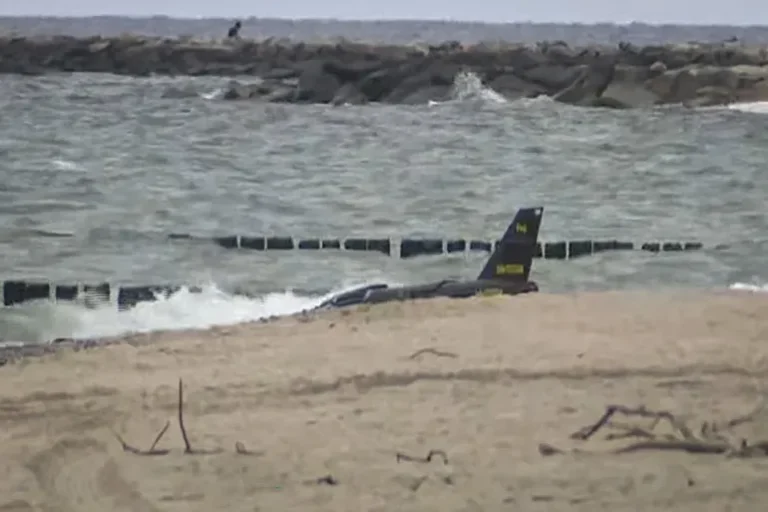
In 2024, an ocean exploration company conducted a deep-sea search within 100 miles of Howland Island, after spotting what they believed to be the wreckage of the Electra 10E.
Over the decades, researchers have scanned swaths of the ocean floor, traversed remote islands and scoured satellite images in costly attempts to locate the plane that Earhart piloted as she sought to become the first person to fly around the world.
Earhart’s sudden disappearance immediately spurred a wide range of theories that sought to explain what happened to the world-famous aviator.
Pettigrew said the object came into view in April 2015 and resembles an anomaly seen in photographs taken in the months and years after Earhart’s disappearance.
“But there’s just been a lot of promising things that haven’t come through.”
They will also scour the surface for metal rivets unique to the Electra’s design.
“We won’t know until we go down there and identify it.”
A future voyage will involve a recovery operation in which crews would remove the wreckage and transport the remnants back to the United States.
Both Schultz and Pettigrew said that while they hope to solve the nearly century-old mystery, it won’t be a failure if they come up empty-handed.
Christopher Cann is a national reporter for.
Contact him via email at ccann@.com.