
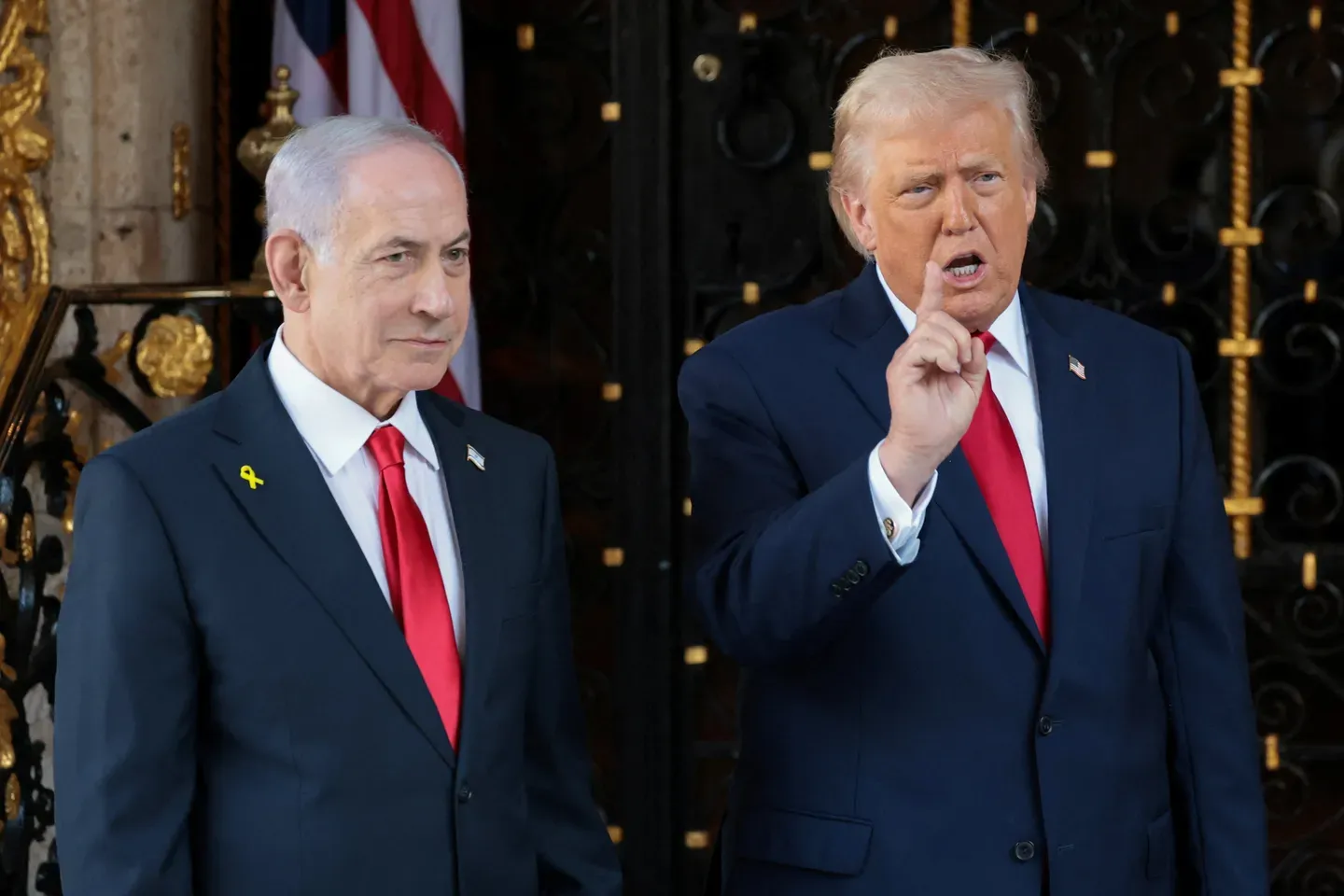








Israeli Prime Minister Benjamin Netanyahu’s outright rejection of a key condition in the US-backed Gaza peace plan has thrown the entire initiative into uncertainty. On Sunday, Netanyahu informed his cabinet that Tel Aviv categorically rejects the 15-point document, insisting that the Israeli military will not withdraw from Gaza until Hamas is “genuinely disarmed.” This stance directly challenges the peace roadmap, which serves as the second phase of US President Donald Trump’s broader 20-point Gaza plan introduced in October 2025. The plan links a phased Israeli withdrawal to the demilitarisation of Hamas under a Palestinian technocratic administration.
Last month, Hamas took significant steps to facilitate this transition by dissolving its government in Gaza and formally handing administrative control to the National Committee for the Administration of Gaza. This move was intended to pave the way for a complete disarmament, provided that Israel adhered to the withdrawal terms. However, despite a ceasefire agreement reached in October 2025, Israel has continued to violate the fragile accord, resulting in the deaths of more than 1,250 Palestinians. Tel Aviv has simultaneously expanded its control over the besieged territory by unilaterally shifting the demarcation line, effectively shrinking Gaza’s landmass month by month.
Analysts remain deeply sceptical about whether Washington possesses the political will or the leverage to prevent Netanyahu from sabotaging the peace plan. Mustafa Yetim, a professor of international relations at Eskisehir Osmangazi University, notes that while the Trump administration appears to be seeking greater alignment with regional actors and international public opinion to constrain Israeli actions, the resistance from Tel Aviv is fierce. This friction is exacerbated by domestic political pressures, particularly with Israeli general elections scheduled for October, which make it difficult for any government to appear conciliatory.
“This position could seriously undermine the peace process, particularly because Hamas’s willingness to proceed with disarmament is closely linked to the promise of a full Israeli withdrawal,” Yetim explains. He adds that radical Jewish-nationalist and Zionist elements within the Netanyahu government remain committed to maintaining policies of occupation and expansion. This ideological rigidity explains why the Israeli approach has increasingly clashed with the Trump administration’s broader regional vision, potentially jeopardising the entire diplomatic framework.
Zahide Tuba Kor, a scholar of Middle Eastern studies, expresses strong doubt that US pressure will succeed. She argues that the ceasefire was never intended by Israel to be a path to peace, but rather a strategic pause to continue its military campaign in Gaza without international interference. “Israeli politics and society cannot survive without war,” she asserts. Furthermore, she notes that a powerful lobby supports reoccupation and settlement, and no Israeli government can afford to back down due to external pressures, especially in the volatile run-up to national elections.
Kor recalls a telling statement Netanyahu made during his tenure as deputy ambassador to the US in the 1980s: “If the US government were to oppose Israeli policy, I know how to manipulate American public opinion against its own government.” With US midterm elections approaching in November and evangelical factions within the Republican Party base being “more pro-Israel than Israel itself,” Kor argues that no American president can easily risk a confrontation with the Israeli leadership.
The financial scale of the relationship is substantial; according to the Costs of War Project at Brown University, the US provided $21.7 billion in military aid to Israel between October 2023 and September 2025. Kor suggests that cutting arms sales would leave Israel with “no choice but to submit.” She notes that Washington has several other tools at its disposal, including removing diplomatic protection, allowing international court proceedings to move forward, abandoning the Israeli propaganda framing in media coverage, or cutting economic aid entirely.
Yetim warns that a failure to convince Israel to halt its military action and occupation is a “more plausible scenario” than the establishment of a stable political order in Gaza. The underlying Israeli security and political paradigm poses a “persistent challenge to any regional arrangement” aimed at containing its interventionist policies. He cautions that there is a “relatively fragile boundary between containing regional instability and allowing it to escalate into a much wider conflict.”
An even worse outcome, according to analysts, would be the total collapse of the peace plan and the onset of a broader cycle of confrontation. Such a failure could draw other regional players into the conflict, potentially pulling the United States deeper into Middle East instability. For many observers, the successful implementation of the peace plan is now viewed as a “strategic necessity” to prevent such a catastrophic regional escalation.
The current impasse highlights the limits of US influence when faced with a partner that prioritises domestic political survival over international commitments. As Netanyahu continues to defy the terms of the roadmap, the Biden-Trump transition of policy has yet to yield the results necessary to secure a lasting ceasefire. The international community watches closely to see if the US will move beyond rhetoric to exert tangible pressure on its ally.
Ultimately, the disconnect between the US-backed vision for a technocratic Palestinian administration and the ground reality of continued Israeli military expansion remains the primary obstacle. Without a fundamental shift in how Washington manages its relationship with the Netanyahu government, the prospects for a stable, demilitarised Gaza appear increasingly dim.
The coming weeks will be critical as the deadline for the next phase of the peace plan approaches. Whether the US can force a change in Israeli policy or whether Netanyahu will successfully derail the initiative remains the central question in the ongoing Gaza crisis.