








Italian authorities have confirmed the discovery of an ancient Roman shipwreck off the coast of Sicily, believed to date back more than 2,000 years. The vessel, which rests at a depth of approximately 46 meters (150 feet), was located following a tip-off from local fishermen. According to media reports, the wreckage measures 21 meters (69 feet) in length and 6 meters (20 feet) in width.
Italy’s Culture Minister Alessandro Giuli described the find as one of the most significant underwater archaeological discoveries in recent years. The culture ministry estimates the ship originated between the 1st and 2nd Century BC. The site is notable for being piled high with hundreds of well-preserved amphorae—tall ceramic jars historically used to transport commodities such as wine, olive oil, and grain.
The discovery was initially made by fisherman and free-diver Giacomo De Mola while he was surveying the seabed near Mazara del Vallo. De Mola recounted that he investigated an unusual shape on his scanner, initially mistaking it for a large rock. Upon diving closer, he realized the formation was actually a collection of ancient pottery. In a social media post, he expressed his awe, stating, “I get closer. And my heart stops. It wasn’t a rock.”
De Mola described the experience as the most incredible discovery of his life, noting the surreal feeling of being among the first people in nearly two millennia to witness the site. His footage of the wreck revealed that the jars have become a habitat for local marine life, including eels and snappers. He remarked, “This time we didn’t just find a wreck, we found a piece of our history.”
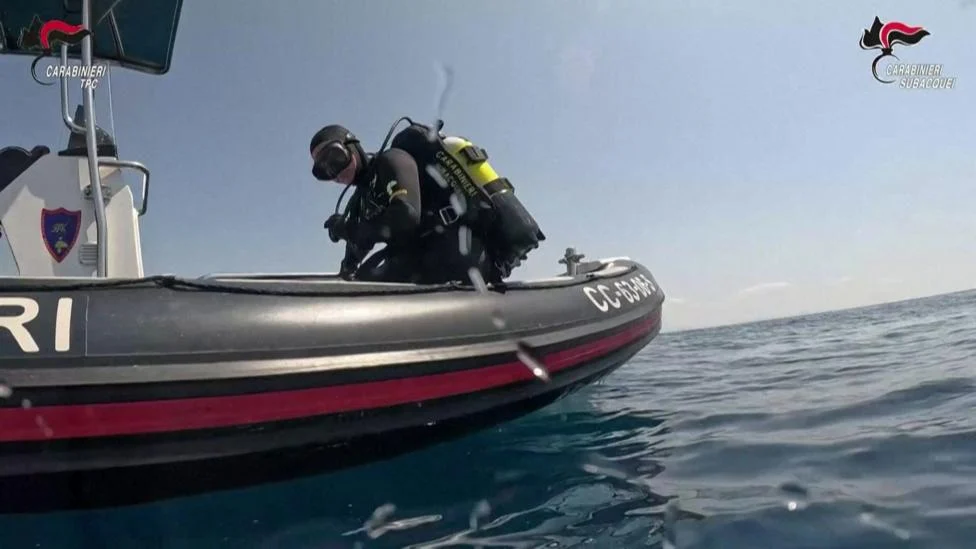
In response to the find, the Carabinieri Art Squad—a specialized unit of Italy’s police force dedicated to cultural heritage protection—was deployed to the site. Officials have implemented safety measures to secure the area while experts conduct a formal investigation to determine the vessel’s specific origins and analyze its cargo.
The Mediterranean Sea is known to hold a vast number of ancient shipwrecks. Similar discoveries have occurred in recent years, including a vessel found north-west of Rome in 2023 that was also laden with hundreds of amphorae dating to the 1st or 2nd Century BC.
Further afield, archaeological efforts in 2018 uncovered a Greek merchant ship off the Bulgarian coast. That vessel, which dated back more than 2,400 years and was found lying on its side, was recognized at the time as the oldest-known intact shipwreck in the world.
“It’s hard to describe what it feels like to be among the first humans, in nearly 20 centuries, to see that place again.”