
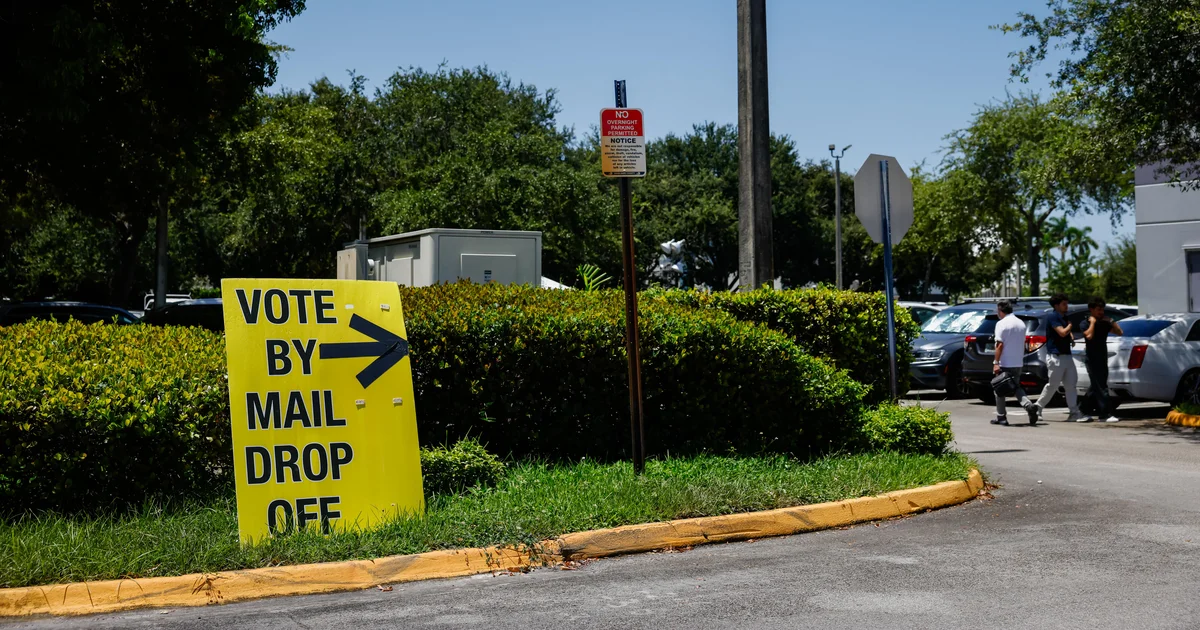







A federal whistleblower has raised alarms regarding the U.S. Postal Service’s newly developed mail-voting infrastructure, warning of “potentially catastrophic problems” that could jeopardize the upcoming midterm elections. In a disclosure provided to Democratic Senator Richard Blumenthal of Connecticut, the official accused the agency of disregarding court rulings by pushing forward with an online portal designed to manage voter information and mail-in ballots.
Senator Blumenthal has formally questioned Postmaster General David Steiner about the project, characterizing the agency’s actions as “sabotage.” He argued that the system appears intentionally designed to disenfranchise millions of Americans, noting that with one-third of the electorate relying on mail-in voting, the Postal Service’s current trajectory places countless votes at risk.
The whistleblower, represented by legal counsel from Whistleblower Aid, described the portal as an “untested” and “rushed” system. According to the disclosure, the agency’s development process was “insufficiently tested” and poorly planned, creating a high risk of significant operational failures. The official warned that the verification process, which relies on scanning batches of ballots, is “entirely unforgiving” and could lead to widespread delivery delays.
Under the proposed verification policy, the Postal Service would scan a sample of roughly 400 ballots from a batch of 10,000 or more to ensure they match data within the federal portal. The whistleblower claims this system operates on a “zero percent failure rate” standard; if a single barcode fails to scan correctly or data mismatches occur, the entire batch would be rejected and returned to state election officials. This cycle could repeat, potentially preventing states from distributing enormous numbers of ballots in time for the midterms.
The controversy stems from the Postal Service’s efforts to implement a directive from President Trump, who has sought to tighten mail-voting regulations. While the president has claimed that mail-in voting is prone to fraud, his administration has not provided evidence of widespread irregularities. In March, the president signed an executive order imposing new restrictions, which the Postal Service subsequently codified into a final rule last month.
Legal challenges have already emerged, with a federal judge temporarily blocking the enforcement of these new rules. Although the Justice Department has appealed the decision, the judge issued a brief order on Monday permitting the Postal Service to continue designing the portal and communicating with states, provided that state participation remains voluntary.
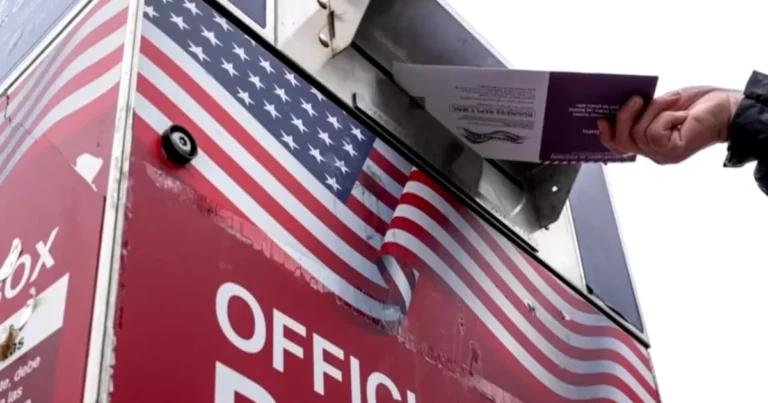
The new regulations mandate that state election officials submit voter names, addresses, and unique ballot envelope barcodes to the “Federal Ballot Mail Portal.” Once submitted, voters are enrolled in a “Mail-In and Absentee Participation List.” The agency maintains that it will not play a role in determining voter eligibility or counting ballots, but critics argue the move infringes on state authority to manage their own election procedures.
David Becker, executive director of the Center for Election Innovation and Research, echoed concerns about the potential for voter disenfranchisement. He suggested that the new requirements create “completely unnecessary” hurdles that offer no benefit to election integrity. With North Carolina scheduled to begin sending ballots to certain voters this Friday, and other states following suit by mid-September, the pressure on the system is mounting.
Senator Blumenthal’s letter to Steiner, dated Monday, described the implementation of the executive order as “perilously rushed and potentially unlawful.” He urged the agency to abandon these plans, asserting that the Postal Service lacks the operational capacity to implement these provisions without compromising the right to vote. The Postal Service did not immediately respond to requests for comment regarding these allegations.
The political divide over mail-in voting remains stark. A March poll indicated that 77% of Democrats support universal mail-in voting, compared to 25% of Republicans, with independents split nearly down the middle. As the legal and technical battles continue, the whistleblower’s warning highlights the growing tension between federal oversight and the logistical realities of administering a national election. The report also notes that the president has also pushed Congress to approve a package of voting regulations that would outlaw mail voting — with some exceptions — and impose new proof-of-citizenship requirements to register to vote. The report also notes that plus the District of Columbia, that have not yet eliminated in-person voting but also send ballots to all of their voters, there are also four states. The report also notes that in a poll in March, 77% of Democrats said anyone should be allowed to vote by mail, while just 25% of Republicans also felt that way. The report also notes that with 49% backing mail voting by anyone, independents were split. The report also notes that it could delay ballots by the thousands in repeated verification cycles — and thus prevent states from mailing enormous numbers of ballots,” the lawyers said. The report also notes that a election law contributor, asked, are Americans clamoring for the Postal Service to have this added responsibility as they’re hoping that their ballots are just seamlessly sent to them?” Becker. The report also notes that publication of the final rule came days before the Supreme Court intervened last week in a case brought by 23 Democratic-led states that challenged key provisions of Mr.