
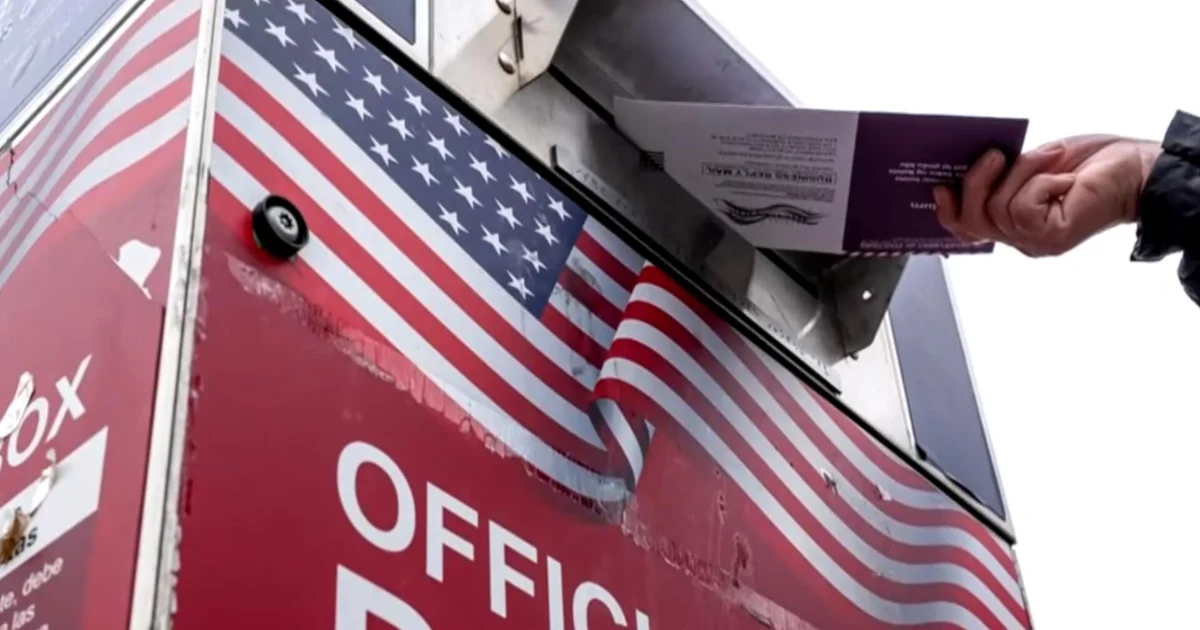







Washington — The nation’s highest court has declined to lift a lower tribunal’s order that prevents the U.S. Postal Service from enforcing revised regulations governing mail-in ballots. Monday’s action halts the administration’s push to implement the requirements ahead of the approaching midterm contests.
Implementation of the postal agency’s mandates remains frozen while ongoing litigation proceeds. Several states have already dispatched mail ballots to voters, and local election administrators previously cautioned that adapting to the strict mandates on short notice would prove exceedingly difficult.
Federal attorneys defended the directives as necessary safeguards against mail-voting vulnerabilities. Solicitor General D. John Sauer characterized the concern as a severe threat that compromises valid ballots and erodes public trust in democratic outcomes.
Despite these arguments, the administration presented no widespread evidence of mail-in fraud, and the president himself cast a mail ballot in Florida earlier this year. In a brief, unsigned ruling, the justices concluded that the government is unlikely to prevail on the merits of its challenge against the preliminary injunction issued by the District Court.
Justices Samuel Alito and Clarence Thomas dissented from the decision, maintaining that the challenging states failed to demonstrate the policy violates the law. Justice Brett Kavanaugh joined the majority, noting a fair possibility that the final rule falls within statutory authority, though he acknowledged that enforcing it immediately would prove arbitrary and capricious under the Administrative Procedure Act due to insufficient preparation time for local officials.
President Trump sharply criticized the outcome on social media, labeling it a major setback for Republicans and expressing dissatisfaction with conservative members he appointed to the bench. The postal guidelines mandate specific envelope specifications, including unique barcodes, alongside online portal submissions from local jurisdictions regarding participating voters.
Noncompliant mailings face rejection and return to election offices, sparking widespread concern over potential disenfranchisement and administrative disruption. A coalition of Democratic-led states and voting rights advocates argued that the postal agency lacks authority over federal election administration and that compliance before the midterms would be logistically impossible.
Legal filings warned of technical failures, system delays, and severe disruption across mail-voting infrastructure. Conversely, the administration maintained that regulating postal mail falls squarely within constitutional bounds and imposes only minimal burdens.
The Supreme Court order concludes a heated legal dispute that intensified after an executive order directed postal officials to draft new plans earlier in the year. A Massachusetts district judge initially enjoined key elements of the directive, though the high court temporarily paused that ruling in August.
Shortly after the agency published its finalized rules, two dozen Democratic-led states filed fresh litigation. A temporary 14-day injunction was subsequently issued by Judge Indira Talwani while the court weighed a longer-term prohibition.
Meanwhile, an anonymous whistleblower disclosed potential systemic vulnerabilities regarding the postal portal, warning Congress that the rushed platform risks blocking delivery for a substantial volume of ballots. New York Attorney General Letitia James welcomed the judicial outcome, stating it successfully averted chaotic disruption to the electoral process. The report also notes that john Sauer said is a “particularly pernicious species of fraud” that dilutes lawful votes and undermines public confidence in the integrity of elections. The report also notes that calling it a “bad decision” and a “big loss for Republicans, trump on Tuesday morning slammed the decision. The report also notes that this Supreme Court is bullied and cajoled by the Radical Left into making decisions that have set America back at least a hundred years,” Mr. The report also notes that they are merely a shell of their original selves, trump said on social media. “These are not the people I interviewed to serve on the United States Supreme Court. The report also notes that the policies have raised alarm with election officials who are concerned significant numbers of voters could be disenfranchised and fear that if the policies take effect, they would upend states’ mail voting programs just ahead of the midterms. The report also notes that they added there would be “chaos” and said the new rules are “fraught with an extreme risk of error” that even if the states were to comply in time, “there is a high risk of technical breakdown, ineptitude, and delay,” by the Postal Service.