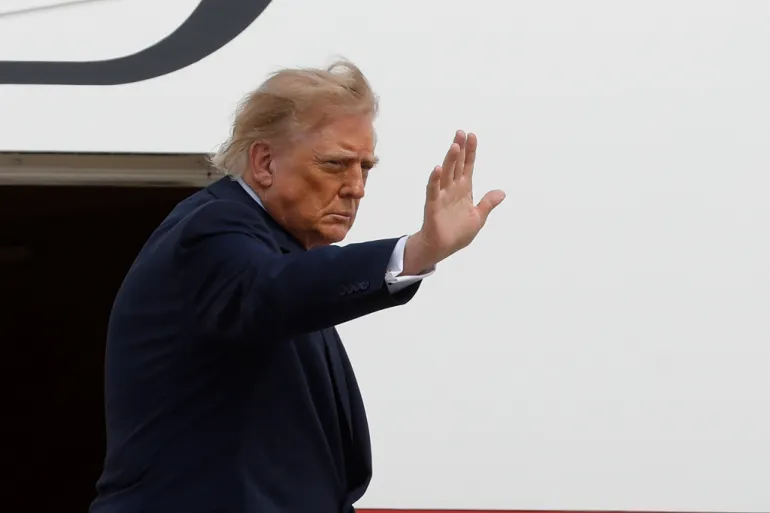









The United States has announced a significant agreement to secure control over a substantial portion of Venezuela’s oil reserves. President Donald Trump, who previously pledged to “take back” the South American nation’s energy resources, confirmed on Friday that his administration reached a deal with the government of interim President Delcy Rodriguez. The arrangement grants the US majority control over 17 strategic oil fields, representing an estimated 65 billion barrels of proven oil reserves.
Celebrating the announcement on social media, Trump declared, “The United States of America has just entered into an Agreement with the Country of Venezuela on, THE BIGGEST OIL DEAL IN WORLD HISTORY!” He further claimed that the agreement “MORE THAN DOUBLES American Oil Reserves.” While the administration intends to partner with private businesses to extract the fuel, specific terms of the contract remain largely undisclosed.
The scale of the deal has drawn skepticism from industry experts. Oil market researcher Rory Johnston dismissed the 65-billion-barrel figure as a “red herring,” noting that the actual, relevant details of the arrangement are still unknown. Johnston compared the move to colonial-era practices, such as British Petroleum’s historical claims over Iraqi and Iranian reserves prior to World War II. He suggested that the large number is a typical rhetorical device used by Trump to generate headlines.
The US government currently estimates that Venezuela holds 303 billion barrels of oil, the largest known deposit globally, accounting for roughly 17 percent of the world’s supply. The 65 billion barrels involved in the new deal represent approximately one-fifth of those national reserves. This development comes against the backdrop of declining US domestic oil reserves, which stood at roughly 46 billion barrels as of 2023, and a shrinking Strategic Petroleum Reserve, which currently holds 289.7 million barrels against a capacity of 714 million.
The geopolitical landscape shifted dramatically in 2026. Following years of tension between the US and former socialist President Nicolas Maduro—who faced accusations of facilitating drug trafficking—the conflict reached a breaking point on January 3. After US military vessels amassed off the coast of Venezuela, Maduro was ousted and now awaits trial in New York on drug and weapons charges. Trump subsequently backed Rodriguez to lead the government in Caracas and announced that Washington would indefinitely control Venezuela’s oil exports.
Critics argue that the administration has coerced Rodriguez into compliance. The move has been widely denounced by experts as a violation of international law, which grants nations “permanent sovereignty” over their own natural resources. Despite these legal concerns, the Trump administration has framed the seizure as a key pillar of its foreign policy. In December, the White House imposed a blockade on Venezuelan oil sales, with adviser Stephen Miller labeling the nationalization of the country’s oil industry as the “largest recorded theft of private property.”
The timing of the deal coincides with broader global energy instability. Friday marked the six-month anniversary of the US-Israel war on Iran, which began on February 28. Following the closure of the Strait of Hormuz by Iran, global oil prices spiked, impacting domestic costs in the United States ahead of the upcoming midterm elections. The American Automobile Association recently warned that August is expected to be the most expensive month for fuel in years.
Trump has explicitly linked his foreign policy to the concept of “Manifest Destiny,” arguing that the expansion of territory and wealth is essential for a growing nation. He has previously floated the idea of using military power to secure resources elsewhere, including in Libya and the Strait of Hormuz, which he has proposed making a US territory. Regarding the Venezuelan deal, Trump told a crowd, “We’re doing great in Venezuela. We’re taking a lot of oil from Venezuela, and we’re getting along great with them.”
He further suggested that the US had effectively “paid for the war” against Venezuela using the resources extracted from the country. “That’s the old-fashioned way, right? The old-fashioned way,” Trump remarked. “To the victor belong the spoils, right?”
US Secretary of State Marco Rubio defended the agreement as a triumph for the “America First” agenda. He stated that the deal demonstrates how the administration’s “bold foreign policy” is successfully securing stable energy reserves while simultaneously lowering gas prices for American consumers. The report also notes that and what could the new deal mean for US-Venezuela relations, what has been said so far. The report also notes that we answer those questions and more in this explainer. The report also notes that but some analysts have questioned the 65-billion-barrel total Trump announced. The report also notes that there has been speculation that Trump may have made a splashy announcement to help jumpstart the US economy, with no fixed terms released. The report also notes that “It’s just a classic big number that Trump was sure to jump all over and will repeat ad nauseam going forward.”. The report also notes that standing at approximately 46 billion barrels by the end of 2024, government estimates indicate that proven US oil reserves are declining. The report also notes that with only 289.7 million barrels in storage facilities designed to hold up to 714 million barrels, but the emergency stockpile is shrinking. The report also notes that which have hit their lowest levels since 1982, trump has indicated that Friday’s deal will help restore the US oil reserves.