







Washington and Tehran are delivering contradictory signals regarding the direction of their eight-month conflict, leaving open the question of whether the two nations are headed toward renewed full-scale military strikes or a potential diplomatic breakthrough. Which of all these signals matter most. According to he, He does not expect Washington to accept what he called the unfavourable deal Tehran is offering “without another round of attacks”.
Military preparations are accelerating as the US lays the groundwork for potential future action.
General Brad Cooper, commander of United States Central Command (CENTCOM), briefed US President Donald Trump on options for renewed strikes against Iran. Joint military planning between the US and Israel for potential strikes after the November 3 US midterm elections has also been developed. The US military has enhanced its air defense systems and ammunition stockpiles across the region while moving personnel away from facilities vulnerable to Iranian counterstrikes. Ten military transport aircraft landed at Israel’s Ovda and Nevatim air bases in the Negev region, with additional logistics flights deployed to Jordan, Saudi Arabia, and Qatar. According to the US and Israel have drawn up joint plans to attack Iran after the November 3 US midterm elections, The New York Times (NYT), Last week. According to the WSJ, The US has boosted air defences and munitions in the region and moved some troops away from bases vulnerable to Iranian retaliation. Iran was attacked by Israel or the US while talks were under way in both 2025 and 2026. On June 13, 2025, Israel launched major strikes on Iranian nuclear and military sites, two days before a sixth round of US-Iran talks was due in Oman. Bombing Iran’s Natanz, Fordow and Isfahan nuclear sites, the US joined on June 22. According to this year, the US and Israel attacked on February 28, two days after talks in Geneva that mediator Oman, Had made “significant progress”.
Democratic Senator Chris Murphy, who received a briefing on the joint attack plans, publicly criticized the strategy as “insane” and cautioned that executing it would trigger a devastating regional escalation.
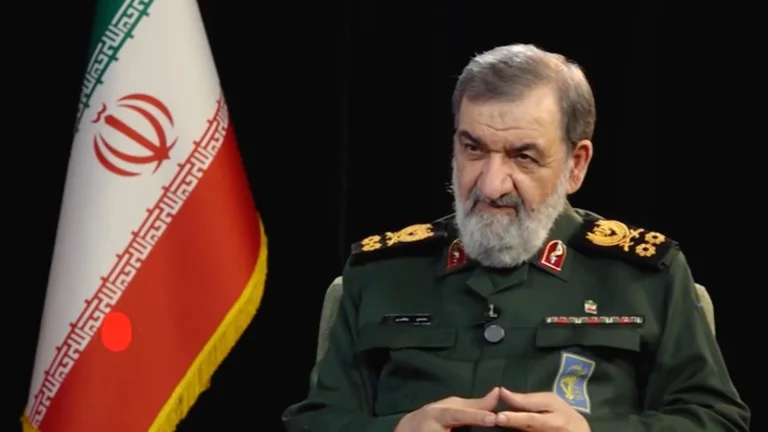
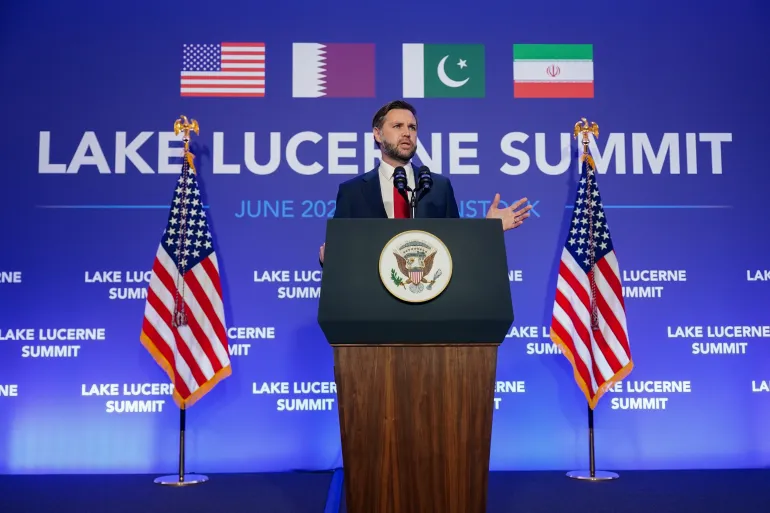
Despite the military positioning, diplomatic channels remain active. Vice President JD Vance sent a letter delivered to Mohsen Rezaei, secretary of Iran’s Supreme National Security Council, through Qatari intermediaries. Vance’s message proposed direct, vice-president-level negotiations with Iran’s nuclear program included on the agenda from the outset to avert further military clashes. Qatari officials subsequently visited Tehran to coordinate discussions linked to Washington. Meanwhile, Vance stated on Fox News that President Trump would “never” permit the confrontation to turn into “a forever war.” On Friday, Qatari mediators returned to Tehran for talks coordinated with the US, an official told Reuters. According to iranian President Masoud Pezeshkian, In September that Iran no longer trusts negotiations with Washington because attacks had come during previous rounds of talks. “The issue is mostly around sequencing and the lack of trust on the Iranian side that the Americans will actually follow through with their commitments,” Krieg said.
Experts remain divided on whether Vance’s diplomatic initiative can prevent a return to active combat. Rouzbeh Parsi, an Iran analyst and affiliated researcher at Lund University’s Department of History and Human Rights Studies in Sweden, characterized Vance as the “voice of reason” and the “least volatile and unpredictable” official within the Trump administration. However, Parsi noted that Vance’s stance has “never proven to be sturdy enough to actually sway Trump.” He expressed skepticism that Iranian officials would view the initiative as credible until Vance demonstrates an ability to produce concrete results.
Questions also persist regarding who controls decision-making within Iran. Nader Hashemi, a professor of Middle East politics at Georgetown University, emphasized that “Rezaei is just one voice among many,” explaining that authority in the Islamic republic is exercised collectively. Conversely, Wolfgang Pusztai, a defense analyst and former Austrian defense attache to Libya, stated that “there is no doubt that the IRGC [Islamic Revolutionary Guard Corps] currently calls the shots in Iran.”
Pusztai noted that following the killing of former Supreme Leader Ayatollah Ali Khamenei during joint US-Israeli strikes in February, his son assumed the role of supreme leader but lacks the influence his father held. “Without the IRGC’s approval, there will be no agreement with Iran,” Pusztai remarked. He added that any stance taken by Rezaei likely mirrors IRGC leadership thinking, making Washington’s outreach to him appropriate. Pusztai suggested that sustained economic pressure could lead Rezaei—who holds a doctorate in economics—to conclude that regime survival is better secured without conflict, noting that “time is running out for Iran’s economic recovery through the use of its oil revenues.” “Without the IRGC’s approval, there will be no agreement with Iran,” Pusztai said, adding it is safe to assume that when Rezaei makes a statement or endorses a proposal, “it reflects the position of the IRGC leadership” and that the US was “absolutely right to negotiate with him”.
Iran’s formal demands present significant hurdles to a deal. Iranian Parliament Speaker Mohammad Bagher Ghalibaf stated that progress depends on satisfying seven conditions, including lifting economic sanctions, ending the US naval blockade, and providing compensation for war damages. Tehran fears a prolonged negotiation process would allow Trump to reverse course. Additionally, hardline factions within the IRGC see strategic value in maintaining tension to solidify control over the Strait of Hormuz, with forces actively preparing for military confrontation over recent weeks. While a Democratic win could push Trump to show his unilateral powers, including by attacking, he said, a strong Republican showing could encourage more aggressive tactics. According to hashemi, He suspects “the same pattern is repeating itself”, with the US preparing “a massive bombing campaign in Iran, replete with war crimes like we haven’t seen before”, citing his reading of Murphy’s comments. Fearing that a slow process gives Trump room to backtrack, he said, tehran wants sanctions and the US naval blockade lifted quickly.
Analysts emphasize that military assessments could heavily influence Trump’s final decision. Andreas Krieg, an associate professor at King’s College London, noted that Vance’s outreach indicates Washington recognizes the limits of coercive power. However, he warned that Admiral Cooper, whom he described as “quite hawkish,” might give Trump false confidence in a quick military outcome. “This idea that there is a short and crisp military operation to solve this issue is obviously an illusion,” Krieg stated.
Paul Musgrave, an associate professor at Georgetown University in Qatar, suggested the White House is using signals for coercion, though he assessed that “the United States is getting ready to carry out substantial attacks relatively soon” rather than accepting Iranian terms. Whatever the vote’s result, “in the short term it will not change much”, Musgrave said.
Timing remains tied to domestic American politics. Krieg expects no major military escalation prior to November 3, after which the likelihood of war will “increase exponentially.” Pusztai similarly assessed that Trump is focused on the midterms, making major attacks unlikely before then, but warned that mid-to-late November could bring substantial strikes targeting IRGC capabilities. Krieg warned that any fresh confrontation would be vastly more severe than the clashes in February and March, as Iran stands prepared to hit critical infrastructure across Gulf states, creating an “unprecedented” regional threat. The diplomacy may say more than the threats.